

South Sudan: Region History
For decades, the people of what is now South Sudan have endured layered systems of violence — armed conflict, famine, displacement, and coerced identity transformation. Among the least examined yet most consequential drivers of this suffering is the sustained ideological pressure exerted through Islamist political agendas, rooted in Khartoum's long effort to reshape the demographic, cultural, and religious landscape of the south. This report examines how that pressure — in both its historical form and its contemporary echoes — has shaped patterns of insecurity, mass displacement, and structural vulnerability for communities including the Dinka, Nuer, Shilluk, Azande, and dozens of other ethnic groups across South Sudan.
Part I — Historical Foundations
The Sudanese Islamist State and Its Southern Project
The roots of ideologically driven violence in South Sudan trace directly to the political consolidation of the National Islamic Front (NIF) government in Khartoum following the 1989 coup led by Omar al-Bashir and ideologically shaped by Hassan al-Turabi. The NIF's vision was not merely one of governance — it was a comprehensive project to extend the cultural, legal, and religious norms of political Islam southward, into territories whose populations were predominantly Christian, animist, or adherents of indigenous spiritual traditions.
The consequences of that project were catastrophic in scale. The Second Sudanese Civil War (1983–2005), though complex in its origins, was dramatically escalated and prolonged by the introduction of a Jihad framing from Khartoum. Beginning in the early 1990s, the Sudanese government began formally characterizing its military campaigns in the south as religiously obligated warfare. Soldiers were told they would be martyrs if killed in combat against southern populations. This framing transformed what might have remained a political separatist conflict into a holy war narrative — with consequences for military conduct, civilian treatment, and the scope of violence permitted under government authority.
Institutionalized Coercion and the Islamization of Civic Life
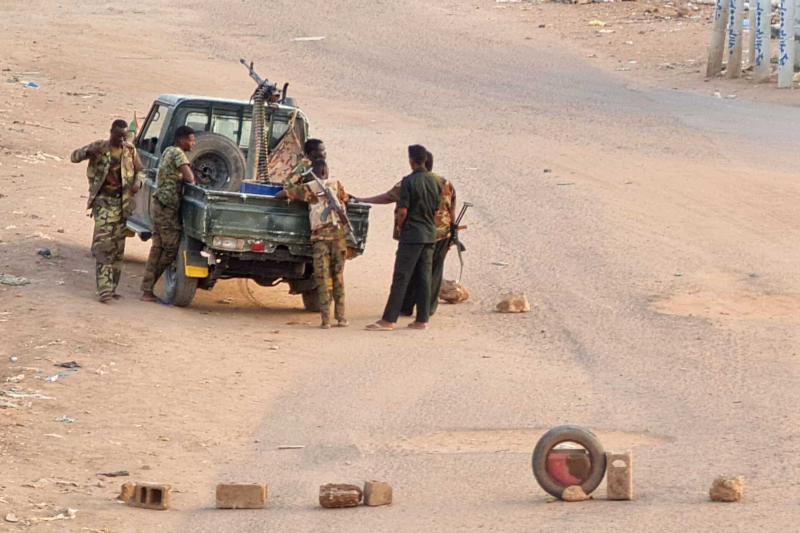
In areas under northern military control during the 1990s and early 2000s, southern Sudanese civilians were subjected to systematic ideological pressure intended to reshape religious and cultural identity as a condition of access to resources, safety, and legal recognition. In garrison towns — areas controlled by the Sudan Armed Forces in the south — populations faced requirements to observe Islamic dress codes, attend Quranic education, and operate within the framework of Sharia-based legal administration that had been formally imposed on the whole of Sudan in 1983 under Nimeiry's September Laws.
For communities like the Nuer and Dinka, whose social identities were inseparable from customary law, cattle-keeping traditions, and their own spiritual frameworks, this institutional pressure was experienced not as policy disagreement but as an assault on communal existence. Resistance to Islamization — whether passive, such as maintaining traditional practices, or active, such as sheltering SPLA combatants — was treated as a security threat and could result in extrajudicial detention, village destruction, or forced displacement.
The Khartoum government did not simply fight a military war in the south. It pursued a civilization war — one in which the goal was to remake who southerners were allowed to be, what language they prayed in, and what legal framework governed their lives. That is not counterinsurgency. That is cultural erasure through coercion.
— Testimony recorded by Human Rights Watch field researchers, Juba, 2004The Murahileen — Arab militias from Darfur, Kordofan, and other northern regions mobilized by Khartoum during the civil war — operated as a paramilitary extension of this ideological project. Documented extensively by human rights investigators, their raids on Dinka communities in Bahr el Ghazal were characterized not merely by looting and killing but by the capture of women and children who were subsequently sold into slavery or forced into northern households where conversion to Islam was compelled. The UN and NGO community documented tens of thousands of such captives. The ideological dimension of these raids — their explicit framing as Jihad, with enslaved southerners regarded as war booty sanctioned by the religious framework of the state — is critical to understanding both their scale and their brutality.
Part II — Displacement and Demographic EngineeringFlight, Forced Migration, and the Erasure of Southern Communities
The war years produced one of the most severe displacement crises of the twentieth century. By 2004, an estimated four million southern Sudanese had been internally displaced, with a further 500,000 living as refugees in neighboring countries. The immediate drivers of displacement were military — aerial bombardment of civilian areas, ground raids, deliberate destruction of food stores, and blocking of humanitarian aid — but the ideological scaffolding of Jihad elevated these acts from military tactics into instruments of a larger agenda: the depopulation of the south as a means of removing the human obstacle to resource extraction and territorial control.
Oil fields discovered in Upper Nile and Unity States in the 1970s and 1980s became flash points in which the Islamist state's ideological imperatives and its economic interests merged. The government of Sudan, following the NIF's consolidation of power, systematically depopulated oil-producing areas through scorched-earth campaigns documented by the human rights organization Christian Solidarity International and later confirmed by the United Nations. Nuer communities in Unity State, Shilluk settlements along the Nile, and mixed communities in Upper Nile were driven from their lands through air raids, militia attacks, and denial of relief. The intent was explicitly to clear populations resistant to Arabization and Islamization from territories the state wished to exploit.
Internal Displacement Camps and the Reach of Ideological Pressure
For those displaced to Khartoum and northern cities, the experience of ideology as coercion became immediate and intimate. The squatter settlements that housed southern Sudanese IDPs on the outskirts of Khartoum — areas such as Dar es Salaam and Mandela — were subjected to repeated demolitions, with residents forcibly transferred to more remote locations as part of policies explicitly linked to maintaining the Islamic character of the capital. Children in these settlements were disproportionately targeted by state-supported Islamic educational institutions that offered food, medicine, and schooling conditional on religious instruction.
Human Rights Watch's investigations in the 1990s and early 2000s documented systematic pressure on displaced Dinka, Nuer, and Shilluk families to enroll children in Quranic schools run by organizations connected to the NIF's da'wah (proselytization) networks. In some documented cases, children removed from displaced families were placed in Islamic boarding institutions far from their communities, where contact with parents was restricted or eliminated. These practices constituted a form of cultural and religious coercion that operated below the threshold of military violence but served the same demographic and ideological ends.
Part III — The CPA Era and Residual PressuresThe Comprehensive Peace Agreement and Unresolved Ideological Tensions
The Comprehensive Peace Agreement (CPA) signed in January 2005 brought an end to the formal civil war and opened a six-year path toward the 2011 independence referendum in which southern Sudanese voted overwhelmingly — by approximately 99 percent — for separation. The CPA was a significant achievement. It removed the immediate framework of Jihad as state policy toward the south and created formal guarantees for freedom of religion, customary law, and cultural expression in the south. However, it left unresolved a set of structural vulnerabilities and regional tensions that have continued to shape insecurity in South Sudan since independence.
The contested areas of Abyei, Blue Nile, and South Kordofan — regions with majority or significant African non-Arab, non-Muslim populations — were not definitively resolved by the CPA and became sites of renewed military conflict after 2011. The Sudan People's Liberation Movement-North (SPLM-N), fighting in these areas, faced a government in Khartoum that continued to apply counterinsurgency strategies with Islamist ideological framing. Communities in the Nuba Mountains and Blue Nile State — many of whom had historic cultural and political ties to South Sudan's SPLA — faced aerial bombardment, mass displacement, and aid blockade in campaigns that human rights investigators described as bearing the hallmarks of the southern war.
Cross-Border Dimensions: Proxy Networks and Ideological Spillover
The end of formal war did not terminate the cross-border channels through which ideological pressure was transmitted into South Sudan. Multiple investigations by UN Panel of Experts reports have documented the continuation of support networks linking armed groups operating within South Sudan to northern Sudanese political and intelligence structures. While the direct Jihad framing of the civil war era was formally absent in the post-CPA period, the structural relationships — between Khartoum, Arab pastoral militia networks, and armed actors in South Sudan — persisted and were periodically activated during periods of political instability in Juba.
The involvement of Sudan in South Sudan's internal conflicts — most notably the post-2013 civil war — has been characterized by multiple observers as partly continuous with older patterns of external manipulation, in which Khartoum's ability to support or withhold support from competing South Sudanese factions gave it leverage in shaping political outcomes favorable to northern interests, including access to oil infrastructure and transit fees.
Part IV — Post-Independence InsecurityThe 2013 Civil War and the Layering of Conflict Drivers
South Sudan's post-independence civil war, which erupted in December 2013 following a political rupture between President Salva Kiir and former Vice President Riek Machar, introduced a new layer of internal violence over the unhealed wounds of the north-south conflict. The 2013–2018 war and its subsequent fragile peace process have been analyzed extensively through the lens of ethnic conflict — primarily framed as Dinka versus Nuer — and through narratives of elite political competition. These analyses capture important dimensions of the crisis but are incomplete if they omit the extent to which decades of externally driven displacement, cultural disruption, and resource competition — shaped significantly by the Islamist state's war on the south — created the conditions in which intra-southern violence became possible at such scale.
Communities whose traditional conflict-resolution mechanisms had been shattered by the civil war, whose customary leadership structures had been killed, exiled, or co-opted, and whose young men had been militarized by decades of conflict, were poorly equipped to manage the political crisis of 2013. The social capital that might have contained violence — functioning community councils, trusted religious leadership, accessible legal institutions — had been systematically degraded by years of war and displacement, much of it driven by the north's campaign to render the south ungovernable except on Khartoum's terms.
The Weaponization of Ethnicity and the Destruction of Inter-Community Trust
Researchers studying the mechanisms by which south-south violence scaled so rapidly in 2013 have pointed to the disruption of inter-ethnic cooperation frameworks that had historically governed relations between groups like the Dinka and Nuer. Cattle-raid conflict, though traditional, had historically been managed within customary frameworks that limited casualties and preserved long-term relationships between communities. The militarization of these communities during the SPLA era, and the introduction of automatic weapons in large quantities, transformed small-scale raiding into mass-casualty events.
It is important to contextualize this transformation: the supply of weapons to southern communities during the civil war was partly a deliberate Khartoum policy designed to foment intra-southern conflict and reduce the SPLA's political coherence. The instrumentalization of Dinka-Nuer tensions by the northern government during the civil war — most notably in the early 1990s when Machar's SSIM/SSDF fought against Kiir's SPLA factions in a conflict that produced some of the war's most horrific massacres — demonstrated a pattern of external actors exploiting southern divisions for political ends.
Part V — Contemporary DimensionsSalafi Networks, Regional Actors, and Contemporary Ideological Pressures
The landscape of ideological pressure on South Sudan has evolved since independence and since the broader transformation of the Sudanese political landscape following the 2019 popular uprising that removed Omar al-Bashir from power. The formal architecture of Khartoum's Jihad state has been dismantled in significant respects — the September Laws were suspended, peace negotiations with the SPLM-N have advanced, and Sudan's transitional authorities have sought international rehabilitation. However, the ground-level networks through which Salafi and Islamist organizations operated in the Sudan-South Sudan borderlands did not dissolve with the political transition.
Documented by researchers at the Small Arms Survey and by UN monitoring bodies, Salafi missionary networks operating in parts of South Sudan — particularly in Muslim-majority communities along the White Nile and in northern Unity State — have continued to receive funding and institutional support from Gulf-linked organizations. The objectives of these networks are primarily religious in character, but in contexts of acute resource competition and weak state authority, the introduction of new religious identities and external funding streams has in documented cases sharpened inter-community tensions.
The Lord's Resistance Army, Al-Shabaab, and Regional Jihadi Pressures
South Sudan's security environment has also been shaped by the overspill of regional Islamist militant activity. The Lord's Resistance Army (LRA) — while not an Islamist organization — has operated in South Sudan's Equatoria region and has been exploited by various regional actors as a destabilizing instrument. Of greater direct ideological relevance is the documented presence of Al-Shabaab smuggling and recruitment networks in parts of South Sudan's border with Kenya and Uganda. UN reports have flagged the use of South Sudan's ungoverned spaces by Al-Shabaab-linked logistics networks, and recruitment of South Sudanese youth — particularly those displaced to urban areas with limited economic opportunities — by organizations promising material resources alongside religious frameworks of belonging.
These dynamics remain at a relatively low level of development compared to the LRA's operational footprint or Al-Shabaab's presence in Somalia, Kenya, and Uganda. But human rights investigators and security researchers consistently warn that the combination of youth unemployment, displacement trauma, weak governance, and the availability of external ideological funding networks creates conditions in which militant recruitment becomes progressively easier. The trajectory matters as much as the current state.
What we see in parts of Equatoria and greater Upper Nile is not yet a jihadist insurgency. But it has the structural prerequisites — a traumatized young male population, absent state services, and external actors willing to pay for loyalty. The question is whether protective governance arrives before the recruiters consolidate.
— Senior analyst, Small Arms Survey Regional Conflict Monitor, 2024The Human Cost: Displacement, Coercion, and Loss of Communal Identity
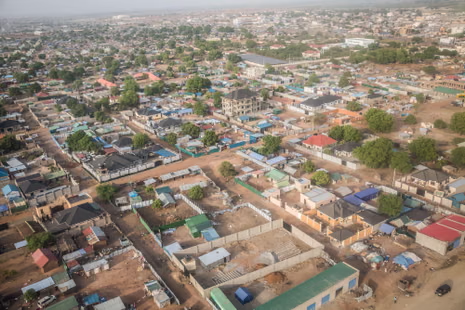
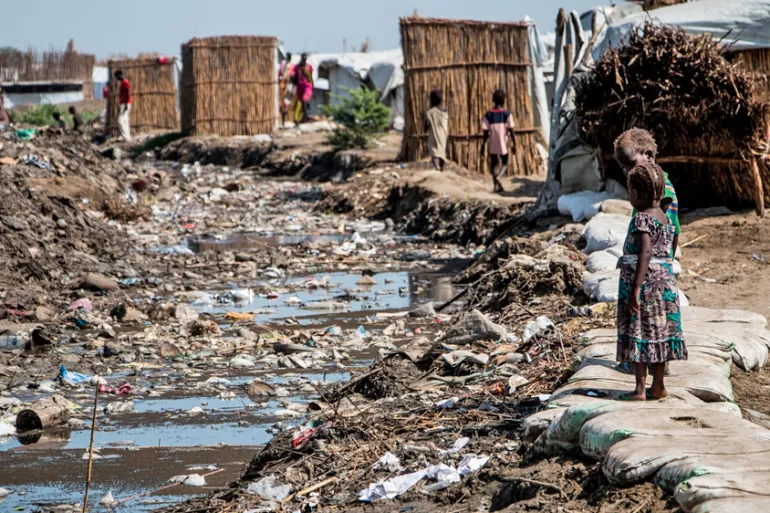
Abstract discussions of ideological pressure and geopolitical manipulation risk obscuring the lived reality of communities who have borne the cost of these dynamics. Across South Sudan — in the cattle camps of Jonglei, the papyrus swamps of Unity State, the forests of Western Equatoria, and the urban displacement settlements around Juba — the consequences of decades of ideologically inflected violence are visible in concrete and devastating terms.
Displacement statistics speak to the scale: as of 2025, South Sudan remains host to one of the largest internal displacement crises in the world, with approximately 2.2 million people internally displaced and nearly 2.3 million registered as refugees in neighboring countries. The majority of this displacement traces directly or indirectly to the conflict dynamics — civil war, post-independence violence, intercommunal clashes — that have been shaped in part by the ideological pressures documented in this report.
Impact on Women and Girls
Women and girls have been disproportionately targeted by the coercive dimensions of both the civil war era and the post-independence conflict period. During the civil war, the use of sexual violence as a weapon — documented extensively in communities affected by Murahileen raids, SAF military operations, and inter-SPLA faction violence — was inseparable from the ideological frameworks that cast southern women as legitimate war booty. Enslavement, forced marriage, and forced religious conversion were documented not as abuses of individual soldiers but as systematic practices enabled and in some cases encouraged by the ideological framing of the state's war.
In the post-independence civil war, sexual violence again emerged as a systematic tool of conflict, with documented cases in which women from specific ethnic groups were targeted for violence intended to degrade and humiliate their communities. While the immediate perpetrators in many of these cases were operating within South Sudan's internal political conflict, the normalization of such conduct — and the absence of accountability — reflects in part the legacy of a conflict culture shaped over decades by a northern state that treated southern civilians as legitimate targets of ideologically sanctioned violence.
Impact on Youth and Cultural Transmission
The disruption of customary educational, initiation, and cultural transmission frameworks — caused both by physical displacement and by the deliberate ideological pressure to replace indigenous cultural identities with externally imposed ones — has produced what many community leaders describe as a generation cut off from the knowledge systems and values that previously governed communal life. Dinka cattle-keeping traditions, Nuer leopard-skin chief conflict-resolution practices, Shilluk royal institution frameworks — all of these were degraded not only by the disruptions of war but by explicit policies of cultural replacement pursued by the Islamist state over four decades.
The long-term consequences of this cultural disruption are not simply sentimental. Functional customary institutions governed land use, managed inter-community conflict, regulated marriage and inheritance, and provided frameworks for accountability. Their weakening has contributed directly to the collapse of conflict-prevention mechanisms, the escalation of intercommunal violence, and the vulnerability of communities to manipulation by armed political actors who exploit the absence of legitimate authority.
Part VII — Policy and AdvocacyAdvocacy Imperatives: Toward Recognition, Accountability, and Protection
Understanding the ideological dimensions of conflict in South Sudan is not merely an academic exercise. It has direct implications for how advocacy organizations, international donors, peacekeeping missions, and humanitarian actors approach their work. Several imperatives follow from the analysis presented in this report.
- Historical accountability must be integrated into transitional justice frameworks. The Hybrid Court for South Sudan, mandated under the 2018 Revitalized Agreement, must have a mandate and capacity to address crimes committed during the civil war period — including crimes whose commission was enabled by Khartoum's ideological framework. Accountability limited to post-2013 violence will leave the deepest structural wounds unaddressed.
- Diplomatic engagement with Sudan must include explicit human rights conditionality. As Sudan's transitional process proceeds, international support must be conditioned on genuine accountability for civil war-era crimes in the south, return of abducted individuals, and dismantling of the structural networks through which proxy violence in South Sudan was supported.
- Counter-radicalization investment must be proportionate and preventive. The conditions in which militant recruitment networks can gain traction in South Sudan — youth unemployment, displacement trauma, absence of state services — require dedicated investment. Security-only responses will be insufficient and counterproductive.
- Cultural rehabilitation and customary institution support must be explicit programming priorities. International development programming in South Sudan systematically underinvests in the rehabilitation of customary governance, conflict resolution, and cultural transmission frameworks. This gap is not merely symbolic — it is a protection gap that leaves communities vulnerable to violence and manipulation.
- Communities must be empowered as testimony-givers and rights-holders. The voices of Dinka, Nuer, Shilluk, Azande, Acholi, and other South Sudanese communities must be centered in advocacy, documentation, and policy design. Their experiences of ideological coercion, displacement, and cultural disruption constitute evidence — not background.
- Religious freedom must be protected as a concrete security concern. In areas where Salafi missionary networks are active, protection of the right of South Sudanese communities to maintain indigenous religious practices without material coercion or intimidation is a security issue as much as a civil liberties one. Monitoring and advocacy frameworks must treat it as such.
- Regional mechanisms must address cross-border ideological funding flows. The Intergovernmental Authority on Development (IGAD) and the African Union must develop monitoring and accountability frameworks for external funding to religious organizations operating in conflict-affected areas of the Horn of Africa, including South Sudan.
The Role of International Documentation
Sustained international documentation of the ideological dimensions of conflict in South Sudan is essential for several reasons. First, it counters narratives — sometimes advanced by actors with interests in minimizing accountability — that frame South Sudan's violence as purely tribal or primordial, without political and ideological architecture. Second, it provides the evidentiary basis for legal accountability claims, including potential claims before international courts. Third, it signals to communities affected by this violence that their experiences are recognized as politically and legally significant — not merely as humanitarian emergencies requiring food and shelter, but as human rights violations requiring redress.
Advocacy organizations working on South Sudan must resist the tendency to treat ideological drivers of conflict as too sensitive or too complex to address directly. The sensitivity is real — religious dynamics in conflict zones require careful, evidence-based handling. But the alternative — silence, or analysis that reduces everything to ethnic competition and resource scarcity — leaves a critical dimension of violence unaddressed and ultimately serves the interests of those who perpetrated it.
Conclusion
The people of South Sudan have survived one of the most sustained and multi-layered campaigns of violence in modern history. Among the threads running through that violence — from the slave raids of the Murahileen to the displacement of Nuer communities from oil-producing areas, from the forced Islamization of southern IDPs in Khartoum to the contemporary vulnerabilities that external militant networks seek to exploit — is the thread of ideological intent. The Islamist state project in Khartoum did not simply wage war on the south. It sought to transform the south, to erase the identities, institutions, and beliefs of its people, and to replace them with a framework in which those people's existence was legitimate only on terms defined by the north.
That project failed, in the sense that South Sudan is an independent state whose people have retained their identities, their languages, their spiritual traditions, and their extraordinary capacity for resilience. But it did not fail without cost. The cost is measured in the millions who fled, in the tens of thousands enslaved, in the customary institutions disrupted, in the generations cut off from cultural transmission, in the inter-community trust destroyed. Naming the ideological dimension of this violence is not inflammatory. It is an act of historical accuracy — and, for those who survived, an act of recognition long overdue.
Appendix — People of South Sudan
Communities of South Sudan: An Ethnic Encyclopedia
South Sudan is home to more than 60 distinct ethnic groups speaking languages drawn from three of Africa's four major language families. Each community carries its own governance traditions, spiritual frameworks, modes of livelihood, and historical relationship to the land. The entries below offer a structured reference to the primary communities whose lives have been shaped — and whose rights have been violated — by the conflicts documented in this report. Population estimates are approximate and drawn from pre-2020 census projections; displacement has significantly altered the geographic distribution of most groups.
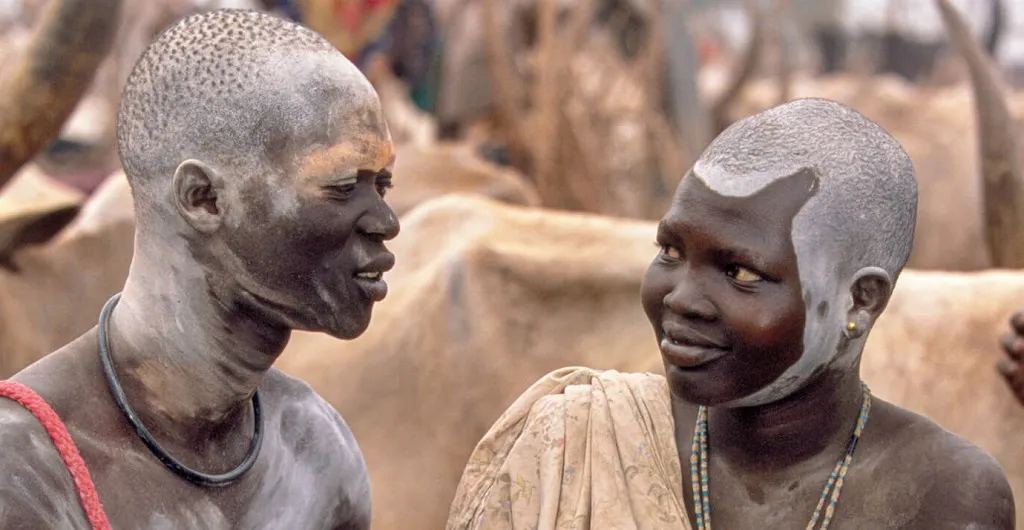
The Dinka are the largest ethnic group in South Sudan, constituting an estimated 35–40% of the national population. They are organized into more than 25 territorial sections — among them the Rek, Malwal, Twic, Bor, Ngok, and Aliab — each with distinct dialectal variations and territorial affiliations. The Dinka are historically agropastoralists, combining cattle herding with cultivation of sorghum and other grains. Cattle occupy a central ceremonial, economic, and symbolic role: bridewealth is paid in cattle, and the health of a man's herd is inseparable from his social standing and spiritual wellbeing.
Governance is traditionally structured around a system of chiefs (beny) whose authority derives from both lineage and community recognition, and spear masters (beny bith) who hold spiritual authority over rain, cattle health, and community welfare. The paramount chief tradition has been significantly disrupted by decades of war and by the integration of Dinka political leadership into South Sudan's national government structures.
The Nuer are the second-largest ethnic group in South Sudan and among the most extensively documented pastoral peoples in the ethnographic literature, owing in large part to E.E. Evans-Pritchard's foundational studies in the 1930s. Like the Dinka, the Nuer are cattle-keeping agropastoralists organized into segmentary lineage structures with no centralized political authority. Conflict resolution has historically been managed through the institution of the leopard-skin chief (kuaar muon), a ritual figure with the authority to mediate blood feuds and negotiate cattle compensation between feuding families.
The Nuer inhabit the flood plains of the Sudd and the surrounding savanna, moving seasonally between dry-season cattle camps and wet-season cultivation areas. Their territory overlaps substantially with South Sudan's oil-producing regions, making Nuer communities disproportionately affected by the convergence of resource extraction and armed conflict.
The Shilluk inhabit a narrow strip along the western bank of the White Nile in Upper Nile State, with their historic capital at Fashoda (Kodok). Uniquely among Nilotic peoples, the Shilluk developed a centralized monarchy — the Reth (king) — whose authority is both political and divine. The Reth is regarded as an earthly embodiment of the founding ancestor Nyikang, and the institution of kingship is maintained through elaborate ceremonial traditions. This degree of political centralization set the Shilluk apart from their Dinka and Nuer neighbors and gave them a distinct identity in regional politics.
The Shilluk economy combines fishing, cultivation, and limited cattle herding along the fertile Nile banks. Their geographic concentration along a single corridor has historically made them politically coherent but militarily vulnerable, as control of the river corridor carries strategic value for all armed actors in the region.
The Azande are a culturally sophisticated people whose historical kingdom once extended across what is now South Sudan, the Democratic Republic of Congo, and the Central African Republic. Unlike the Nilotic groups of the north and east, the Azande are of Ubangian linguistic origin and follow a sedentary agricultural mode of life, cultivating cassava, sorghum, maize, and a variety of tropical crops in the dense woodland and savanna of Western Equatoria. Their political organization historically centered on the Avongara royal clan, whose members governed territorial chieftaincies across a wide area.
Azande material culture — including distinctive architecture, ironwork, and woodcarving — reflects centuries of complex social organization. The Azande are noted in the ethnographic record for highly structured systems of belief, including the concept of mangu (witchcraft) as an explanatory framework for misfortune, and the use of oracles to arbitrate disputes and guide decisions.
The Bari are the indigenous inhabitants of the Juba region and the surrounding Central Equatoria — the heartland of South Sudan's capital and the area that has experienced the most intensive urbanization and political transformation since independence. The Bari language cluster encompasses several closely related groups including the Kakwa, Kuku, Mundari, Nyangwara, and Pojulu, who share significant linguistic and cultural ties. The Bari themselves are organized into clan-based communities with traditional chiefs whose authority has been substantially eroded by the urban growth and political centralization of Juba.
The Bari are primarily cultivators, though cattle-keeping holds cultural significance. The fertile lands of the Bari homeland along the Nile have become subject to intense land pressure as Juba expanded, and Bari communities have lost significant acreage to urban encroachment, military installations, and allocation to non-Bari settlers under government land policies.
The Murle are a relatively small but historically resilient community occupying the Pibor area of Jonglei State — one of the most remote and least accessible regions of South Sudan. They speak a Surmic language unrelated to the Nilotic languages of their Dinka and Nuer neighbors, and their social organization, material culture, and cosmology are distinct from surrounding groups. The Murle practice a combination of agropastoralism and hunting, and their territory along the Pibor River has historically served as a buffer zone between competing Nilotic groups.
The Murle are frequently portrayed in South Sudanese political discourse as aggressors — particularly in connection with child abduction practices historically linked to demographic recovery after disease or drought — but this framing has been criticized by humanitarian researchers as reductive, obscuring the extent to which Murle communities have themselves been subjected to organized violence, government neglect, and displacement.
The Acholi of South Sudan inhabit the Magwi region of Eastern Equatoria and are closely related to the far larger Acholi community in northern Uganda — they share language, cultural traditions, and clan systems across the international boundary. The trans-border nature of Acholi identity has made them distinctive participants in both South Sudanese and Ugandan politics, and their territory has served as a corridor for both LRA movement and refugee flows during periods of regional instability.
The South Sudanese Acholi are primarily cultivators, growing sorghum, sesame, groundnuts, and cassava in the relatively fertile soils of Eastern Equatoria. Their traditional governance is organized around chieftaincy structures reinforced by clan councils. Like other Equatorian communities, the Acholi have developed strong Christian institutional frameworks — particularly Catholic — which have historically played a significant role in education, community organization, and conflict mediation.
The Toposa are a semi-nomadic agropastoral people of the Karamojong cultural cluster, whose related groups extend across the tri-border region of South Sudan, Ethiopia, Kenya, and Uganda. They are renowned cattle herders whose seasonal movements follow the availability of water and pasture across the arid plains of Eastern Equatoria. Toposa social organization is structured around age-grade systems that govern initiation, military roles, and political decision-making. The age-grade warrior cohort has historically been the primary vehicle for both cattle raiding and community defense.
Relations between the Toposa and neighboring groups — particularly the Turkana of Kenya and the Didinga, Buya, and Nuer — have long been marked by cyclical raiding, which increased dramatically in frequency and lethality following the proliferation of small arms during the civil war years. The Toposa's geographic remoteness has resulted in chronic state neglect in terms of development, education, and health infrastructure.
The Mundari inhabit a stretch of the White Nile north of Juba in Central Equatoria and are closely linguistically related to the Bari. They are perhaps best known internationally as the keepers of the Ankole-Watusi cattle — long-horned zebu breeds whose care is treated as both economic livelihood and aesthetic art form. Young Mundari men dedicate years to the care of cattle camps along the river, developing intimate bonds with individual animals and organizing their social lives around the rhythms of herd management. The cattle camps are a distinct social institution that has persisted through decades of war.
The Mundari are primarily pastoralists in cultural orientation, though cultivation supplements their diet. Their territory along the Nile corridor places them in proximity to Juba's political economy without being fully integrated into it, giving them a complex relationship with both the national government and neighboring Dinka communities who have moved into the region.
The Anuak are a Luo-speaking people distributed across the South Sudan-Ethiopia border, with the majority residing in Ethiopia's Gambela Region and a significant community in the Pochalla area of Jonglei. The Anuak are primarily riverine cultivators and fishers, settling along the banks of the Baro, Gilo, and Akobo rivers. Their political organization is distinctive: leadership tokens — bead necklaces and other insignia — pass between village heads in competitive ceremonies, creating a fluid and historically contested system of authority rather than a fixed hereditary hierarchy.
The Anuak share their territory with the Nuer, with whom relations have historically alternated between cooperation and violent competition over land and fishing access. In Ethiopia, Anuak communities experienced severe ethnic violence in the Gambela region in 2003–2004, when government-backed Nuer highlander settlers clashed with Anuak in events that human rights investigators described as massacres.
The Lotuko inhabit the mountainous terrain around the Imatong range in Eastern Equatoria, centered on the town of Torit — the capital of Eastern Equatoria State. They are a highland agropastoral people whose mountain terrain historically provided a degree of natural protection during periods of conflict. The Lotuko are organized into clan-based chieftaincies with a strong age-grade warrior tradition. Their language belongs to the Surmic branch of the Eastern Sudanic family, distinguishing them from the Nilotic-speaking Acholi and Madi communities of the same region.
Torit is historically significant as the site of the 1955 mutiny — the first armed uprising by southern soldiers against northern administration — which is often cited as the origin point of South Sudan's long liberation struggle. This history gives the Lotuko a symbolically important place in South Sudanese national consciousness, though it has not translated into political or economic privilege in the post-independence period.
The Kakwa are a trans-boundary people distributed across South Sudan, Uganda, and the Democratic Republic of Congo, sharing language and cultural identity across three national jurisdictions. In South Sudan they are concentrated in the Yei River area of Central Equatoria. The Kakwa are cultivators and traders, and their cross-border networks have historically served as informal economic corridors in a region where official trade infrastructure is minimal. They are linguistically related to the Bari and share aspects of chieftaincy tradition with other Central Equatoria communities.
The Kakwa's cross-border identity became politically sensitive during the era of Ugandan dictator Idi Amin, who was himself of Kakwa origin. Amin's brutal regime drew international attention to the Kakwa name and created complex associations that Kakwa communities in South Sudan have long sought to separate from their own identity and political standing.
Appendix II — Documentation of Atrocities
Crimes Against the South Sudanese People
The following section constitutes a documented record of categories of crimes committed against the peoples of South Sudan across two civil wars, the post-independence conflict, and the sustained campaign of Islamist ideological coercion described in this report. Entries are organized by crime type and draw on findings by the United Nations, Human Rights Watch, Amnesty International, the African Union Commission of Inquiry on South Sudan, and investigative reporting by the Small Arms Survey. This record is neither exhaustive nor closed — crimes continue to be documented, and many remain uninvestigated due to access restrictions and the systematic destruction of evidence.
The enslavement of southern Sudanese civilians by northern-backed Murahileen militias constitutes one of the most extensively documented instances of chattel slavery in the late twentieth century. Operating under the ideological framework of Jihad sanctioned by the National Islamic Front government, militia raiders from Baggara Arab tribes in South Kordofan and Darfur conducted systematic raids on Dinka and Nuer communities across Bahr el Ghazal, abducting civilians — predominantly women and children — and transporting them northward to serve as domestic workers, agricultural laborers, and in cases of children, as forced adoptees subjected to religious conversion.
Christian Solidarity International documented over 15,000 individual redemption cases between 1995 and 2002 — instances in which slaves were purchased from their captors and freed — and estimated total captives in the tens of thousands. The UN Special Rapporteur on Contemporary Forms of Slavery confirmed the systematic nature of these abductions in successive reports through the 1990s.
Deliberate mass killing of civilians has been a recurring instrument of all principal armed actors in South Sudan's conflicts. During the civil war, the Sudan Armed Forces and allied militia conducted targeted destruction of civilian settlements identified with SPLA support, often with complete disregard for non-combatant status. In the post-independence civil war, both government forces and SPLM-IO opposition committed documented massacres along ethnic lines, constituting what multiple UN investigators characterized as crimes against humanity and, in specific instances, acts consistent with the legal definition of genocide.
The Commission on Human Rights in South Sudan, established by the UN Human Rights Council, documented a pattern in which soldiers were given explicit orders to kill civilians of targeted ethnic identities — particularly Nuer in December 2013 and Dinka in subsequent opposition offensives — and in which mass graves were subsequently concealed or destroyed to impede documentation.
Sexual violence — rape, gang rape, forced marriage, sexual slavery, and genital mutilation — has been systematically used as a weapon of war against South Sudanese women and girls by all major armed factions across both the civil war and post-independence conflict periods. The UN Office of the Special Representative on Sexual Violence in Conflict has designated South Sudan a situation of particular concern and documented sexual violence as a deliberate tactic used to terrorize communities, punish perceived political affiliation, and degrade the social fabric of opposing ethnic groups.
The AU Commission of Inquiry found credible evidence that sexual violence was ordered or condoned by commanders rather than occurring solely as individual soldier misconduct — a pattern consistent with criminal command responsibility under international humanitarian law. Survivors consistently described perpetrators using ethnic slurs during assaults and explicitly framing violence as punishment for the victim's identity.
The deliberate use of starvation as a weapon of war — through the destruction of food sources, obstruction of humanitarian aid, and targeted killing of agricultural populations — has been documented across both the civil war and post-independence conflict in South Sudan. Under international humanitarian law, starvation of civilians as a method of warfare in non-international armed conflict is a war crime codified in the 2019 Rome Statute amendment. Evidence gathered in South Sudan meets this threshold across multiple periods and by multiple actors.
During the civil war, the Khartoum government's denial of humanitarian access to SPLA-controlled areas was systematic and deliberate, resulting in the deaths of hundreds of thousands of civilians from famine conditions that were entirely preventable. The 1998 Bahr el Ghazal famine — which killed an estimated 70,000 people in a matter of months — occurred in a context of active aid denial and deliberate crop destruction documented by Operation Lifeline Sudan investigators.
The forced displacement of South Sudanese civilians has operated across two distinct but overlapping logics. During the civil war, displacement served Khartoum's twin objectives of depopulating contested territory — particularly oil-bearing land — and removing the human base of the SPLA. This displacement was achieved through the deliberate destruction of villages, burning of food stores, killing of livestock, mining of agricultural land, targeting of civilian water sources, and direct massacre of those who refused or were unable to flee. The Nuer of Unity State and the Dinka of Bahr el Ghazal were the primary targets of this systematic depopulation, but virtually every community in the south experienced displacement in some form during the two-decade war.
In the post-independence period, displacement has served a distinct set of political and ethnic purposes tied to the competition for territorial control within South Sudan itself. The Kiir government's pursuit of what critics — including former allies — described as a project of Dinka political and demographic consolidation resulted in the displacement of Nuer, Shilluk, Equatorian, and other communities from their ancestral territories. UN investigators found credible evidence that displacement operations in Shilluk territory on the west bank of the Nile and in Equatoria were not merely byproducts of fighting but deliberate exercises in demographic manipulation designed to alter the ethnic character of contested administrative regions.
The systematic attack on South Sudanese cultural identity — through forced Arabization, Islamization, destruction of customary governance structures, targeting of traditional religious practitioners, and deliberate interruption of cultural transmission — constitutes what international legal scholars have increasingly categorized as ethnocide: the destruction of a people's cultural existence without necessarily seeking their physical annihilation. While ethnocide does not carry the same legal designation as genocide under the 1948 Convention, it is recognized as a violation of the rights of indigenous and minority peoples under international human rights law, and it forms a predicate condition for the physical violence that has accompanied it in South Sudan.
The NIF government's da'wah networks operating in IDP settlements around Khartoum targeted children for Islamization precisely because cultural transmission through children — language, ritual, cosmology, moral frameworks — is the primary mechanism by which communities perpetuate themselves across generations. The removal of children from their communities and families for forced religious education was understood by perpetrators and survivors alike as an attack not merely on individuals but on the communities' capacity to reproduce their own cultures.
The destruction of customary institutions — courts, initiation ceremonies, cattle-keeping traditions, seasonal calendars, sacred groves, and ritual specialist roles — has occurred through both direct violence and the structural degradation caused by decades of displacement, militarization, and physical insecurity. Elders who hold traditional knowledge have been killed, displaced, or rendered unable to transmit that knowledge in conditions of camp-based or urban displacement. The result is a generational rupture whose effects on communal governance, conflict resolution, and cultural coherence will persist for decades beyond any formal peace agreement.
The deliberate obstruction of humanitarian relief operations — including the denial of flight clearances, looting of aid convoys, killing and abduction of humanitarian workers, and bureaucratic interference with NGO operations — has been a consistent feature of the conflict in South Sudan from the civil war era through the present. Under international humanitarian law, the willful impediment of relief supplies to civilian populations in need constitutes a war crime. The International Criminal Court's jurisdiction over such acts was clarified in the 2019 Rome Statute amendment, making post-2019 obstruction directly actionable before the Court.
Operation Lifeline Sudan, the UN-coordinated humanitarian operation that functioned during the civil war, was repeatedly subjected to flight denials by the Khartoum government — particularly to SPLA-controlled areas — in direct violation of the access agreements that governed its operation. The 1998 Bahr el Ghazal famine was in substantial part a product of these repeated access denials, combined with deliberate ground-level destruction of food sources. In the post-independence conflict, both government and opposition forces have looted aid warehouses, killed humanitarian workers, and used threats against aid organizations as a lever to manipulate coverage of atrocities.
The recruitment and use of children in armed hostilities — a war crime under the Rome Statute and a grave violation listed under UN Security Council Resolution 1612 — has been documented across virtually every armed faction operating in South Sudan, including the SPLA/SSPDF, SPLM-IO, and numerous militia groups in Jonglei, Unity State, and the Greater Equatoria region. The UN Secretary-General's annual reports on children and armed conflict have consistently listed the Government of South Sudan and multiple armed groups among the world's worst violators of children's rights in the context of armed conflict.
Children recruited by armed groups in South Sudan have been used as combatants, porters, spies, and domestic workers — including in roles of sexual servitude. Boys as young as ten have been documented in frontline combat roles. Recruitment methods have included direct abduction from villages, coercion of families through threats, and opportunistic recruitment in displacement camps where economic destitution makes children vulnerable to adults offering food and protection in exchange for military service.
The Nuer White Army — an irregular militia force drawn from Nuer community youth — became notorious during the 2013–2014 offensive for including very young fighters. Similarly, the SPLA's own child soldier problem predated independence and was documented by UNICEF throughout the 2000s. Demobilization programs have repeatedly failed due to inadequate funding, political obstruction, and the absence of economic alternatives capable of absorbing formerly recruited youth.
Across both the civil war era and the post-independence conflict, the absence of accountability for crimes committed against South Sudanese civilians has been near-total. No senior Sudanese military or political official has been held accountable before a domestic or international court for the atrocities of the 1983–2005 civil war, including the slave raids, deliberate famines, and aerial bombardment of civilian settlements. While Omar al-Bashir was indicted by the International Criminal Court for crimes in Darfur, his indictment did not cover crimes against southern Sudanese populations despite the availability of substantial evidence. Sudan's ongoing political transition has not yet produced a credible accountability mechanism for these crimes.
In South Sudan, the Hybrid Court provided for under the 2018 Revitalized Agreement on the Resolution of the Conflict in South Sudan (R-ARCSS) has not been established despite repeated deadlines. The South Sudanese government has obstructed its formation, expressed opposition to international participation in its composition, and failed to enact enabling domestic legislation. This obstruction is itself a violation of a binding peace agreement and represents a deliberate political choice to protect perpetrators — many of whom remain in senior government and military positions — from accountability.
The consequence of entrenched impunity is not merely injustice for past victims. It is structural permission for future crimes. Commanders who ordered or condoned massacres, sexual violence, starvation, and forced displacement — and who have faced no legal consequences — remain in positions of authority. Their continued presence communicates to subordinates that such conduct carries no personal risk. Human rights investigators consistently identify impunity as the single most important enabling condition for the perpetuation of atrocity in South Sudan.
If you or your community have been affected by the events described in this report, we invite you to contribute to our documentation record.