Site Navigation | International Freedom Coalition
Levantine Kurds | International Freedom Coalition
Northern Middle East Desk · Community Dossier

Levantine Kurds

Case Undergoing Active Documentation

The Kurds are the world's largest nation without a state: a people of approximately 35 to 45 million distributed across the mountains and plains of Turkey, Iraq, Iran, and Syria, with major diaspora communities across Europe and beyond. An ancient people of the Zagros and Taurus highlands, with their own languages, literatures, and religious diversity spanning Sunni Islam, Alevism, Yarsanism, and Yazidism, they have seen their aspiration to self-determination denied and violently crushed by four states across more than a century. Theirs is a story of extraordinary cultural vitality and extraordinary political suffering, one the world has repeatedly witnessed, periodically mourned, and structurally failed to resolve.

Northern Middle East Desk · Area of Documentation

Dr. Mahmoud Abbas, Dossier Leader
Dossier Leader

Dr. Mahmoud Abbas

Co-Founder, Kurdish National Council in Syria · Writer & Political Analyst

Dr. Mahmoud Abbas is a Kurdish writer and political analyst based in the United States whose work focuses on Middle Eastern geopolitics, Kurdish political thought, and democratic governance, examining Kurdish history, regional power dynamics, and the impact of political Islam and extremist movements in the Middle East. He is the author of multiple books and hundreds of analytical articles published in Arabic and Kurdish media. Born in Western Kurdistan, Dr. Abbas holds a degree in Geography from Damascus University, a master's in Geographical Sciences from Kharkov University, and a PhD in Economic Geography from Moscow University. He is a co-founder and former Vice President of the General Union of Kurdish Writers and Journalists in Syria and a co-founder and Executive Board member of the Kurdish National Council in Syria. He has lived in the United States since 1991 and is fluent in Kurdish, Arabic, English, and Russian.

Conflict Analysis & Human Rights

Kurds: A History

The record below traces the promise and betrayal of Sèvres, the four-state suppression that followed, and the genocides, chemical attacks, and military operations that define the modern Kurdish experience.

I · Foundations

Ancient Origins and the Betrayal of Sèvres

An Iranian-language people whose presence in the Zagros and Taurus highlands is attested from at least the seventh century BCE, with ancestors likely including the ancient Medes, the Kurds entered the modern era as tribal confederations balancing autonomy and subordination under the Ottomans; Saladin, who recaptured Jerusalem in 1187, was of Kurdish origin, an irony not lost on a people since persecuted by Muslim states. The 1920 Treaty of Sèvres provided for a referendum on Kurdish autonomy and possible independence; it was never implemented, and the 1923 Treaty of Lausanne replaced it without a single Kurdish provision, drawing the Turkish Republic's borders across the Kurdish heartland. Sèvres set the template for the century that followed: Western powers arming Kurdish forces when convenient and abandoning them when calculations shifted, in 1975, in 1991, and again in 2019.

II · Four States

One Nation, Four Frameworks of Denial

The postwar settlement divided the Kurds across four states, each with its own machinery of suppression. Turkey, home to the largest population, denied Kurdish existence outright, coining the term Mountain Turks, banning the language from public life, and waging military campaigns that evacuated 3,000 to 4,000 villages and displaced up to three million people between 1984 and 1999, in a conflict with the PKK that has killed roughly 40,000 people across four decades, with documented atrocities by both the state and the PKK itself. Iraq answered Kurdish resistance with the Anfal genocide of 1986 to 1989 and the Halabja chemical attack. Iran has executed Kurdish political prisoners at disproportionate rates since declaring jihad on Kurdish organizations in 1979. Syria stripped some 120,000 Kurds of citizenship by decree in 1962, a number that had grown past 300,000 by the civil war.

III · The Present

ISIS, Rojava, and the Price of Alliance

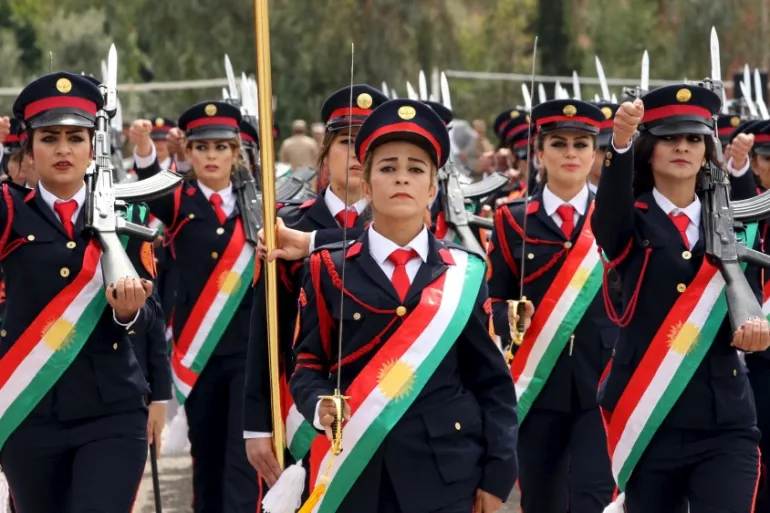
Kurdish forces, the Peshmerga of Iraqi Kurdistan and the YPG and YPJ of northeastern Syria, became the primary ground force that halted and destroyed the Islamic State's caliphate, at a cost the Syrian Democratic Forces put at roughly 11,000 fighters killed, while ISIS inflicted on the Kurdish-speaking Yazidis the most documented genocide of the century. The Rojava administration built from the Syrian collapse, with gender-parity governance across a multi-ethnic territory, has faced Turkish military operations in Afrin in 2018 and northeastern Syria in 2019, the latter launched within days of the American withdrawal announcement and described by Kurdish leaders as betrayal and by Turkey as counterterrorism. The fall of the Assad government in late 2024 and the expansion of HTS have added new uncertainty, while Turkish drone strikes on Kurdish leadership continue across Iraq and Syria.

"The Kurds have no friends but the mountains. Every alliance we have made has ended with our abandonment. Every uprising has ended with our massacre. And still we are here: because the mountains have never betrayed us, and because we have no choice but to continue."

Kurdish Proverb · Widely Cited in the Political Literature
A Regional Encyclopedia

The Levantine Kurdish Community

The Kurdish people are not a single community but a mosaic of regional, linguistic, religious, and political identities distributed across four countries and a global diaspora. The entries below document the principal communities and their specific experiences of state violence, jihadist persecution, and political struggle; this internal diversity is essential to understanding both the vitality of Kurdish culture and the complexity of the Kurdish predicament.

Kurmanji Kurds

Also known as Northern Kurds · Badinani · Kurmanci

RegionTurkey (southeast) · Northern Iraq · Syria · Armenia
Population~15 to 20 million
LanguageKurmanji (Northern Kurdish) · Latin script (Turkey/Syria)
ReligionSunni Islam · Alevism · Yazidism · Christian (minority)

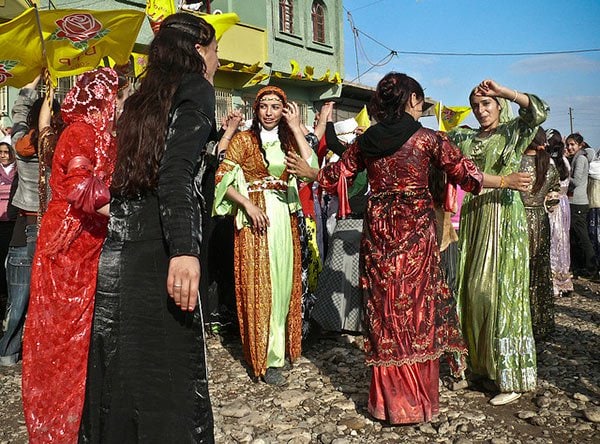
The largest Kurdish linguistic community, spanning the Turkish-Iraqi-Syrian-Armenian borderlands, whose dengbêj story-singers preserve an epic oral tradition and whose modern literature flowered in exile despite the decades-long ban on the language in Turkey, only partially eased after 2003. Kurmanji Kurds in Turkey bear the heaviest burden of state suppression in the Kurdish world: 3,000 to 4,000 villages evacuated and destroyed between 1984 and 1999, roughly three million displaced, tens of thousands imprisoned for political offenses, and the double insecurity of both state violence and the PKK conflict, while communities in Afrin and northeastern Syria have faced Turkish military operations and documented abuse by Turkish-backed armed groups.

Sorani Kurds

Also known as Central Kurds · Sulaimani Kurds · Iraqi Kurds

RegionIraqi Kurdistan (Sulaymaniyah · Erbil) · Iranian Kurdistan
Population~6 to 8 million
LanguageSorani (Central Kurdish) · Arabic script
ReligionSunni Islam (majority) · Sufi orders · Secular

The primary population of the Kurdistan Region of Iraq, the most politically advanced Kurdish autonomous entity in the world, with its own parliament, Peshmerga, and international relationships. The Sorani communities of Sulaymaniyah were the principal victims of the Anfal genocide, whose mass graves are still being recovered, and the memory of Anfal and Halabja defines Iraqi Kurdish political consciousness. The community survived the crushed 1991 uprising, the KDP-PUK civil war of the 1990s, and the 2014 ISIS advance that reached the approaches to Erbil, displaced over one million people into the region, and was halted at the cost of thousands of Peshmerga killed.

Yazidis

Also known as Êzidî · People of the Peacock Angel

RegionSinjar (Shengal) · Iraqi Kurdistan · Syria · Germany
Population~300,000 to 500,000 remaining (globally)
LanguageKurmanji Kurdish · Yazidi dialect
ReligionYazidism (ancient syncretic indigenous religion)

A Kurdish-speaking religious minority whose ancient faith, centered on the Peacock Angel and transmitted orally through hymns, is closed to conversion and organized in endogamous castes; Yazidi communal memory counts seventy-three fermans, documented persecutions, across its history. On August 3, 2014 ISIS overran Sinjar, killing thousands, enslaving roughly 6,400 women and girls under an explicitly theological program, and driving tens of thousands onto Mount Sinjar until a YPG corridor and American airdrops opened an escape. The UN recognized the campaign as genocide; approximately 2,700 women and girls remain missing as of 2025, and reconstruction is hampered by the competing armed presences that now occupy the Yazidi homeland.

Iranian Kurds

Also known as Kurds of Rojhelat · Eastern Kurds

RegionKurdistan Province · Kermanshah · Ilam · West Azerbaijan
Population~8 to 12 million (Iran)
LanguageSorani · Kurmanji · Gorani · Hawrami · Zazaki
ReligionSunni Islam · Yarsanism · Alevism · Shia (minority)

Doubly marginal in the Islamic Republic as non-Persian and predominantly Sunni, Iranian Kurds carry the memory of the 1946 Republic of Mahabad, the only independent Kurdish state in modern history, crushed after eleven months. Khomeini declared jihad against Kurdish organizations in the revolution's first weeks, and the suppression since has been sustained and lethal: disproportionate execution rates documented year after year by Amnesty International, kolbar border couriers shot at a rate of five to ten per month, and missile strikes on exiled KDPI and Komala leadership, including a January 2024 strike on Erbil. The killing of Mahsa (Zhina) Amini in September 2022 ignited Iran's greatest uprising in decades under a slogan, Jin, Jiyan, Azadî, born in Kurdish political culture.

Syrian Kurds & Rojava

Also known as Kurds of Rojava · AANES · West Kurdistan

RegionNortheastern Syria · Afrin · Kobane · Qamishli
Population~2 to 3 million (Syrian Kurds)
LanguageKurmanji · Arabic · Syriac
ReligionSunni Islam · Yazidism · Christianity · Secular

Stripped of citizenship by a 1962 decree that left some 120,000 people stateless, a number past 300,000 by the civil war, Syrian Kurds built the most ambitious experiment in Kurdish self-governance in modern history: the Autonomous Administration of North and East Syria, governed through councils with gender-parity co-presidencies at every tier and defended by the YPG and the all-female YPJ, which became a global symbol of armed resistance to ISIS's ideology of female subjugation. The community has endured the siege of Kobane, the Turkish operations against Afrin and the northeast, and now the uncertainty that follows the Assad government's collapse in late 2024 and the expansion of HTS.

Alevi & Zaza Kurds

Also known as Kızılbaş · Dimili · Dersimli

RegionDersim (Tunceli) · Bingöl · Erzincan · Eastern Turkey
Population~3 to 5 million Zaza speakers, many identifying as Kurdish
LanguageZazaki (Zaza-Gorani branch) · Kurmanji · Turkish
ReligionAlevism (syncretic indigenous tradition)

The Zaza-speaking Alevi communities of the Dersim highlands practice a syncretic tradition centered on the cem ceremony and led by hereditary dede rather than mosque-based imams, and their linguistic and religious distinctiveness has set them apart within both Turkey and the Kurdish movement. The Dersim massacre of 1937 to 1938 killed an estimated 13,000 to 14,000 people by aerial bombardment, execution, and forced marches, acknowledged only partially by Erdoğan in 2011 and never subject to accountability. Alevi Kurds face double discrimination today: as Kurds in a state that suppressed Kurdish identity, and as Alevis whose cemevi prayer houses receive no recognition or funding from a state that finances only Sunni mosques.

Feyli Kurds

Also known as Faili Kurds · Shia Kurds

RegionBaghdad · Khanaqin · Mandali · Diyala · Wasit
Population~200,000 to 500,000 (Iraq)
LanguageLuri-Feyli · Sorani Kurdish · Arabic
ReligionShia Islam (distinctive within a majority-Sunni nation)

Shia-practicing Kurds concentrated in Baghdad and the Diyala borderlands, targeted by the Ba'ath regime simultaneously as Kurds and as Shia: from the 1970s to 1988 an estimated 200,000 to 500,000 Feyli Kurds were stripped of citizenship on the unproven claim of Iranian origin and deported across the border, their property confiscated and their young men separated at the frontier and taken into detention facilities where the vast majority were killed. The mass graves discovered after 2003 allowed some families to recover remains after decades without answers. Post-2003 Iraq has partially restored Feyli citizenship rights, but property restitution and accountability for the disappearances remain incomplete.

The Kurdish Diaspora

Also known as Kurdish Germans · Kurdistani Diaspora · Exile Kurds

DestinationsGermany · Sweden · UK · Netherlands · USA · Australia
Population~2 to 3 million (Europe) · 500,000+ (Americas/Australia)
InstitutionsKurdish Institute Paris · KNK · Kurdish media networks
Political RoleAdvocacy · Documentation · Cultural preservation · Lobbying

Built by successive waves of displacement, guest workers from Turkey joined by refugees of the PKK conflict, Anfal, the 1991 uprising, Iranian persecution, and the Syrian war, the diaspora holds an estimated 800,000 to one million Kurds in Germany alone, a de facto political capital in exile. Institutions like the Kurdish Institute in Paris, founded in 1983, have kept language, publishing, and broadcasting alive where the homeland states sought to extinguish them, and diaspora advocacy has carried Kurdish persecution to international attention. The community also faces documented Turkish intelligence surveillance in Europe, a German PKK ban applied well beyond the party itself, and the protests that followed Sweden's 2023 extradition agreement with Turkey.
Appendix · A Documentation Record

Crimes Against the Kurdish People

This record documents the principal crimes committed against Kurdish communities across the modern period, from the early Turkish Republic's suppression campaigns through the Anfal genocide, the Halabja chemical attack, the Yazidi genocide, and the displacement operations that continue today. Some of these events have been formally recognized as genocide by governments and international bodies. None has produced anything approaching comprehensive accountability, and in most cases the structures of impunity that permitted them remain intact.

01

State Massacre · Cultural Destruction

The Dersim Massacre and Early Republican Suppression

The Turkish Republic inscribed the suppression of Kurdish identity into its foundations. The Sheikh Said rebellion of 1925 was crushed with overwhelming force, its leader and 47 others hanged in public, and the Law on the Maintenance of Order that followed shut Kurdish newspapers, associations, and parties while the state banned the Kurdish language, Kurdish names, and Kurdish dress, renamed towns and villages, and replaced the word Kurdish in official discourse with Mountain Turk. The Dersim massacre of 1937 to 1938, conducted against the Alevi Zaza-speaking communities of Dersim in response to an uprising against forced resettlement, killed an estimated 13,000 to 14,000 people through aerial bombardment, ground executions, and forced marches, with roughly 11,000 survivors relocated to western Turkey. No accountability process has ever been conducted; Erdoğan's partial acknowledgment came only in 2011.

02

War Crime · Genocide

The Halabja Chemical Weapons Attack, March 1988

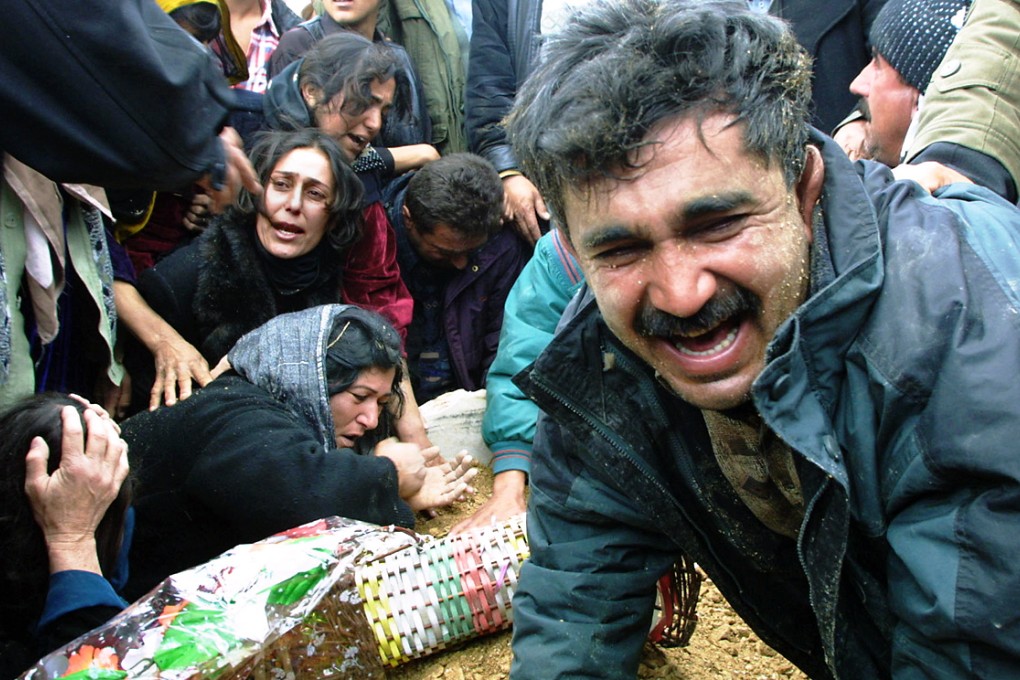
On March 16 to 17, 1988, Iraqi aircraft dropped mustard gas and nerve agents including sarin, tabun, and VX on the Kurdish city of Halabja, killing between 3,200 and 5,000 civilians immediately and injuring tens of thousands more, the largest chemical weapons attack on a civilian population in history; the victims were found in the positions of sudden death, mothers clutching children, families collapsed in doorways. Declassified US Defense Intelligence Agency documents later revealed that American intelligence agencies knew of Iraqi chemical weapons use against Kurdish civilians while the United States continued intelligence support to the Iraqi military and initially attributed the attack to Iran. Research published since 2010 has documented cancer rates in Halabja at roughly twelve times the national average, a continuing toll among people born after the attack ended.

03

Forced Displacement · Cultural Destruction

Turkish Forced Village Evacuations and Displacement

Between 1984 and 1999, Turkish security forces evacuated and destroyed an estimated 3,000 to 4,000 Kurdish villages across the southeast, forcibly displacing two to three million civilians: villages burned within hours of evacuation orders, livestock killed, food stores destroyed, and populations marched to district centers in winter conditions. The operations drove rural Kurdish society into urban shantytowns and western Turkish cities, and the European Commission on Human Rights received over 10,000 individual applications, the largest single-country caseload in its history at the time, with the European Court ruling against Turkey in hundreds of cases. After the collapse of the 2013 to 2015 peace process, urban operations in Cizre, Sur, Nusaybin, and Silopi again killed civilians and displaced tens of thousands, with UN human rights officials documenting violations of international humanitarian law.

04

Political Persecution · Imprisonment

Mass Imprisonment of Kurdish Political Leaders and Activists

Broadly drafted anti-terrorism laws have criminalized Kurdish political life across Turkey, Iran, and Syria. In Turkey, thousands of HDP members have been prosecuted, dozens of elected Kurdish mayors removed and replaced with government-appointed trustees, journalists charged with terrorism for reporting on the conflict, and academics imprisoned for signing a peace petition; former HDP co-leader Selahattin Demirtaş, who won 10% of the presidential vote in 2014, has been imprisoned since November 2016 despite two European Court of Human Rights rulings ordering his release, and a pending Constitutional Court case could ban the party outright, disenfranchising the roughly six million people who voted for it. Abdullah Öcalan has been held in solitary confinement on İmralı Island since 1999, in conditions the European Committee for the Prevention of Torture has described as inhuman, with lawyers and family barred for years at a time.

05

Genocide · Chemical Warfare · Crimes Against Humanity

The Anfal Genocide, 1986 to 1989

Named for the eighth chapter of the Quran, the Anfal campaign was the Ba'ath government's systematic operation against the Kurds of northern Iraq under Ali Hassan al-Majid, combining eight sequential military sweeps with chemical attacks on more than forty villages, mass execution of captured males, the transfer of survivors to the Topzawa and Dibs camps, and the bulldozing of roughly 4,000 villages to prevent return. Its documentation is exceptional: Kurdish forces captured some 14 tonnes of government records during the 1991 uprising, and Human Rights Watch's 1992 study Genocide in Iraq established from the perpetrators' own documents the intent to destroy the Kurdish people as such. Al-Majid was convicted and executed in 2010, the only high-level conviction; Saddam Hussein was tried and executed for a different crime, so the genocide's primary architect was never formally judged for it.

50–182K
Kurdish civilians killed, a range reflecting mass grave uncertainty
~4,000
Kurdish villages destroyed during the Anfal campaign
~1M
Kurds internally displaced within Iraq during Anfal
40+
Villages attacked with chemical weapons during the campaign
06

Genocide · Sexual Slavery · Crimes Against Humanity

The ISIS Yazidi Genocide, August 2014

On August 3, 2014, ISIS overran the Sinjar region following the withdrawal of Peshmerga forces, separating the Yazidi population by sex and age: men and older boys were executed at sites including Kocho, where the entire male population was killed; younger boys were taken for forced recruitment; and roughly 6,400 women and girls were sold through an institutionalized slave-market system that ISIS documented in its own theological publications and financial records, with prices set by age. Tens of thousands fled to the summit of Mount Sinjar and faced death from exposure until a YPG corridor from Syria and American airdrops opened an escape. The UN, the United States, the European Parliament, and multiple governments have formally recognized the genocide; Nadia Murad shared the 2018 Nobel Peace Prize for her testimony, yet most perpetrators have never been prosecuted for the crime.

~5,000
Yazidis killed in the initial ISIS assault on Sinjar
~6,400
Yazidi women and girls taken into sexual slavery
~2,700
Yazidi women and girls still missing as of 2025
80+
Mass graves discovered in Sinjar containing Yazidi victims
07

Forced Displacement · War Crimes · Civilian Targeting

Turkish Military Operations Against Kurdish Communities in Syria

Operations Euphrates Shield, Olive Branch, and Peace Spring displaced hundreds of thousands of Kurdish civilians and dismantled Rojava's self-governance in the targeted areas, with Human Rights Watch and Amnesty International documenting looting, kidnapping, arbitrary detention, and killings by Turkish-backed Syrian National Army factions, including the killing of politician Hevrin Khalaf, dragged from her car and shot in an incident recorded on video. Afrin's displaced Kurdish population has not been permitted to return, and the demographic transformation of the region has been documented by multiple organizations. The 2019 operation began within days of the American withdrawal announcement, described by Kurdish leaders as the betrayal of allies who had buried 11,000 fighters defeating ISIS and by the Turkish government as legitimate counterterrorism; drone strikes on Kurdish leadership continue across Iraq and Syria.

~300K
Kurds displaced from Afrin following Operation Olive Branch, 2018
~180K
Civilians displaced in the first weeks of Operation Peace Spring, 2019
~11,000
SDF fighters, predominantly Kurdish, killed fighting ISIS
72 hrs
Between the US withdrawal announcement and the operation's launch
Contribute

Affected by the Events
in This Dossier?

If you or your community have been affected by the events described in this report, we invite you to contribute to our documentation record. Submission is confidential by default.

Site Footer | International Freedom Coalition