Site Navigation | International Freedom Coalition
Nigerians | International Freedom Coalition
West Africa Desk · Community Dossier

Nigerian Peoples

Case Undergoing Active Documentation

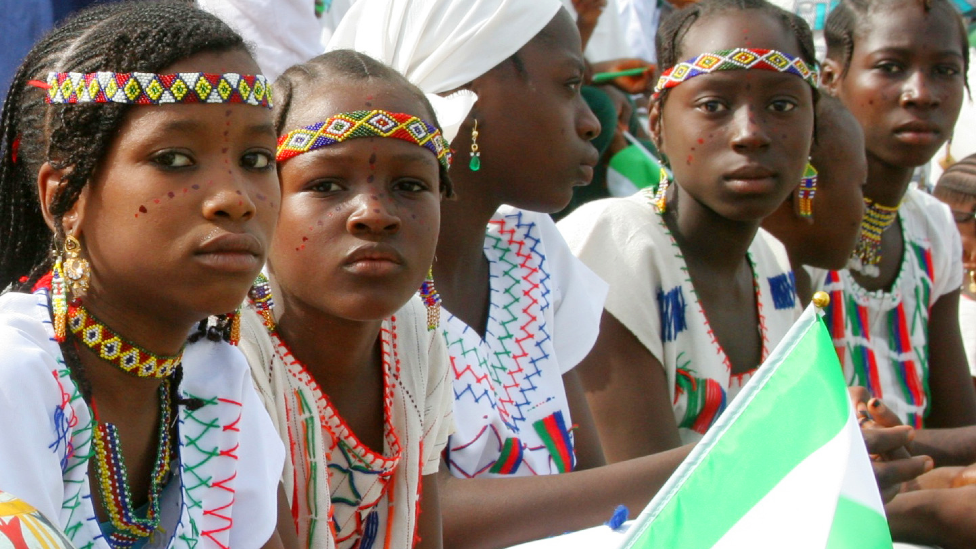
Nigerians are among the most internally diverse national populations on earth: over 250 distinct ethnic groups speaking more than 500 languages, anchored by the Hausa-Fulani of the north, the Yoruba of the southwest, and the Igbo of the southeast, alongside the Ijaw, Kanuri, Tiv, Efik, Urhobo, and dozens more. Since 2009 this nation of over 220 million, Muslim and Christian, northern and southern, has endured one of the world's most devastating jihadist insurgencies: a campaign of mass murder, mass abduction, and systematic cultural destruction whose reverberations define Nigerian life.

West Africa Desk · Area of Documentation

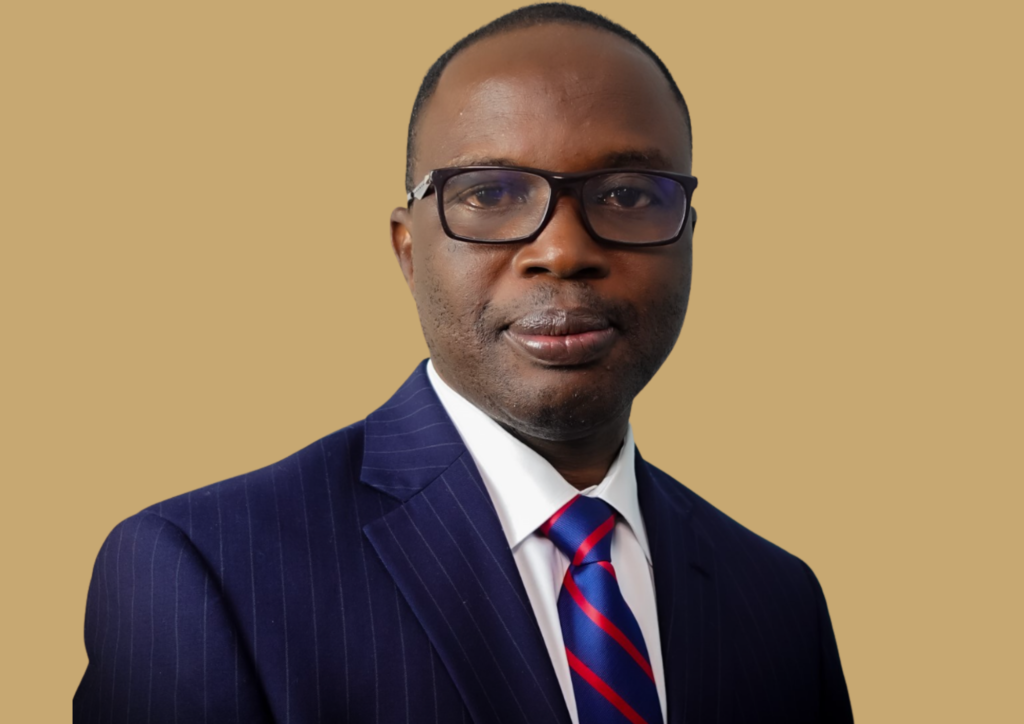
Stephen Enada, Dossier Leader
Dossier Leader

Stephen Enada

Executive President & Co-Founder, ICON

Stephen S. Enada promotes the vision of the International Committee on Nigeria (ICON) as Executive President and Co-Founder. He has over 25 years' experience in asset-based community and international development and has led many innovative programs in Africa, especially Nigeria. He is an alum of the US State Department's International Visitor Leadership Program (IVLP) on religious freedom and social initiative, and a fellow at the Equator Peace Academy of Uganda Martyrs University. Stephen is a director of International Theme Park, a Nigerian-based attraction and amusement enterprise, and leads the real estate investment portfolio of JITA Investments Group LLC, based in Georgia.

History, Identity & Human Rights

Region History

The record below traces nine millennia of civilization, the colonial rupture that created modern Nigeria, and the conditions that produced the deadliest jihadist insurgency of the twenty-first century.

I · Foundations

Nine Millennia of Civilization

The territory that is today Nigeria has hosted complex civilizations for millennia: the Nok culture of the Jos Plateau, whose terracottas of roughly 1000 BCE to 300 CE are the oldest known figurative art in sub-Saharan Africa; the Kanem-Bornu Empire, which dominated the Lake Chad basin for over a thousand years with a scholarly Islamic culture centered on Maiduguri; the Ife civilization and the Kingdom of Benin, whose artwork carries world-historical significance; and the Oyo Empire, whose cavalry commanded regional trade from the seventeenth century. The Fulani Jihad of 1804 to 1808 under Usman dan Fodio established the Sokoto Caliphate, a tradition of Sufi scholarship and structured governance whose memory Boko Haram would later invoke and grotesquely distort while massacring the descendants of its adherents.

II · Colonial Rupture

Amalgamation to Democracy

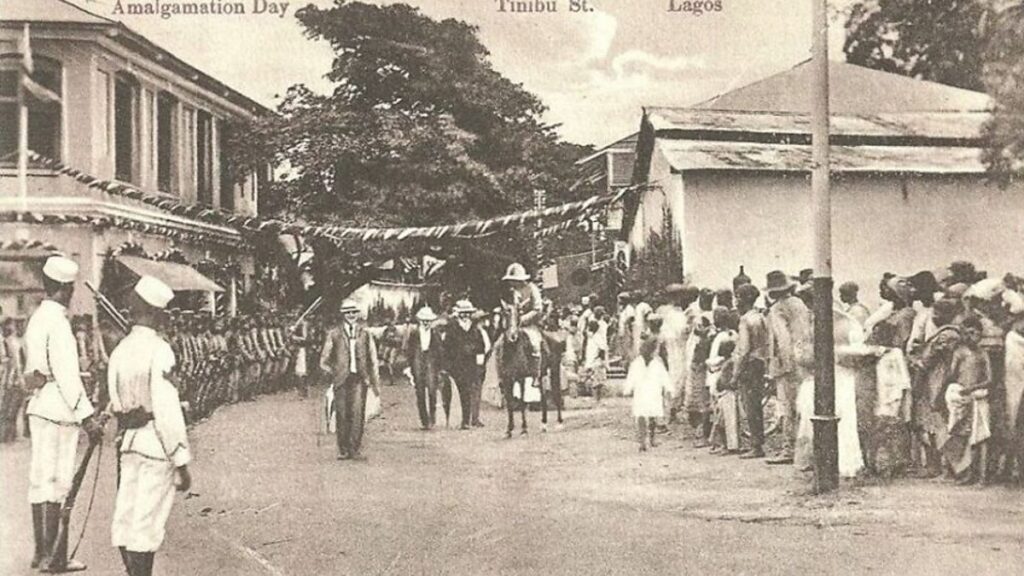
Frederick Lugard's 1914 amalgamation of the Northern and Southern Protectorates created by administrative fiat a single political unit encompassing hundreds of distinct peoples with no prior unified governance. Independence arrived on October 1, 1960, and the early decades brought coups, counter-coups, and the Nigeria-Biafra war of 1967 to 1970. The return to civilian democracy in 1999 opened a new chapter, and coincided with the emergence, in the impoverished margins of Maiduguri, of the radical Salafi preaching that would within a decade produce Boko Haram and one of the twenty-first century's most catastrophic campaigns of mass violence.

III · The Jihadist Threat

The Roots of the Insurgency

Boko Haram did not emerge from a vacuum. Its rise was enabled by the structural poverty and political neglect of the northeast, by Saudi-funded Salafi missionary networks that from the 1970s onward gradually displaced the tolerant Sufi-inflected Islam of the Sokoto tradition, and by the charisma of Mohammed Yusuf, whose preaching at Maiduguri's Ibn Taimiyya mosque drew thousands of young men with a totalizing message: that the corrupt secular state was the enemy of God, that Western education was forbidden, and that true Muslims must separate from the system entirely. When that separatism curdled into violence, it produced a movement that has murdered Muslims and Christians alike with equal ideological conviction.

"The trouble with Nigeria is simply and squarely a failure of leadership. There is nothing basically wrong with the Nigerian character. There is nothing wrong with the Nigerian land or climate or water or air or anything else."

Chinua Achebe · The Trouble with Nigeria, 1983
People of Nigeria

The Communities of Nigeria

Nigeria's extraordinary diversity, over 250 groups speaking over 500 languages, is both its greatest cultural wealth and the central challenge of its political life. The entries below document the principal communities with attention to their specific experiences of the jihadist violence that has reshaped the north and Middle Belt since 2009, violence that has not fallen evenly but has struck specific peoples, in specific places, with devastating force.

Kanuri

Also known as Borno people · Kanembu · Yerwa

RegionBorno State · Lake Chad Basin · Niger · Chad
Population~5 to 6 million (Nigeria)
LanguageKanuri · Arabic · Hausa
ReligionIslam (Sunni, deeply observant)

Heirs of the Kanem-Bornu Empire, one of Africa's longest-lasting states, with Maiduguri as their capital, the Kanuri have suffered more comprehensively from the insurgency founded in their homeland than perhaps any other community: mosques bombed at Friday prayers, markets struck by suicide bombers, farms abandoned, schools shuttered for years, scholars assassinated, and over one million people displaced. The Sheikh of Borno and the Kanuri religious establishment, among Boko Haram's most consistent critics, have been targeted for assassination in return; the Kanuri are overwhelmingly the insurgency's victims rather than its perpetrators.

Hausa-Fulani

Also known as Hausa · Fulani · Fulbe · Fula · Peul

RegionNorthern Nigeria · Niger · Cameroon · Sahel
Population~70 to 80 million (combined)
LanguageHausa (lingua franca) · Fula · Arabic
ReligionIslam (predominantly Sunni · Sufi orders)

The largest ethnic bloc in Nigeria and anchor of the Muslim north, shaped by the Sokoto Caliphate's tradition of Sufi scholarship and civic governance and by the great trading cities of Kano, Katsina, Zaria, and Sokoto. Boko Haram regards this mainstream tradition, democratic participation, and the Sufi orders as apostasy: it bombed the Kano Grand Mosque at Friday prayers in 2014, killing over 120 worshippers, and assassinated dozens of scholars, leaving northern Muslim civilians caught between jihadist violence and an often indiscriminate state security response.

Middle Belt Christians

Also known as Berom · Tiv · Atyap · Mwaghavul · Bajju · Gbagyi

RegionPlateau · Kaduna · Benue · Taraba · Adamawa
Population~15 to 20 million (combined)
LanguageBerom · Tiv · Hausa · English · dozens of others
ReligionChristianity · Traditional Religion

Scores of distinct peoples, the Berom of Plateau, the Tiv of Benue, and the Atyap, Bajju, Gbagyi, and Jaba of southern Kaduna, occupying the corridor between north and south. Their communities have endured churches bombed, pastors assassinated, villages burned, grain stores destroyed, and wells poisoned in campaigns that Amnesty International and Human Rights Watch have documented as ethnic and religious cleansing, and that Open Doors cites in consistently ranking Nigeria among the worst countries in the world for Christian persecution.

Northeastern Minority Peoples

Also known as Chibok · Marghi · Bura · Mandara · Higgi · Shuwa Arab

RegionSouthern Borno · Adamawa · Yobe · Cameroon border
Population~3 to 5 million (combined)
LanguageMarghi · Bura · Chibok · Kanuri · Hausa
ReligionChristianity · Islam · Traditional Religion

The Marghi, Bura, Higgi, Mandara, Chibok, Babur, and dozens of smaller peoples of the Cameroon border and Yobe basin sit precisely where the insurgency has operated most freely, and have been devastated with the least international attention and the least state protection. The Chibok community, which built one of the region's few functional girls' secondary schools, lost 276 daughters for it. These peoples organized some of the most effective local resistance through the Civilian Joint Task Force, whose volunteers and families have been targeted for revenge killings with minimal national recognition.

Nigerian Christians

Also known as CAN membership · Southern Christians · Church communities

RegionSouth Nigeria · Middle Belt · Urban North
Population~95 to 100 million (approx. 46% of Nigeria)
LanguageEnglish · Yoruba · Igbo · Tiv · Efik · others
ReligionPentecostal · Anglican · Catholic · Baptist · Methodist

One of the world's largest and most dynamic Christian communities, roughly 46 percent of Nigeria, whose worship gatherings, churches, clergy, and Christmas and Easter assemblies Boko Haram has systematically targeted since 2010. The Christian Association of Nigeria has documented thousands of church burnings and pastoral assassinations, the federal response has been characterized by the CAN, the Vatican, and human rights organizations as systematically inadequate, and congregations across the north now worship behind armed guards, vehicle checks, and locked gates.

Yoruba

Also known as Ọmọ Odùduwà · Anagó (in diaspora)

RegionSouthwest Nigeria · Benin · Togo · Global diaspora
Population~40 to 50 million (Nigeria)
LanguageYoruba (tonal, with regional dialects)
ReligionChristianity · Islam · Yoruba Traditional Religion

One of Africa's largest and most culturally influential peoples, religiously plural, roughly half Christian with a substantial Muslim minority rooted in the Tijaniyya and Qadiriyya Sufi brotherhoods, whose scholars have been among the insurgency's most articulate Islamic critics. The southwest has sat outside the primary theatre, but the 2011 bombing of the UN headquarters in Abuja announced national ambitions, ISWAP has articulated southward expansion toward the oil states, and deteriorating northern security forced Yoruba traders to contract their commercial presence there.

Igbo

Also known as Ibo · Ndi Igbo

RegionSoutheast Nigeria · Anambra · Imo · Enugu · Abia
Population~35 to 45 million (Nigeria)
LanguageIgbo (tonal, many dialects) · English
ReligionChristianity (predominantly) · Traditional Religion

Predominantly Christian and commercially dynamic, Igbo traders historically dispersed deep into the north, building networks in Kano, Kaduna, and Maiduguri that integrated Nigeria's economies across regions. Boko Haram's market bombings, aimed at the most economically integrated public spaces of northern cities, killed Igbo traders alongside northern Muslim civilians, and the security collapse forced a contraction of decades-old Igbo commercial presence that impoverished both the traders who lost their livelihoods and the northern communities that lost their services and employment.

Ijaw

Also known as Izon · Ịzọn · Niger Delta peoples

RegionNiger Delta · Bayelsa · Rivers · Delta States
Population~15 to 18 million (Nigeria)
LanguageIzon (with regional dialects) · English
ReligionChristianity · Traditional Religion

The fourth-largest ethnic group and dominant people of the Niger Delta, with archaeological evidence of some 7,000 years of continuous habitation. Outside the insurgency's primary theatre, the Ijaw nonetheless face its stated future: ISWAP propaganda frames the oil-producing south as an eventual theatre and Nigeria's oil wealth as a resource for the jihadist project, the Navy has acknowledged the infiltration risk of the Delta's waterways, and the insurgency's fiscal drain reduces the developmental investment reaching the very states that generate federal revenue.
Appendix · Documentation of the Jihadist Campaign

Crimes Against the Nigerian Peoples

This record documents the jihadist campaign of mass violence directed against Nigerian peoples, Muslim and Christian, northern and southern, since the outbreak of the Boko Haram insurgency in 2009: a campaign of mass murder, mass abduction, systematic sexual violence, and civilizational destruction whose scale has been chronically underreported and inadequately addressed. Entries draw on documentation by Amnesty International, Human Rights Watch, the UN Office for the Coordination of Humanitarian Affairs, and survivor testimony.

01

Jihadist Origins · Early Violence

The Rise of Boko Haram and the 2009 Uprising

Mohammed Yusuf's movement launched a coordinated uprising across Borno, Yobe, Kano, Katsina, and Bauchi States in July 2009, killing approximately 800 people over five days. In the suppression that followed, Yusuf was captured and extrajudicially executed in police custody, on video, handing the movement a martyrdom narrative of extraordinary mobilizing power. His successor, Abubakar Shekau, rebuilt Boko Haram in the Sambisa Forest and turned to suicide bombing, mass abduction, and territorial conquest, opening with a 2010 to 2011 assassination campaign against politicians, police officers, critical Islamic scholars, and Christian clergy.

02

Anti-Christian Jihadist Terrorism

The Systematic Bombing of Churches and Christian Worship

From 2010 through 2014, Boko Haram bombed churches, Christmas services, Easter gatherings, and Sunday worship in one of the most systematic anti-Christian campaigns in the contemporary world, deliberately striking the holiest days for maximum casualties and terror. On Christmas Day 2011 a vehicle bomb at St. Theresa's Catholic Church in Madalla, near Abuja, killed 44 worshippers as they left Mass, with three more churches bombed the same day; the sustained Kaduna bombing campaign of 2012 to 2014 killed hundreds across denominations, calibrated to trigger the intercommunal reprisals that jihadist polarization strategy explicitly seeks.

03

Anti-Muslim Jihadist Violence

Mass Killings of Muslim Civilians, Scholars, and Worshippers

Frequently obscured in coverage that frames the conflict as Muslim against Christian, Boko Haram has killed more Muslims than Christians over the insurgency's duration, holding that Muslims who vote, attend government schools, or follow mainstream scholars are apostates deserving death. Over a dozen prominent sheikhs and imams were assassinated between 2010 and 2015 for condemning the movement, and in November 2014 a suicide bomber at Kano's Grand Mosque killed over 120 worshippers at Friday prayer, one of the insurgency's single deadliest attacks, directed at the mainstream Islam that is its greatest theological rival.

04

Mass Abduction · Sexual Slavery · Child Soldiering

The Systematic Abduction of Women, Girls, and Boys

Amnesty International documented over 2,000 women and girls abducted between 2009 and 2015 alone, a fraction of the true total: women and girls taken as forced brides, laborers, and suicide bombers, and boys taken for forced fighting. The abduction of 276 schoolgirls from Chibok on April 14, 2014 generated the global #BringBackOurGirls campaign, and dozens remain unaccounted for more than a decade later; in February 2014 an estimated 500 women and girls were taken from Konduga with virtually no international coverage. Survivors who return frequently face community stigma layered atop their captivity.

05

Territorial Conquest · Genocide · Crimes Against Humanity

The Boko Haram Caliphate: Mass Killing and Civilizational Destruction

At its 2014 to 2015 peak, Boko Haram controlled some 20,000 square kilometers of the northeast, roughly the size of Belgium, declared a caliphate, and conducted mass executions of men deemed to have cooperated with the state, enslaving captured women and eliminating every institution of Nigerian governance. In the Baga massacre of January 2015, fighters killed an estimated 2,000 civilians across the town and 16 surrounding villages in four days, the insurgency's deadliest single event, which drew a fraction of the international attention given the Paris attacks of the same week. Over 900 schools were burned or closed in a deliberate program against education itself, and the August 2011 suicide bombing of the UN headquarters in Abuja, killing 21, announced ambitions far beyond the northeast.

350,000+
Deaths attributed to the conflict, direct and indirect
~2.4M
Internally displaced persons in northeast Nigeria
900+
Schools destroyed or closed across the three northeastern states
1.5M+
Children out of school at the peak of the territorial insurgency
06

Ongoing Jihadist Campaign · War Crimes

ISWAP and the Continued Insurgency, 2016 to Present

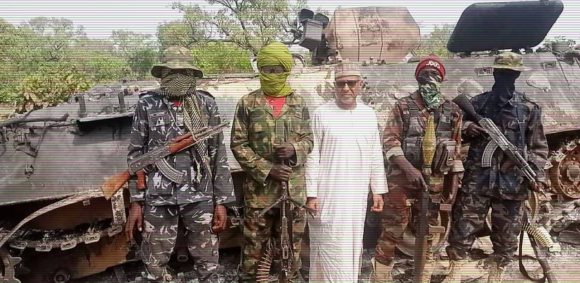
The Islamic State West Africa Province split from Boko Haram in 2016, presenting a tactically calculated restraint toward Muslim civilians to build support as an alternative to the Nigerian state, and after Shekau's death in June 2021 absorbed much of the remaining movement as the dominant jihadist force in the Lake Chad basin. Its ongoing campaign includes videotaped mass executions of captured soldiers, assassinations of traditional rulers who cooperate with the state, market bombings, and continued abduction, including 344 schoolboys taken at Kankara in December 2020. Over two million people remain displaced, farmers cannot safely return to their land, and ISWAP's stated ambition of southward expansion toward the oil states has reshaped the national security calculus.

276
Chibok schoolgirls abducted on April 14, 2014
468+
Suicide bombings carried out by Boko Haram and ISWAP, 2011 to 2020
56%
Of suicide bombers used by Boko Haram were women or girls
4th
Deadliest terrorist organization globally (Global Terrorism Index, 2015)
Contribute

Affected by the Events
in This Dossier?

If you or your community have been affected by the events described in this report, we invite you to contribute to our documentation record. Submission is confidential by default.

Site Footer | International Freedom Coalition