Site Navigation | International Freedom Coalition
South Sudanese | International Freedom Coalition
Upper Nile Desk · Community Dossier

South Sudanese Peoples

Case Undergoing Active Documentation

For decades, the people of what is now South Sudan have endured layered systems of violence: armed conflict, famine, displacement, and coerced identity transformation. Among the least examined drivers of this suffering is the sustained ideological pressure rooted in Khartoum's long effort to reshape the demographic, cultural, and religious landscape of the south, a pressure whose historical form and contemporary echoes have shaped insecurity for the Dinka, Nuer, Shilluk, Azande, and dozens of other communities.

Upper Nile Desk · Area of Documentation

Francis Bok, Dossier Leader
Dossier Leader

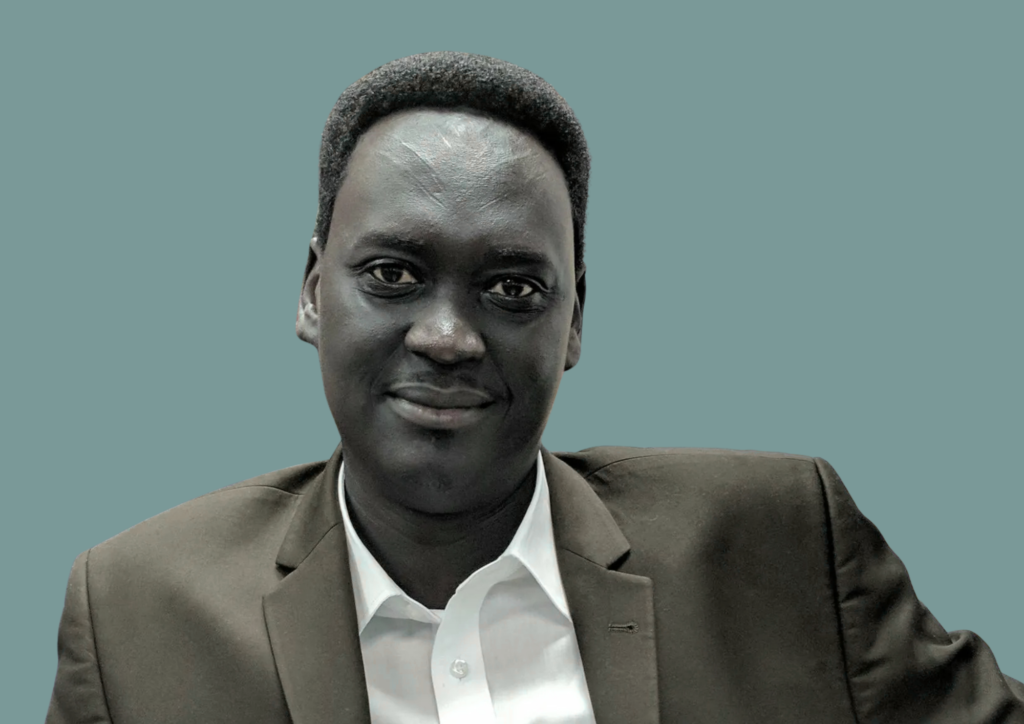
Francis Bok

Author, Escape from Slavery · Anti-Slavery Advocate

Francis Bok was born into a Catholic Dinka family in southern Sudan and was enslaved at age seven during a 1986 militia raid. Held for ten years during the Second Sudanese Civil War, he was forced to herd livestock and pressured to convert before escaping at seventeen. After reaching the United States as a refugee, Bok became a leading anti-slavery advocate, testified before the U.S. Senate, met with President George W. Bush, and authored Escape from Slavery. He now lives in South Sudan and continues his human rights work.

Contributing Editors

Contributing Editors are members of the communities represented in each dossier who work alongside Dossier Leaders to develop, verify, and refine documentation. They bring lived experience, cultural fluency, and local knowledge to the research process, helping ensure that testimony is accurately contextualized and responsibly presented, and that IFC documentation remains both community-grounded and internationally credible.

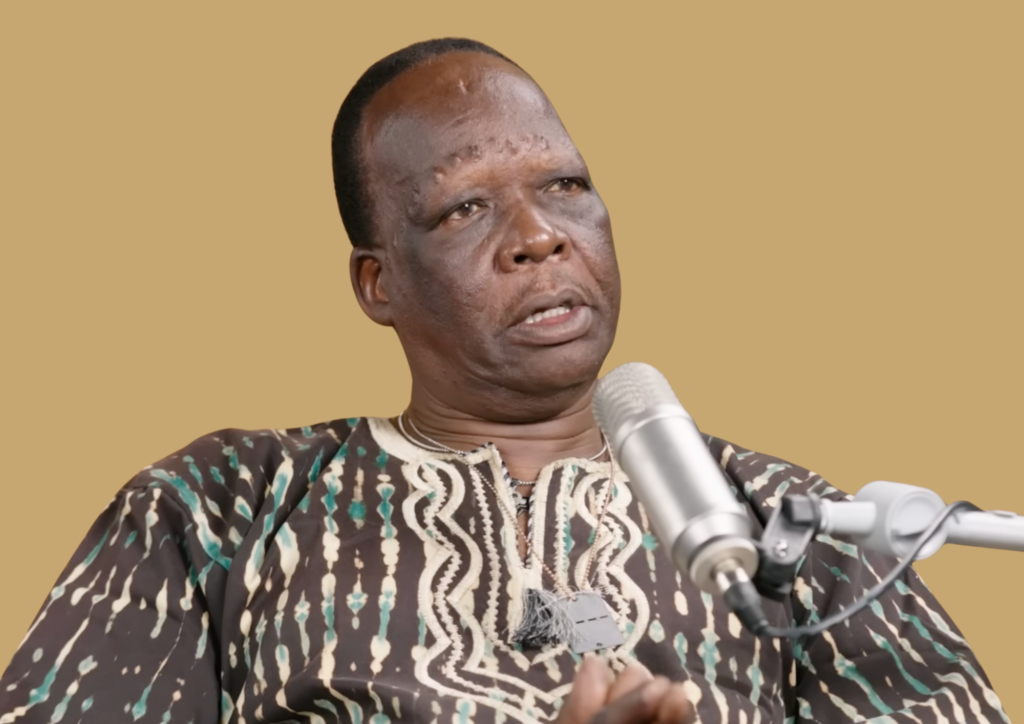
Simon Aban Deng

Contributing Editor · Human Rights Activist

Simon Aban Deng is a South Sudanese-American human rights activist and former child slave, abducted at age nine during Sudan's civil war and enslaved for three and a half years before escaping. Now based in the United States, he speaks internationally about slavery in Sudan, South Sudanese self-determination, and human rights. He has worked with anti-slavery organizations, organized protests against the Khartoum regime, and continues to advocate for victims of jihadist violence and religious persecution.

Simon Aban Deng, Contributing Editor
Conflict Analysis & Human Rights

Region History

The record below traces Khartoum's ideological war on the south, the displacement it engineered, and the layered conflicts that have followed South Sudan into independence.

I · Foundations

The Islamist State's Southern Project

The roots of ideologically driven violence trace to the National Islamic Front government consolidated in Khartoum after the 1989 coup led by Omar al-Bashir and shaped by Hassan al-Turabi: a comprehensive project to extend the legal and religious norms of political Islam into territories whose populations were predominantly Christian or followers of indigenous traditions. From the early 1990s the state formally characterized its campaigns in the south as religiously obligated warfare, transforming a separatist conflict into a holy war. In garrison towns, civilians faced Islamic dress codes, Quranic education, and Sharia courts under the September Laws imposed in 1983, while Murahileen militias raided Dinka communities in Bahr el Ghazal, capturing tens of thousands of women and children who were sold into slavery and forced conversion as sanctioned war booty.

II · Displacement

Demographic Engineering and Flight

By 2004 an estimated four million southerners were internally displaced and 500,000 were refugees, driven out by aerial bombardment, ground raids, destroyed food stores, and blocked aid. Oil fields in Upper Nile and Unity States became flash points where ideology and economics merged: the government systematically depopulated oil-producing areas through scorched-earth campaigns documented by Christian Solidarity International and confirmed by the United Nations. Southerners displaced to Khartoum's squatter settlements faced repeated demolitions tied to preserving the Islamic character of the capital, and Human Rights Watch documented children removed into Quranic boarding institutions run by the NIF's da'wah networks, with contact with their families restricted or severed.

III · Independence & After

The CPA, the 2013 War, and Today

The Comprehensive Peace Agreement of January 2005 ended the formal war and led to the 2011 referendum in which roughly 99 percent voted for separation, though Abyei, Blue Nile, and the Nuba Mountains were left unresolved and Khartoum's proxy networks persisted. The civil war that erupted in December 2013 between forces aligned with Salva Kiir and Riek Machar layered new violence over old wounds: customary leadership had been killed or exiled, young men militarized, and Khartoum had deliberately armed rival southern factions. Salafi missionary networks and Al-Shabaab-linked recruitment now probe the borderlands, where analysts warn the structural preconditions for militant recruitment are present. The Islamist project failed; South Sudan is independent and its peoples kept their identities, languages, and spiritual traditions, at a cost measured in millions displaced and tens of thousands enslaved. As of 2025, roughly 2.2 million remain internally displaced and 2.3 million are refugees.

"The Khartoum government did not simply fight a military war in the south. It pursued a civilization war: one in which the goal was to remake who southerners were allowed to be, what language they prayed in, and what legal framework governed their lives."

Testimony recorded by Human Rights Watch · Juba, 2004
Advocacy Imperatives

Historical Accountability

The Hybrid Court for South Sudan must have the mandate and capacity to reach civil war era crimes, beyond post-2013 violence alone.

Conditional Engagement with Sudan

International support tied to genuine accountability for civil war era crimes in the south and the return of abducted individuals.

Preventive Counter-Radicalization

Dedicated investment where youth unemployment, displacement trauma, and absent state services invite militant recruitment.

Cultural Rehabilitation

Explicit programming support for customary governance, conflict resolution, and cultural transmission frameworks.

Communities as Rights-Holders

Dinka, Nuer, Shilluk, Azande, Acholi, and other voices centered in advocacy and documentation as evidence rather than background.

Religious Freedom as Security

Protection of indigenous religious practice from material coercion, monitored as a security concern as much as a civil liberty.

Regional Funding Oversight

IGAD and African Union frameworks to monitor external funding to religious organizations in conflict-affected areas.

People of South Sudan

The Communities of South Sudan

South Sudan is home to more than 60 distinct ethnic groups speaking languages drawn from three of Africa's four major language families, each carrying its own governance traditions, spiritual frameworks, and relationship to the land. The entries below sketch the primary communities whose rights have been violated by the conflicts documented in this report. Population estimates are approximate, drawn from pre-2020 census projections; displacement has significantly altered the distribution of most groups.

Dinka

Also known as Jieng

LanguageNilo-Saharan · Eastern Sudanic · Nilotic
Population4.5 to 6 million
StatesBahr el Ghazal, Jonglei, Upper Nile, Unity
ReligionIndigenous (Nhialic) · Christianity

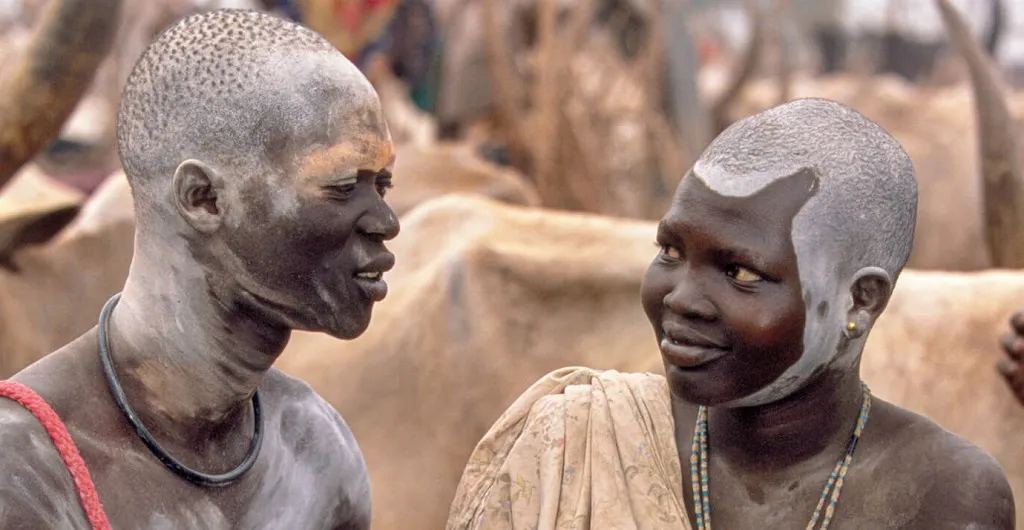
The largest ethnic group in South Sudan, an estimated 35 to 40% of the population, organized into more than 25 territorial sections with cattle at the center of ceremonial, economic, and spiritual life under chiefs (beny) and spear masters (beny bith). Dinka communities in Bahr el Ghazal bore the brunt of Murahileen slave raids, with settlements burned and tens of thousands abducted; the Ngok Dinka of Abyei remain inside an unresolved territorial dispute, and Jonglei saw severe intercommunal violence after independence.

Nuer

Also known as Naath

LanguageNilo-Saharan · Eastern Sudanic · Nilotic
Population2 to 3 million
StatesUnity, Upper Nile, Jonglei
ReligionIndigenous (Kuoth) · Christianity

Cattle-keeping agropastoralists of the Sudd flood plains, organized in segmentary lineages with feuds historically mediated by the leopard-skin chief (kuaar muon). Their territory overlaps the oil regions, and Nuer communities in Unity State were systematically depopulated by the Sudanese government and allied militias clearing extraction areas. The 1991 Bor Massacre by Khartoum-backed Nuer forces deepened Dinka and Nuer tensions, and Nuer civilians were the targets of mass killings in Juba in December 2013.

Shilluk

Also known as Chollo

LanguageNilo-Saharan · Eastern Sudanic · Nilotic
Population800,000 to 1.2 million
StatesUpper Nile (west bank of the Nile)
ReligionIndigenous · Christianity

Uniquely among Nilotic peoples, the Shilluk developed a centralized monarchy, the Reth, regarded as an earthly embodiment of the founding ancestor Nyikang and maintained through elaborate ceremony from the historic capital at Fashoda. Their concentration along a single Nile corridor has made them politically coherent but militarily vulnerable: Malakal changed hands dozens of times between 2013 and 2018 and was nearly destroyed, and UN investigators documented the systematic displacement of Shilluk communities from the west bank.

Azande

Also known as Zande · A-Zande

LanguageNiger-Congo · Ubangian
Population700,000 to 1 million (South Sudan)
StatesWestern Equatoria
ReligionChristianity · Indigenous

A sedentary agricultural people whose historical kingdom under the Avongara royal clan extended into today's DRC and Central African Republic, with a rich material culture and a structured belief system documented in the ethnographic record around the concept of mangu and the use of oracles. Western Equatoria became a primary zone of LRA activity from the mid-2000s, subjecting Azande communities to abduction, massacre, and displacement, and government Mathiang Anyoor forces were accused of widespread atrocities during the post-2013 war.

Bari

Also known as Karo · Bari-speaking peoples

LanguageNilo-Saharan · Eastern Sudanic · Central Sudanic
Population400,000 to 600,000
StatesCentral Equatoria (Juba region)
ReligionChristianity · Indigenous

The indigenous inhabitants of the Juba region, a cluster embracing the Kakwa, Kuku, Mundari, Nyangwara, and Pojulu. Primarily cultivators on fertile Nile lands, the Bari have lost significant ancestral acreage to urban encroachment, military installations, and allocation to settlers as the capital expanded, a process community leaders describe as internal dispossession. During the 2016 Juba fighting, Bari and other Central Equatoria communities suffered looting, sexual violence, and civilian casualties.

Murle

Also known as Beir · Mourle

LanguageNilo-Saharan · Surmic
Population180,000 to 300,000
StatesJonglei (Pibor region)
ReligionIndigenous

A small, resilient community of the remote Pibor area, speaking a Surmic language unrelated to their Nilotic neighbors and combining agropastoralism with hunting. Often portrayed in political discourse as aggressors, a framing humanitarian researchers criticize as reductive, the Murle have themselves faced organized violence, state neglect, and displacement, including a 2011 attack on Pibor town that displaced tens of thousands and was described by the UN as a potential atrocity; the Cobra Faction militia emerged from these grievances.

Acholi

Also known as Acoli

LanguageNilo-Saharan · Eastern Sudanic · Nilotic (Luo)
Population45,000 to 80,000 (South Sudan)
StatesEastern Equatoria (Magwi region)
ReligionChristianity · Indigenous

Closely related to the far larger Acholi community of northern Uganda, sharing language, clan systems, and strong Catholic institutional frameworks across the border. Cultivators of Eastern Equatoria's fertile soils, they endured sustained LRA attacks in the 2000s, with child abductions, killings of community leaders, and burned villages documented by human rights organizations, and were later caught between armed actors during government counterinsurgency operations in the post-2013 war.

Toposa

Also known as Taposa · Topotha

LanguageNilo-Saharan · Nilotic (Karamojong cluster)
Population300,000 to 500,000
StatesEastern Equatoria (Kapoeta region)
ReligionIndigenous · Christianity

Semi-nomadic herders of the arid Kapoeta plains, organized through age-grade systems that govern initiation, defense, and decision-making, with related peoples across the tri-border region with Ethiopia, Kenya, and Uganda. Cyclical raiding with neighboring groups grew dramatically more lethal as small arms proliferated during the war years, their remoteness has brought chronic state neglect, and their territory has become a corridor for arms trafficking serving multiple armed groups.

Mundari

Also known as Mundari-Bari · Karo

LanguageNilo-Saharan · Central Sudanic (Bari group)
Population120,000 to 200,000
StatesCentral Equatoria (Terekeka region)
ReligionIndigenous · Christianity

Keepers of the long-horned Ankole-Watusi cattle along the White Nile north of Juba, whose young men dedicate years to riverside cattle camps that function as a social institution in their own right and have persisted through decades of war. Mundari camps have been repeatedly targeted by armed raiders, the Terekeka region saw significant violence in the 2013 to 2018 war, and communities have documented land encroachment by herders moving south under government protection.

Anuak

Also known as Anywaa · Anywa

LanguageNilo-Saharan · Eastern Sudanic · Nilotic (Luo)
Population50,000 to 100,000 (South Sudan)
StatesJonglei (Pochalla, Ethiopia border)
ReligionChristianity · Indigenous

Riverine cultivators and fishers of the Baro, Gilo, and Akobo banks, distributed across the South Sudan and Ethiopia border, with a distinctive politics in which leadership tokens pass between village heads in competitive ceremony. Pochalla communities were displaced during the civil war as the area became an SPLA corridor, Anuak in Ethiopia's Gambela region suffered massacres in 2003 and 2004, and the community's cross-border life leaves it with limited protection from either state.

Lotuko

Also known as Otuho · Lotuho

LanguageNilo-Saharan · Eastern Sudanic · Surmic
Population150,000 to 250,000
StatesEastern Equatoria (Torit region)
ReligionChristianity · Indigenous

Highland agropastoralists of the Imatong range centered on Torit, organized into clan chieftaincies with a strong age-grade warrior tradition. Torit is the site of the 1955 mutiny, the first armed southern uprising against northern administration and a symbolic origin point of the liberation struggle, though that history has brought the Lotuko no post-independence privilege: the 2016 to 2018 fighting brought displacement, civilian killings, and destroyed livelihoods to Lotuko territory.

Kakwa

Also known as Bari-Kakwa

LanguageNilo-Saharan · Central Sudanic (Bari group)
Population100,000 to 180,000 (South Sudan)
StatesCentral Equatoria (Yei region) · Western Equatoria
ReligionChristianity · Indigenous

A trans-boundary people of South Sudan, Uganda, and the DRC whose cross-border networks have long served as informal trade corridors, concentrated in the Yei River area. The Kakwa name drew complex international associations during the era of Idi Amin, himself of Kakwa origin. The Yei River corridor became a principal theater of violence in 2016 and 2017, when UN investigators documented mass killings, sexual violence, and forced displacement in some of the war's worst-affected zones.
Appendix · Documentation of Atrocities

Crimes Against the South Sudanese People

This record documents categories of crimes committed against the peoples of South Sudan across two civil wars, the post-independence conflict, and the campaign of ideological coercion described in this report. Entries draw on findings by the United Nations, Human Rights Watch, Amnesty International, the African Union Commission of Inquiry on South Sudan, and the Small Arms Survey. The record is neither exhaustive nor closed: crimes continue to be documented, and many remain uninvestigated due to access restrictions and the destruction of evidence.

01

Crime Against Humanity

Enslavement and Forced Abduction

Murahileen militia raids on Dinka and Nuer communities across Bahr el Ghazal, sanctioned under the state's Jihad framework, abducted civilians, predominantly women and children, into domestic and agricultural slavery in the north, where children faced forced conversion. Christian Solidarity International documented over 15,000 individual redemption cases between 1995 and 2002 and estimated total captives in the tens of thousands, a systematic pattern confirmed by the UN Special Rapporteur on Contemporary Forms of Slavery. In February 1998, coordinated raids across Aweil killed an estimated 1,800 civilians and abducted over 1,000 more.

02

War Crime · Crime Against Humanity

Mass Killings and Massacre

Deliberate mass killing of civilians has been an instrument of every principal armed actor. In November 1991, Khartoum-backed forces loyal to Riek Machar killed an estimated 2,000 Dinka Bor civilians in a three-week rampage through Jonglei, driving survivors into the Sudd marshes. In December 2013, government soldiers and Mathiang Anyoor militiamen conducted house-to-house searches targeting Nuer men in Juba, with the UN estimating 500 to 1,000 killed within days; in April 2017, government operations in Wau left 114 confirmed civilian deaths with evidence of summary execution.

03

War Crime · Crime Against Humanity

Conflict-Related Sexual Violence

Rape, gang rape, forced marriage, and sexual slavery have been used systematically by all major factions, with the AU Commission of Inquiry finding credible evidence that sexual violence was ordered or condoned by commanders and survivors describing assaults framed explicitly as punishment for ethnic identity. At the Terrain Hotel in July 2016, soldiers gang-raped aid workers and South Sudanese women while officers refused to intervene, and no prosecutions followed; across Yei River State in 2016 and 2017, investigators documented victims as young as eight years old.

04

War Crime

Starvation as a Weapon of War

The deliberate destruction of food sources, obstruction of aid, and targeting of agricultural populations has been documented across both wars. The 1998 Bahr el Ghazal famine, produced by Murahileen destruction of crops and cattle combined with Khartoum's denial of UN food flights, killed an estimated 50,000 to 100,000 people between January and August of that year. In 2017 the UN declared famine in parts of Unity State, the first declaration anywhere in the world in six years, directly attributing the crisis to armed actors' destruction of food resources and obstruction of supply routes.

05

Crime Against Humanity · War Crime

Forced Displacement and Demographic Engineering

During the civil war, displacement served Khartoum's twin objectives of depopulating contested territory, particularly oil-bearing land, and removing the SPLA's human base, pursued through village destruction, burned food stores, mined farmland, and massacre. After independence the logic shifted inward: UN investigators documented the systematic displacement of Shilluk communities from the Nile's west bank and the installation of Dinka armed groups in vacated areas, a pattern the Commission described as ethnic cleansing, while a counterinsurgency campaign across Greater Equatoria drove an estimated 800,000 civilians from their homes in under two years.

4.5M+
Peak internal displacement, 2016 to 2018
2.3M
Refugees in neighboring countries (2024)
~4M
Displaced during the civil war, before 2005
60+
Years of continuous displacement cycles
06

Cultural Rights Violation · Ethnocide

Destruction of Cultural Identity and Customary Institutions

The attack on cultural identity through forced Arabization and Islamization, the destruction of customary governance, and the targeting of traditional leaders constitutes what legal scholars increasingly categorize as ethnocide. In NIF-linked Peace Villages around Khartoum, displaced southern children received food, shelter, and protection conditional on Quranic instruction, were assigned Arabic names, and were cut off from non-Muslim family. Cattle camps of profound cultural and economic significance have been raided by every faction, and chiefs, leopard-skin priests, spear masters, and Shilluk royal officials have been systematically targeted as anchors of community cohesion.

07

War Crime

Obstruction of Humanitarian Assistance

Denial of flight clearances, looting of convoys, and the killing of aid workers have marked the conflict from Operation Lifeline Sudan onward: Khartoum's repeated refusal of access to Bahr el Ghazal during the 1998 emergency left available food undelivered while famine killed tens of thousands. The post-independence government expelled NGOs, revoked licenses, and imposed surveillance requirements that compromised humanitarian neutrality, and the UN documented 79 humanitarian worker deaths between 2013 and 2018, among the world's deadliest environments for aid workers in that period, with no completed prosecutions.

08

War Crime · Grave Violation of Children's Rights

Recruitment and Use of Child Soldiers

Virtually every armed faction has recruited children as combatants, porters, spies, and domestic workers, including in roles of sexual servitude, with boys as young as ten documented in frontline combat. Recruitment has proceeded by abduction, coercion of families, and the exploitation of destitution in displacement camps. UNMISS documented children as young as 13 among forces in the January 2014 Jonglei offensive, the Cobra Faction systematically recruited Murle youth into retaliatory raids, and demobilization programs have repeatedly failed for want of funding and economic alternatives.

17,000+
Children recruited by armed groups, 2013 to 2020 (UN estimate)
10+
Armed factions documented recruiting children
0
Successful domestic prosecutions for child recruitment
09

Systemic Failure of Justice

Entrenched Impunity and Obstruction of Accountability

No senior Sudanese official has been held accountable before any court for the atrocities of the 1983 to 2005 war, including the slave raids and deliberate famines; Omar al-Bashir's ICC indictment covered Darfur and left crimes against the south unaddressed. The Hybrid Court mandated under the 2018 Revitalized Agreement has never been established, with the South Sudanese government refusing to sign the memorandum required to operationalize it. Despite video evidence and UN documentation, no soldier or officer has faced charges for the Terrain Hotel attacks, and investigators consistently identify impunity as the single most important enabling condition for future atrocity.

Contribute

Affected by the Events
in This Dossier?

If you or your community have been affected by the events described in this report, we invite you to contribute to our documentation record. Submission is confidential by default.

Site Footer | International Freedom Coalition