

Nigerians: Region History
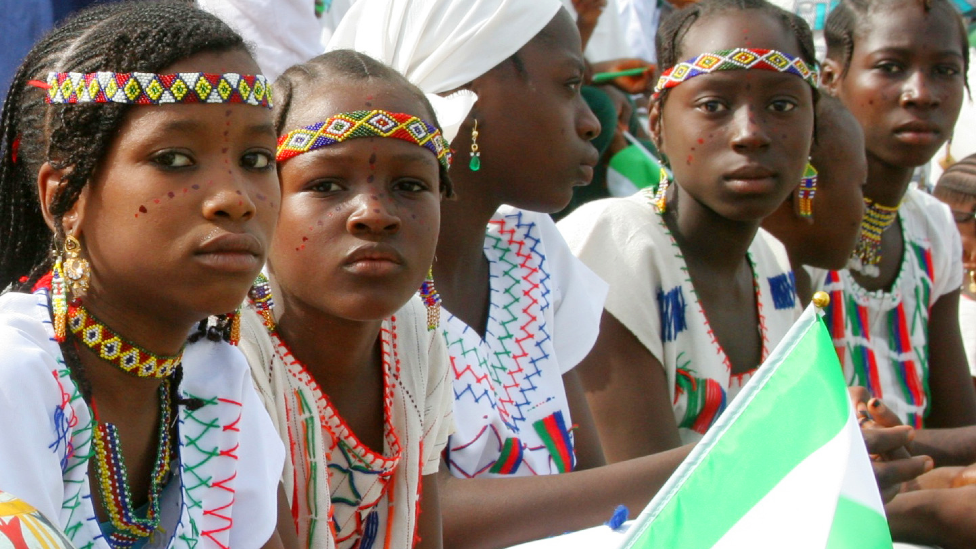
Nigerians are among the most internally diverse national populations on earth — a people unified by a shared political geography and colonial legacy while divided by ethnicity, language, religion, and region in ways that defy easy summary. Nigeria is home to over 250 distinct ethnic groups speaking over 500 languages, anchored by three major blocs — the Hausa-Fulani of the north, the Yoruba of the southwest, and the Igbo of the southeast — alongside dozens of other significant peoples including the Ijaw, Kanuri, Tiv, Efik, and Urhobo. To understand Nigeria is to understand a civilization forged at the intersection of ancient kingdoms and colonial rupture, of extraordinary natural wealth and persistent political challenge, and of a population of over 220 million whose collective future will shape the trajectory of Africa in the twenty-first century. It is also to understand a nation whose peoples — Muslim and Christian, northern and southern — have endured since 2009 one of the world's most devastating jihadist insurgencies: a campaign of mass murder, mass abduction, and systematic cultural destruction that has killed hundreds of thousands and whose reverberations define Nigerian life.
Part I — Region History
Ancient Kingdoms, Colonial Nigeria, and the Emergence of Jihadist Threat
The territory that is today Nigeria has been home to complex, organized civilizations for at least nine thousand years. The Nok culture of the Jos Plateau flourished between approximately 1000 BCE and 300 CE, producing the oldest known figurative art in sub-Saharan Africa. By the first millennium CE, the Kanem-Bornu Empire dominated the Lake Chad basin for over a thousand years, controlling trans-Saharan trade routes and producing a sophisticated Islamic scholarly culture centered at Maiduguri — the same city where, one thousand years later, Boko Haram would be founded. In the southwest, the Ife civilization and the Kingdom of Benin produced artwork of world-historical significance. The Oyo Empire's cavalry dominated regional trade routes from the seventeenth century.
The early nineteenth century witnessed the Fulani Jihad of 1804–1808, led by the Islamic scholar Usman dan Fodio, establishing the Sokoto Caliphate across northern Nigeria — an event whose memory would be selectively invoked, and grotesquely distorted, by Boko Haram two centuries later to justify its campaign of mass murder. The Caliphate's own tradition — rooted in Sufi scholarship, structured governance, and a Islam integrated with community life — was the antithesis of everything Boko Haram represented; yet the jihadist movement claimed its heritage while massacring the descendants of its adherents.
British Colonial Rule and Independence
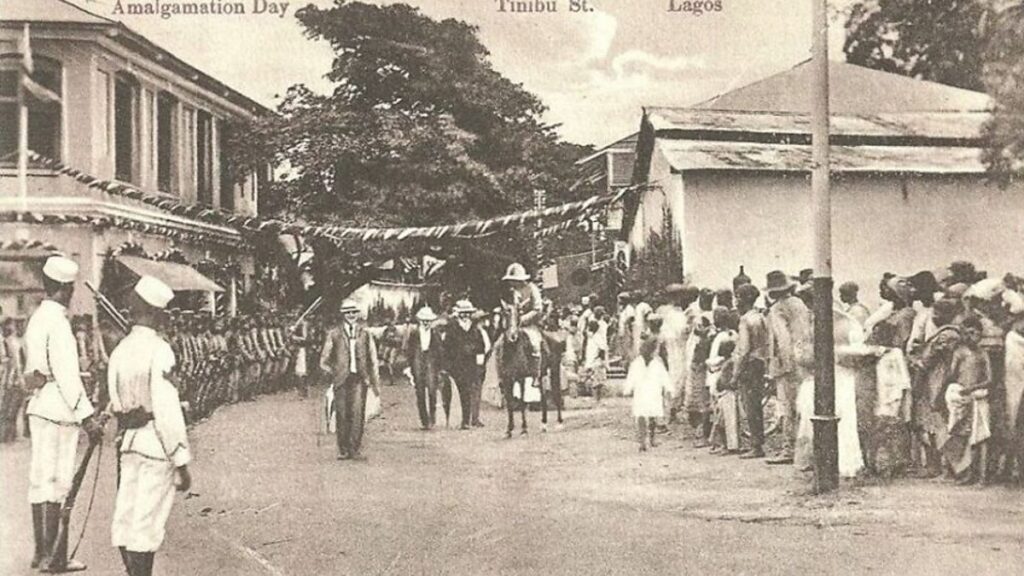
British colonial involvement culminated in Frederick Lugard's 1914 amalgamation of the Northern and Southern Protectorates into a single Colony and Protectorate of Nigeria — creating by administrative fiat a political unit encompassing hundreds of distinct peoples with no prior unified governance. Nigeria achieved independence on October 1, 1960, but its early decades were marked by coups, counter-coups, and the Nigeria-Biafra civil war (1967–1970). The return to civilian democratic governance in 1999 opened a new chapter — but also coincided with the emergence, in the poverty-stricken margins of Maiduguri, of the radical Salafi-jihadist preaching that would within a decade produce Boko Haram and one of the twenty-first century's most catastrophic campaigns of mass violence.
The Ideological Roots of Nigerian Jihadism
Boko Haram did not emerge from a vacuum. Its rise was enabled by a specific convergence of conditions: the structural poverty and unemployment of northeastern Nigeria, among the country's most economically marginalized regions; the penetration of Saudi-funded Salafi missionary networks into Nigerian Islamic education from the 1970s onward, which gradually displaced the tolerant Sufi-inflected Islam of the Sokoto tradition with a more rigid, puritanical orientation; the political neglect of the northeast by successive federal governments; and the charisma of Mohammed Yusuf, whose preaching in Maiduguri's Ibn Taimiyya mosque drew thousands of young men with a simple, totalizing message — that Nigeria's corrupt secular state was the enemy of God, that Western education was forbidden, and that true Muslims must separate themselves from this system entirely. When that separatism curdled into violence, it would produce a movement that murdered Muslims and Christians alike with equal ideological conviction.
The trouble with Nigeria is simply and squarely a failure of leadership. There is nothing basically wrong with the Nigerian character. There is nothing wrong with the Nigerian land or climate or water or air or anything else.
— Chinua Achebe, The Trouble with Nigeria, 1983Part II — Nigerian Communities
Nigerian Communities
Nigeria's extraordinary ethnic diversity — over 250 groups, over 500 languages — constitutes both its greatest cultural wealth and the central challenge of its political life. The entries below document the principal communities that constitute Nigerian society, with attention to their histories, their cultural traditions, and their specific experiences of the jihadist violence that has reshaped life across the north and Middle Belt since 2009. Understanding this community-level experience is essential to understanding the full human cost of the insurgency — which has not fallen evenly but has struck specific peoples, in specific places, with specific and devastating force.
The Kanuri are the heirs of the Kanem-Bornu Empire — one of Africa's longest-lasting states, which dominated the Lake Chad basin from approximately the ninth century CE until the early twentieth century. Maiduguri — the Kanuri capital and Borno State's principal city — is the city where Mohammed Yusuf founded Boko Haram's predecessor movement in the early 2000s, and it has remained the geographic heart of the insurgency ever since. The Kanuri have consequently suffered more comprehensively from Boko Haram's violence than perhaps any other Nigerian community: their mosques bombed during Friday prayers, their markets attacked with suicide bombers, their farms abandoned under threat of attack, their schools shuttered for years, their traditional leaders and Islamic scholars assassinated.
The Sheikh of Borno and the Kanuri traditional and religious establishment have been among the most vocal and consistent critics of Boko Haram, repeatedly issuing religious condemnations of the movement and organizing community resistance — and being targeted for assassination in return. It is critical to understand that the Kanuri people, despite the insurgency originating in their homeland, are overwhelmingly its victims rather than its perpetrators: Boko Haram has killed Kanuri Muslims at scale for cooperating with the Nigerian state, attending government schools, voting in elections, or following mainstream Islamic scholars whose authority the movement rejects.
The Hausa-Fulani constitute the largest ethnic bloc in Nigeria and the dominant political force of the Muslim north. Their cultural identity is a product of centuries of intermarriage and shared Islamic civilization between the Hausa peoples and the Fulani pastoralists, shaped by the Sokoto Caliphate's tradition of Sufi-inflected Islamic scholarship, civic governance, and integration of religious and community life. Hausa is one of the most widely spoken languages in Africa. The great Hausa cities — Kano, Katsina, Zaria, Sokoto — have been major nodes in trans-Saharan and trans-regional trade for centuries, producing a commercial and scholarly culture of deep sophistication.
The Hausa-Fulani majority — and the northern Nigerian Islamic establishment they anchor — must be clearly distinguished from Boko Haram's ideology, which explicitly regards the Sufi scholarly tradition, democratic participation, and the existing social structures of northern Muslim life as apostasy. The Sultan of Sokoto, the Emirs of Kano and Katsina, and the Sufi orders have consistently and publicly condemned Boko Haram. Northern Muslim civilians — traders, farmers, worshippers — have been massacred in markets and mosques across Kano, Potiskum, and Damaturu. The insurgency has specifically targeted the northern Islamic establishment for elimination, assassinating scholars and bombing Friday congregations, precisely because mainstream northern Islam represents its greatest theological rival and most credible refutation.
The Middle Belt — home to scores of distinct non-Hausa, non-Yoruba, non-Igbo ethnic groups in the geographic corridor between Nigeria's north and south — has been among the most devastated zones of jihadist violence in Nigeria. Boko Haram's operational reach into Adamawa and Taraba States brought direct mass-atrocity violence to Middle Belt Christian communities: churches bombed, pastors assassinated, villages burned, and entire communities driven from their ancestral lands. The Berom of Plateau State, the Tiv of Benue, and dozens of smaller groups — the Atyap, Bajju, Gbagyi, and Jaba of southern Kaduna — have suffered systematic attacks that the Christian Association of Nigeria and international human rights organizations have characterized as constituting religious persecution of extraordinary severity.
Open Doors, the international Christian persecution monitoring organization, has consistently ranked Nigeria among the top five countries in the world for Christian persecution. The jihadist campaign in the Middle Belt has targeted not only church buildings and worshippers but the foundational economic and social infrastructure of Christian farming communities: destroying stored grain, poisoning wells, burning farmland, and eliminating the conditions of survival in a systematic effort to depopulate Christian communities from territories the movement regards as within its intended domain.
The northeastern states are home to scores of smaller ethnic communities — Marghi, Bura, Higgi, Mandara, Chibok, Babur, and dozens more — living along the Cameroon border and across the Yobe River basin. These minority peoples have been among the most completely devastated by the insurgency: located precisely in the terrain where Boko Haram and ISWAP have operated most freely — mountain redoubts, border regions beyond effective state control, rural communities far from military bases — they have suffered mass killings, mass abductions, and total destruction of their agricultural economies with the least international attention and the least government protective capacity. Their small population sizes, relative geographic isolation, and lack of political representation in Abuja have made them effectively invisible to the international humanitarian system even as they endure violence on a catastrophic scale.
The Chibok community — from which 276 schoolgirls were abducted by Boko Haram in April 2014 — is a predominantly Christian small ethnic group in southern Borno State who had built one of the region's few functional girls' secondary schools. Their victimization illustrated with terrible precision how the jihadist insurgency targets the most aspirationally progressive communities in the northeast: a community that invested in girls' education, in a movement that regards girls' Western schooling as a religious abomination, and whose response was to steal their daughters.
Nigeria is home to one of the world's largest and most dynamic Christian communities — a living tradition of theological creativity and congregational vitality that has produced some of the largest churches on earth. It is this community — specifically its worship gatherings, its church buildings, its clerical leadership, and its Christmas and Easter assemblies — that Boko Haram has systematically targeted since 2010 in one of the most sustained anti-Christian persecution campaigns in the contemporary world. The choice to bomb Christmas Day services, Easter congregations, and Sunday worship across northern Nigeria was not incidental: it was a deliberate theological and strategic program to eliminate Christian worship from the regions the movement sought to control, and to provoke intercommunal violence that would accelerate the polarization jihadist strategy requires.
The Christian Association of Nigeria has documented thousands of church burnings, pastoral assassinations, and mass-casualty bombing events targeting Christian communities since the insurgency began. Open Doors has consistently placed Nigeria among the world's top countries for Christian persecution. The Nigerian government's response to anti-Christian jihadist violence has been characterized by critics — including the CAN, the Vatican, and international human rights organizations — as systematically inadequate: perpetrators are rarely prosecuted, affected communities rarely protected or compensated, and the scale of anti-Christian violence is rarely acknowledged at the federal level with the seriousness it warrants.
The Yoruba are one of Africa's largest and most culturally influential peoples — their diaspora, created by the Atlantic slave trade, seeded religious and cultural traditions across the Americas with tens of millions of practitioners today. The Yoruba are a religiously plural people: approximately half Christian, a substantial minority Muslim, with Yoruba traditional religion permeating the culture regardless of formal affiliation. Yoruba Islam — historically rooted in the Tijaniyya and Qadiriyya Sufi brotherhoods and integrated into Yoruba civic and cultural life — is the direct antithesis of the Salafi jihadist current that produced Boko Haram. Yoruba Muslim scholars have been among the insurgency's most articulate Islamic critics, arguing from within the tradition that Boko Haram represents a corruption of Islam incompatible with Quranic teaching and prophetic tradition.
The Yoruba southwest has not been the primary theatre of the jihadist insurgency — which has been concentrated in the northeast and Middle Belt. However, the 2011 bombing of the United Nations headquarters in Abuja — the federal capital where significant Yoruba professional and civil service populations live — demonstrated that the insurgency's ambitions were national in scope. ISWAP's articulated strategic goal of southward expansion toward Nigeria's oil-producing states, combined with the general jihadist ideology that regards southern Nigerian society as corrupt and apostate, positions Yoruba communities as potential future targets as the insurgency evolves.
The Igbo are predominantly Christian and organized through a republican tradition of village democracy and individual achievement that has made them one of Nigeria's most commercially dynamic peoples. Igbo traders have historically dispersed across Nigeria, including deeply into the north — building commercial networks in Kano, Kaduna, Maiduguri, and dozens of other northern cities that integrated southern and northern Nigerian economies in significant ways. These Igbo commercial communities in the north have been among the civilian victims of Boko Haram's market bombings: the movement's systematic targeting of markets — the most economically integrated public spaces in northern Nigerian cities — has killed and injured Igbo traders alongside northern Muslim civilians in attacks designed to destroy economic normalcy and maximize civilian casualties across communities.
The broader jihadist threat has contributed to the contraction of Igbo commercial presence in the north — as security deteriorated, Igbo traders and entrepreneurs relocated southward, contracting decades-old business networks that represented one of Nigeria's most durable forms of inter-ethnic economic integration. This contraction — forced by jihadist violence — has impoverished both the Igbo traders who lost their northern livelihoods and the northern communities that lost the commercial services, employment, and economic dynamism those traders provided.
The Ijaw are the fourth-largest ethnic group in Nigeria and the dominant people of the Niger Delta — the ecosystem whose oil wealth finances the Nigerian state. Archaeological evidence suggests continuous Ijaw habitation for at least 7,000 years. The Ijaw are predominantly Christian and have not been the primary target of Boko Haram's northeastern-concentrated insurgency. However, ISWAP's publicly stated strategic vision — which frames Nigeria's oil-producing south as an eventual theatre of operations and Nigeria's oil infrastructure as a resource to be seized for the jihadist project — has been noted by security analysts with alarm. Jihadist propaganda has explicitly targeted Nigeria's oil infrastructure in strategic communications, and ISWAP has articulated ambitions for southward expansion toward the Delta as it consolidates in the northeast.
The Ijaw experience of the jihadist crisis has also been felt in macroeconomic terms: the insurgency's disruption of three northeastern states has created humanitarian emergency costs that consume federal budgetary resources, distort security deployments, and reduce the developmental investment available to all Nigerian states — including oil-producing states like Bayelsa and Rivers, which receive inadequate infrastructure spending despite generating the revenues that sustain the federal government. The jihadist insurgency's fiscal consequences reach every Nigerian community, including those far from its immediate theatre of violence.
Appendix — Crimes Against Nigerian Peoples
Crimes Against Nigerian Peoples
The following section documents the jihadist campaign of mass violence directed against Nigerian peoples — Muslim and Christian, northern and southern — since the formal outbreak of the Boko Haram insurgency in 2009. This record exists because the jihadist insurgency constitutes the greatest ongoing organized crime against Nigerian civilians in the present era: a campaign of genocide, mass abduction, systematic sexual violence, and civilizational destruction whose scale has been chronically underreported in international media and inadequately addressed by both the Nigerian state and the international community. Entries draw on documentation by Amnesty International, Human Rights Watch, the United Nations Office for the Coordination of Humanitarian Affairs, and survivor testimony.
Boko Haram emerged from Maiduguri in the early 2000s under Mohammed Yusuf — a Salafi cleric who preached that Western education, democratic governance, and secular institutions were religiously forbidden. His movement recruited from the ranks of young men marginalized by poverty and state neglect across the northeast. In July 2009, following a confrontation with police, the movement launched an armed uprising across five northeastern states — attacking police stations, government buildings, and prisons. When Nigerian security forces suppressed the revolt, Yusuf was captured and extra-judicially executed in police custody — a fact documented on video and witnessed internationally.
Yusuf's extrajudicial killing transformed the movement rather than destroying it. His successor, Abubakar Shekau, rebuilt Boko Haram in the Sambisa Forest and declared a full jihadist insurgency, adopting suicide bombing, mass abduction, and territorial conquest as core tactics. The movement that re-emerged was more violent, more organizationally sophisticated, and more ideologically total than Yusuf's sect — and the Nigerian state's failure to prevent Yusuf's extrajudicial execution had handed it a martyrdom narrative of extraordinary mobilizing power.
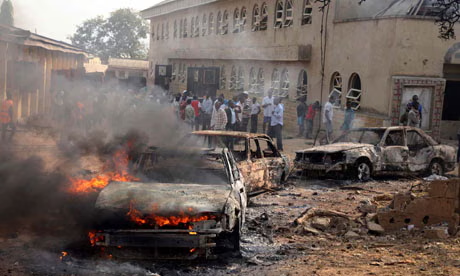
Beginning in 2010 and intensifying dramatically through 2011–2014, Boko Haram launched a sustained campaign of bombing Christian churches, Christmas Day services, Easter gatherings, and Sunday worship that constitutes one of the most systematic anti-Christian persecution campaigns in the contemporary world. The attacks were explicitly ideological — Boko Haram's statements framing them as part of a jihad to eliminate Christian presence from northern Nigeria. Targeting Christmas and Easter services maximized both casualties and symbolic devastation: these are the days when church attendance peaks, and killing worshippers on their holiest days was designed to terrorize the entire Christian community into abandoning worship or abandoning the north entirely.
The geography of the church bombings was deliberately extended into Abuja and the Middle Belt — areas where Christians had believed themselves outside the movement's reach. By striking the federal capital, Kaduna, and Plateau State, Boko Haram demonstrated that no Christian community in the north was safe, accelerating the flight of Christian populations from northern cities and provoking the intercommunal reprisal violence that jihadist polarization strategy explicitly seeks to generate.
A feature of Boko Haram's violence frequently obscured in international coverage — which tends to frame the conflict as Muslim-versus-Christian — is the movement's sustained and extraordinarily lethal campaign against Muslim communities, mosques, scholars, and institutions that failed to endorse its ideology. Boko Haram has killed more Muslims than Christians over the insurgency's duration — a statistical reality reflecting both the demographic predominance of Muslims in the northeast and the movement's theological position that Muslims who participate in elections, attend government schools, follow mainstream Islamic scholars, or cooperate with the Nigerian state are apostates deserving death.
The assassination of Islamic scholars who publicly criticized Boko Haram was among its earliest and most consistent tactics: over a dozen prominent northern Nigerian sheikhs and imams were killed between 2010 and 2015 for issuing fatwas against the movement or encouraging Muslims to cooperate with the state. The bombing of mosques — particularly on Fridays during peak attendance — has killed hundreds of Muslim worshippers in attacks that demonstrate the movement's willingness to massacre co-religionists in service of its totalizing ideological project.
Mass abduction has been one of Boko Haram's and ISWAP's most consistent and devastating tactics — a crime against humanity affecting tens of thousands of Nigerian civilians since 2011. The movement abducts women and girls for use as forced brides, domestic servants, agricultural laborers, and suicide bombers; it abducts boys for military training and forced induction into its fighting forces. Amnesty International documented over 2,000 women and girls abducted between 2009 and 2015 alone — a figure that represents a fraction of the true total given documentation difficulties in areas where state presence has collapsed.
Women and girls held in Boko Haram captivity have been subjected to systematic rape, forced marriage to fighters, forced religious conversion, forced labor, physical abuse, and execution for attempted escape. Boys taken as child soldiers have been subjected to religious indoctrination, physical abuse, and deployment in combat. Those who return — through escape, rescue, or negotiated release — frequently face stigma in their home communities, particularly women and girls who were raped or who returned pregnant or with children fathered by fighters, creating a second wave of social violence layered atop the first.
At its territorial peak between mid-2014 and early 2015, Boko Haram controlled an area of northeastern Nigeria roughly the size of Belgium — approximately 20,000 square kilometers encompassing major towns including Gwoza, Bama, Dikwa, Monguno, and Damasak. Over this territory, it declared an Islamic caliphate, installing its own administrators, courts, and enforcement mechanisms. Within its territory, the movement conducted mass executions of men who refused to join its forces, enslaved captured women, destroyed schools and health facilities, banned markets not operating under its authority, and eliminated every institution of the Nigerian state. Men and boys deemed enemies of the movement — civil servants, teachers, traditional leaders, anyone known to have cooperated with the state or attended government schools — were separated from women and executed in mass killings across captured communities.
The mass killings in captured towns were systematic and ideologically framed as religious obligation: fighters would enter communities, conduct public executions of the condemned, and deliver sermons declaring the deaths to be God's judgment on those who had abandoned true Islam or cooperated with the kafir (infidel) state. The Baga massacre of January 2015 — in which an estimated 2,000 civilians were killed over two days, the single deadliest event of the insurgency — occurred in the same week as the Charlie Hebdo attacks in Paris, receiving a fraction of the international media attention despite killing roughly forty times as many people. The disproportion in global coverage of these two events constitutes one of the starkest examples of the systematic undervaluation of African lives in international media.
The destruction of schools was a deliberate ideological program, not a byproduct of combat. Boko Haram's very name encodes its foundational conviction — that Western education is forbidden — and the burning of over 900 schools across the northeast, the killing of teachers, and the abduction of students represented the physical enactment of that conviction at civilizational scale. By 2015, more than 1.5 million children were out of school across three states. The educational infrastructure destroyed represented decades of developmental investment; the generation of children denied education during the peak conflict years will carry that deprivation throughout their lives.
The Islamic State West Africa Province (ISWAP) emerged from a 2016 split within Boko Haram, with a faction aligning formally with the Islamic State's global caliphate project. ISWAP initially distinguished itself from Shekau's Boko Haram by presenting a more tactically sophisticated operation that avoided some of the most extreme civilian atrocities — in particular, indiscriminate attacks on Muslim civilians — in favor of targeted operations against the Nigerian military, state infrastructure, and Western interests. This tactical moderation was strategic, not humanitarian: ISWAP sought to build popular support in northeastern communities by presenting itself as a governable alternative to the Nigerian state rather than a force of pure destruction.
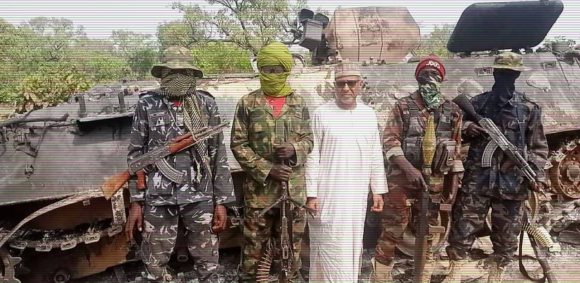
Following Shekau's death in a confrontation with ISWAP forces in June 2021, ISWAP absorbed much of the remaining Boko Haram membership and consolidated as the dominant jihadist force in the Lake Chad basin. Since then, it has conducted a sophisticated ongoing campaign: mass executions of captured Nigerian soldiers (including multiple videos of beheadings released as propaganda), assassinations of traditional rulers and community leaders who cooperate with the state, bombings of civilian markets and gathering places, sustained displacement of farming communities from their agricultural land, and the continued abduction of women and children. The insurgency has entered a prolonged guerrilla phase that security analysts regard as likely to continue for years without a fundamental change in the Nigerian state's approach to the northeast's structural conditions.
ISWAP has also distinguished itself from earlier Boko Haram in its explicit articulation of a strategic vision extending beyond the northeast: its propaganda and strategic communications have framed a long-term project of southward expansion toward Nigeria's Middle Belt and eventually its oil-producing states, incorporating Nigeria's enormous oil wealth into the jihadist project's economic foundation. This articulated ambition — even if currently aspirational rather than operationally imminent — has reshaped the Nigerian security calculus and introduced the jihadist threat as a concern for communities and authorities far beyond the northeast's boundaries.
If you or your community have been affected by the events described in this report, we invite you to contribute to our documentation record.