


Levantine Druze: Region History
The Druze are one of the Levant's most ancient and least understood peoples — a community of approximately one to two million people distributed across the mountains of Syria, Lebanon, Israel, and Jordan whose spiritual tradition, social organization, and political history defy the categories that outsiders typically apply to Middle Eastern communities. They are not Muslims in any orthodox sense, though their faith emerged from within Ismaili Islam in eleventh-century Cairo. They are not Arab nationalists in the conventional mold, though Arabic is their language and the Levant their homeland across more than a thousand years. They are not a single political community, though Druze communities across four countries share a liturgical tradition, a code of mutual solidarity, and a consciousness of collective identity that has allowed them to survive centuries of persecution, massacre, and political encirclement. What the Druze have experienced across the modern period — Ottoman massacres, Mandate-era suppression, displacement by the Syrian civil war, the existential threat of jihadist groups that have repeatedly targeted their villages and sanctuaries — is a story of a small people's survival against extraordinary odds in one of the world's most contested and violent regions.
Part I — Historical Foundations
Origins, Theology, and the Making of Druze Identity
The Druze faith emerged in Cairo between approximately 1017 and 1023 CE, during the reign of the Fatimid Caliph al-Hakim bi-Amr Allah — a ruler whose increasingly eccentric theological proclamations and administrative behavior generated intense controversy across the Islamic world. The faith's founders — principally Hamza ibn Ali ibn Ahmad, a Persian mystic who articulated the theological framework, and Muhammad al-Darazi, whose name may have provided the community's designation — proclaimed al-Hakim's divine nature and promulgated a theology that synthesized Ismaili Shia Islam with Neoplatonic philosophy, Gnosticism, and elements drawn from multiple pre-Islamic intellectual traditions. When al-Hakim disappeared in 1021 — his fate never established — the movement he had inspired was subjected to intense persecution by the Fatimid court. Its followers, driven underground, dispersed to the mountain regions of the Levant — the Jabal al-Druze in southern Syria, Mount Lebanon, and the Galilee highlands — where geography provided the physical refuge that hostile political environments denied them.
The theological core of the Druze faith — called al-Hikma (the wisdom) — remains closed to outsiders and even to the majority of Druze themselves. The community is divided between the initiated (uqqal, "the knowing") and the uninitiated (juhhal, "the ignorant") — the former having access to the sacred texts and practices of al-Hikma, the latter maintaining Druze identity through social belonging, communal solidarity, and the ethical code of honor, hospitality, and mutual protection that defines Druze communal life regardless of religious initiation. Conversion into the Druze faith is not possible, and conversion out of it is considered a grave violation of community norms. The Druze understanding of their own identity is thus simultaneously religious, ethnic, and civilizational — a selfhood that transcends the categories of either ethnicity or religion as typically understood.
The Mountain Refuge and the Politics of Survival
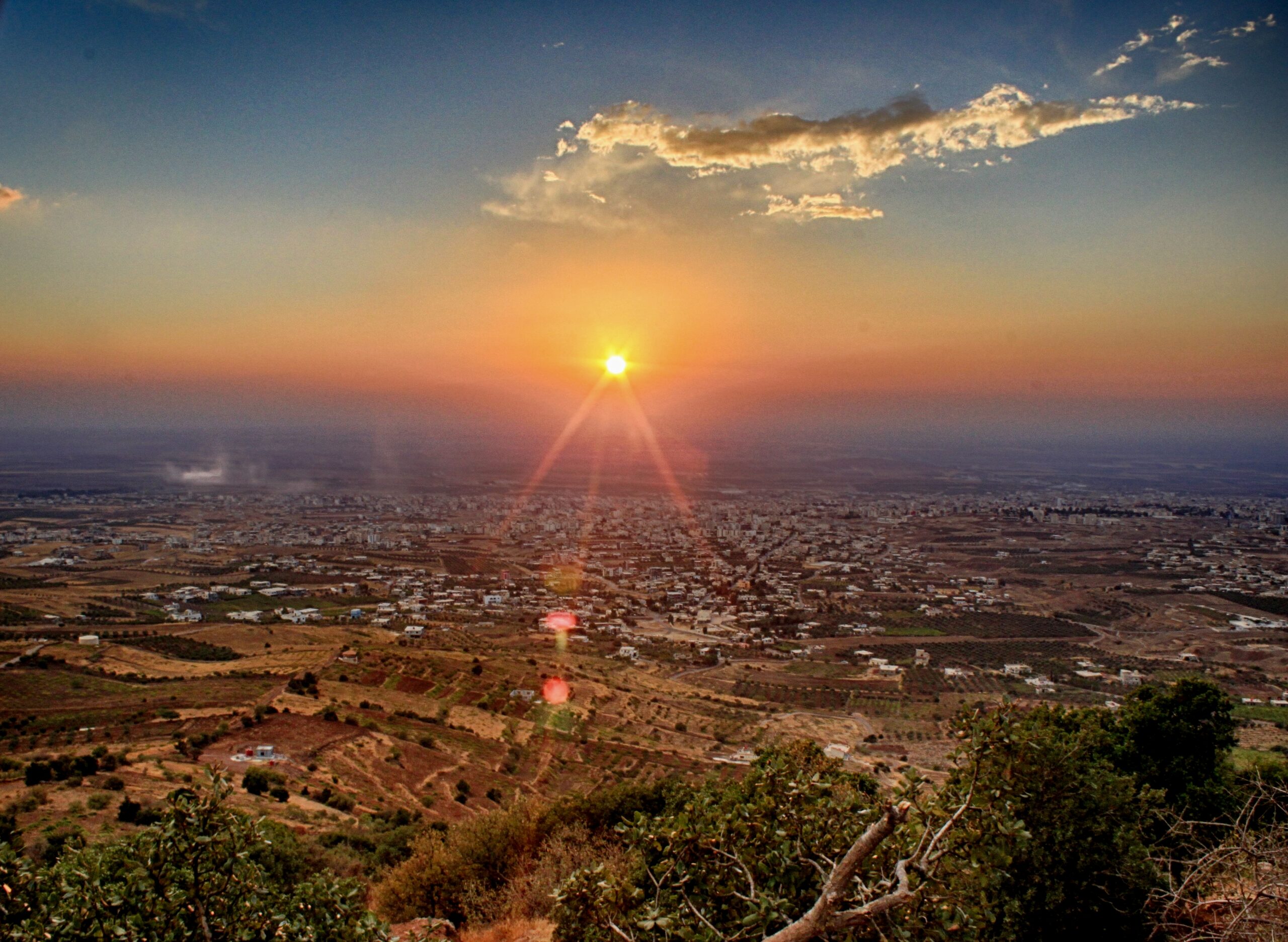
The Druze relationship to mountain geography is not accidental — it is the product of a millennium of calculated self-preservation by a community that recognized from its earliest decades that its theological distinctiveness made it a target for persecution by both Sunni and Shia Islamic authorities. The Jabal al-Druze (Mountain of the Druze) — known since Syrian independence as the Jabal al-Arab — in what is today the Sweida Governorate of southern Syria provided the community's primary demographic anchor, a terrain of volcanic basalt where the difficulty of military operations offered a degree of security unavailable in the plains. Mount Lebanon — particularly the Chouf district — served as the second major concentration, producing Druze feudal dynasties including the Arslan and Jumblatt families whose political influence on Lebanese history has been disproportionate to their numbers. The Carmel range and Galilee in what is today Israel became the third concentration, forming the community that would become Israeli Druze after 1948.
The survival strategy that Druze communities developed across centuries — strategic accommodation with whichever power controlled their territory, maintenance of internal autonomy through negotiation and reputation for martial courage, and fierce communal solidarity that made the price of attacking Druze communities prohibitively high — produced communities with a remarkably sophisticated understanding of power, alliance, and political timing. Druze leaders served Ottoman governors, French Mandate authorities, Syrian Ba'ath governments, Lebanese state institutions, and the Israeli Defense Forces — not from ideological enthusiasm for any of these arrangements but from the calculated pragmatism of a small people that has learned through painful experience that survival requires engagement with power rather than principled distance from it.
The 1860 Massacres and Ottoman Period
The most catastrophic episode of sectarian violence in the Levant before the twentieth century occurred in 1860, when Druze-Maronite conflict in Mount Lebanon — rooted in longstanding competition over land, political authority, and the disruption of traditional social hierarchies by Ottoman Tanzimat reforms — exploded into mass violence. In May and June 1860, Druze forces attacked Maronite Christian communities across the Chouf with a ferocity that shocked European observers: an estimated 11,000 Christians were killed and over 100,000 displaced in a matter of weeks, with villages burned and churches destroyed across a wide arc of the Lebanese mountain. The violence then spread to Damascus, where Sunni mobs killed several thousand Christians in the old city's Christian quarter. The 1860 massacres brought European military intervention — primarily French forces protecting Christian populations — and resulted in the establishment of the Mutasarrifate of Mount Lebanon, an autonomous administrative unit under Ottoman sovereignty with international guarantees, that effectively separated the mountain from direct Ottoman control and created the administrative predecessor of modern Lebanon.
The Druze role in 1860 — as perpetrators of mass violence against Christian communities — is an episode that Druze collective memory has largely suppressed and that requires honest acknowledgment in any complete account of Druze history. It coexists, without contradiction, with the Druze experience of persecution, massacre, and existential threat that has defined subsequent decades. Communities can be simultaneously victims of systematic violence and perpetrators of violence in other contexts; the Druze historical record includes both, and intellectual honesty requires engaging with both.
We are a people who have survived by knowing which mountain to stand on, which alliance to honor, and when to fight and when to wait. We have made mistakes. We have been massacred. We have survived. That is the whole of our history.
— Druze community elder, oral testimony collected by the Minority Rights Group, Lebanon, 2018Part II — Jihadism and Existential Threat
Jihadist Violence, Islamist Pressure, and the Druze Existential Crisis
The Syrian civil war that erupted in 2011 confronted the Druze — concentrated in the Sweida Governorate of southern Syria and in the villages of the Jabal al-Druze — with the most severe existential threat their community has faced since the Ottoman period. The rise of Jabhat al-Nusra, the Islamic State in Iraq and Syria (ISIS/Daesh), and allied jihadist groups across Syria combined a military capacity unprecedented in the region's modern history with an ideology that designated the Druze as apostates (murtaddun) — Muslims who had abandoned Islam for a heretical tradition — whose blood was declared licit by multiple jihadist religious authorities. This designation was not a rhetorical position but a predicate for organized mass killing: jihadist groups that captured Druze villages acted on it systematically, killing community members, destroying shrines, and forcing conversions at gunpoint in operations documented by Human Rights Watch, Amnesty International, and the Syrian Observatory for Human Rights.
The Druze theological position — neither recognizably Muslim by Sunni or Shia standards, nor Christian, nor fitting any other category that Salafi-jihadist ideology recognizes as protected — places them in maximum jeopardy in any territory controlled by groups operating within that ideological framework. Unlike Christians or Jews, who occupy the dhimmi category in traditional Islamic jurisprudence and can claim a form of protected (if subordinated) status, the Druze are classified by jihadist authorities as apostates whose death requires no special justification. This classification was applied with murderous literalism during ISIS's advance through Syrian territory and in subsequent jihadist operations targeting Druze villages.
The Sweida Massacre of 2018 and the Druze of Syria
On July 25, 2018 — while much of the world's attention was focused on other dimensions of the Syrian conflict — ISIS launched a coordinated assault on villages in the Sweida Governorate that constitutes one of the most severe single-day atrocities against the Druze community in modern history. Fighters simultaneously attacked multiple Druze villages including Shbaa, al-Rasas, al-Shabki, and Shrehi, killing over 250 civilians — men, women, and children — in coordinated house-to-house massacres, and abducting approximately 36 Druze women and children who were taken into ISIS-controlled territory as hostages. The attack was accompanied by ISIS-planted bombs in the city of Sweida itself, targeting civilians in the market. The abducted women and children were held for months; most were eventually released through tribal negotiations, but several died in captivity.
The Sweida massacre drew relatively limited international media attention compared to other Syrian atrocity events — a disproportion that Druze advocacy organizations and human rights monitors have consistently highlighted as reflecting the differential value assigned to different communities' suffering in international conflict coverage. The attack demonstrated the specific vulnerability of Druze communities in southern Syria: geographically remote from the Assad government's core areas of control, lacking the international advocacy networks of larger communities, and facing an adversary whose ideology specifically targeted their religious identity for elimination.
Jabhat al-Nusra and the Qalb Lawzeh Massacres
In June 2015, fighters from Jabhat al-Nusra — al-Qaeda's Syrian affiliate — entered the predominantly Druze village of Qalb Lawzeh in the Idlib Governorate and killed at least 20 Druze civilians, with reports suggesting the actual toll was higher. Residents described fighters entering homes and executing civilians after demanding they renounce their faith. The killings followed a period in which Jabhat al-Nusra had been consolidating control of Idlib and its religious authorities had issued statements regarding the Druze that created the theological predicate for violence: declarations that the Druze were apostates whose conversion or death was required by Islamic law. Human Rights Watch documented the Qalb Lawzeh killings and called on Jabhat al-Nusra to protect Druze civilians, a call the organization ignored.
The situation of Druze communities in Idlib — estimated at approximately 100,000 before the war — deteriorated catastrophically as jihadist groups consolidated control. Druze were subjected to forced conversion, the destruction of their shrines and sacred sites, prohibitions on cultural and religious practice, and in numerous documented cases, killing and abduction. The community that had inhabited the Jabal al-Summaq area of Idlib for centuries was effectively eliminated as a functioning community under jihadist governance — a process of cultural destruction that received minimal international attention despite being documented by Syrian and international human rights organizations.
Hayat Tahrir al-Sham and Contemporary Druze Vulnerability
Hayat Tahrir al-Sham (HTS) — the jihadist organization that emerged from Jabhat al-Nusra and controls Idlib and, since late 2024, a dramatically expanded portion of Syrian territory — has presented itself publicly as a more moderate successor to its predecessor organizations. Its leaders have made statements regarding the protection of minorities that international observers have characterized as tactically motivated rather than reflective of ideological transformation. Druze community leaders and human rights organizations have documented continued harassment, forced conversions, and property seizure in HTS-controlled areas with Druze populations, and have expressed profound alarm about the implications of HTS's military advances for the Druze communities of southern Syria — particularly as the Assad government's territorial control has collapsed across regions bordering the Druze heartland of Sweida. The fall of Damascus to HTS-led rebel forces in December 2024 has created acute uncertainty for Druze communities across Syria about their protection under any new political dispensation.
Druze in Lebanon: Hezbollah, Sectarian Politics, and Regional Pressure
Lebanese Druze — concentrated in the Chouf and Aley districts of Mount Lebanon and in the Hasbaya area of the south — have navigated the Lebanese civil war (1975–1990), Syrian occupation, and the post-war sectarian power-sharing arrangement with the same strategic pragmatism that has characterized Druze political behavior across their history. The Druze Progressive Socialist Party under Walid Jumblatt — whose father Kamal Jumblatt was assassinated in 1977, widely believed on Syrian government orders — has been the dominant Druze political institution in Lebanon, repositioning across Lebanon's complex political landscape with considerable flexibility. The Druze played a central role in the Civil War, including episodes of mass violence against Maronite Christian communities in the Chouf in 1983 that replicated, in disturbing ways, the dynamics of 1860. The subsequent Chouf reconciliation process — supported by Walid Jumblatt and involving the symbolic return of displaced Christian families — represented one of the Lebanese Civil War's few genuine reconciliation achievements.
The presence of Hezbollah — a Shia militia and political organization with jihadist dimensions, Iranian backing, and a declared commitment to Islamic revolutionary governance — as the dominant armed actor in Lebanon has created a specific dimension of pressure on Druze communities. Hezbollah's ideology, while primarily focused on Israel and Lebanese political control, contains elements hostile to minority communities that do not fit within its Shia Islamic political framework. Druze communities in south Lebanon in particular, in geographic proximity to Hezbollah's core territory, have navigated the organization's military dominance with the characteristic Druze pragmatism — but with awareness that their options are limited and their margin for error is narrow.
When they came to our village they told us to convert or die. This is not a political conflict. This is a campaign to eliminate us. The world has not understood this because the world does not know we exist.
— Druze survivor of jihadist attack, Idlib Governorate, testimony collected by Human Rights Watch, 2015Part III — Druze Communities
Druze Communities: A Regional Encyclopedia
The Druze are not a single national community but a transnational people whose four principal concentrations — in Syria, Lebanon, Israel, and to a lesser extent Jordan — have developed distinct political identities shaped by the states within which they live while maintaining a deep consciousness of shared religious tradition, genealogical connection, and communal solidarity across borders. The entries below document these principal communities — their geographic anchors, social organization, political relationships, and specific experiences of persecution and survival across the modern period.
Syrian Druze constitute the largest Druze population in the world, concentrated in the Sweida Governorate in southern Syria — a volcanic basalt plateau whose difficult terrain has historically provided physical protection from hostile armies while limiting agricultural productivity and economic development. The community played a significant role in the Great Syrian Revolt of 1925–1927 against French Mandate rule — Sultan al-Atrash, the Druze leader who initiated the revolt, became a pan-Arab nationalist hero whose legacy has complicated Druze relationships with subsequent Arab nationalist governments seeking to claim his legacy for their own purposes.
The Syrian Druze relationship to the Assad government — both Hafez and Bashar — has been characterized by accommodation without enthusiasm. Druze from Sweida have served in the Syrian military in significant numbers, both from genuine Arab nationalist commitment and from the calculated assessment that institutional engagement with the state provides the best protection for a minority community. As the civil war progressed and the Assad government's legitimacy collapsed across Syria, Sweida's Druze increasingly refused military service, organized local defense forces independent of the state, and began articulating aspirations for autonomy within whatever political dispensation might emerge from the conflict's conclusion.
Lebanese Druze occupy a distinctive position in the Lebanese confessional system — the constitutionally mandated power-sharing arrangement that distributes political offices, civil service positions, and parliamentary seats among Lebanon's recognized religious communities. The Druze are allocated the Speaker of Parliament and a proportional share of cabinet and parliamentary positions under this system, giving their political leadership — primarily the Jumblatt family's Progressive Socialist Party — formal institutional power that belies the community's relatively small size. The Jumblatt family's domination of Druze political life in Lebanon spans generations: Kamal Jumblatt, the philosopher-politician assassinated in 1977, remains a defining figure; his son Walid Jumblatt has led the PSP for nearly five decades with a political fluidity that has made him simultaneously admired for his agility and criticized for his perceived opportunism.
Lebanese Druze history in the Civil War period includes episodes of both victimization and perpetration of communal violence. The 1983 Mountain War — in which Druze PSP forces expelled Christian Maronite communities from the Chouf following the Israeli withdrawal — killed hundreds of Christians and displaced tens of thousands in a reversal of the earlier Israeli-backed Christian advance. The subsequent Chouf reconciliation process, supported by Walid Jumblatt from the mid-1990s onward, produced a formal acknowledgment of the expulsions and the symbolic return of Christian families — one of the most significant reconciliation achievements in Lebanese post-war history, though one whose material dimensions remain incomplete.
Israeli Druze represent the most thoroughly integrated Druze community into any state apparatus — a relationship formalized in 1956 when Druze leaders requested and obtained the inclusion of their community in Israel's military conscription system, a request rooted in both genuine loyalty to the state that provided them security and a calculated judgment that military service would translate into full citizenship rights and protection from discrimination. The "blood covenant" — dam — between the Druze community and the Israeli state has become a defining element of Israeli Druze identity: Druze soldiers serve in the IDF, including in elite combat units and officer ranks, at rates comparable to Jewish Israelis, and Druze casualties in Israeli wars are mourned with full state honors.
The Israeli Druze community's position is complex and contested within both Israeli politics and the broader Druze world. Their military service — in wars and operations whose objectives sometimes directly affect Druze communities in Lebanon and Syria — creates moral tensions that Israeli Druze navigate in different ways. The Nation-State Law passed by the Israeli Knesset in 2018 — which declared Israel the nation-state of the Jewish people without equivalent language about other communities — provoked significant Druze protest, with reserve officers and community leaders publicly challenging the law's implications for the status of non-Jewish communities including their own. The protest reflected the community's expectation that loyalty to the state would be reciprocated with genuine equality — an expectation the Nation-State Law appeared to compromise.
The Druze of the Golan Heights occupy one of the most extraordinary political positions of any community in the modern Middle East: residents of Syrian territory captured by Israel in the 1967 Six-Day War, subjected to Israeli military administration and subsequently to Israeli civil law following the 1981 formal annexation that the United States recognized in 2019, but whose majority has consistently refused Israeli citizenship — maintaining Syrian national identity and Syrian passports across more than five decades of Israeli governance. This refusal — remarkable in its consistency across generations born entirely under Israeli administration — reflects both genuine Syrian nationalist sentiment and the Druze principle of loyalty to one's sovereign: accepting Israeli citizenship would, in Druze communal logic, constitute a betrayal of the Syrian state to which they considered themselves bound.
The Golan Druze community maintained a crossing point — the "Shouting Hill" at Majdal Shams, where families separated by the 1967 war would shout across the ceasefire line to communicate — that became one of the Cold War period's most poignant symbols of human connection across political division. The crossing was reopened as part of a 1988 agreement allowing students to pass, and has since facilitated academic exchange, while families have continued navigating the division between relatives on opposite sides of a line that represents not just a political boundary but two entirely different political experiences of the same community.
The Druze of Jordan constitute the smallest of the four principal Druze national communities — a community of approximately 30,000–50,000 people concentrated in the Azraq area of eastern Jordan and in Amman, largely descended from Druze who settled in the Hauran region during the late Ottoman period and whose descendants found themselves within Jordanian rather than Syrian territory following the post-World War I partition of the Levant. Jordanian Druze have generally integrated effectively into Jordanian society and the Jordanian military, following the same logic of institutional engagement that has characterized Druze political behavior across the region.
The Jordanian Druze community lacks the political weight of its Lebanese or Syrian counterparts, and its relative marginality in Jordanian political life has meant that it has received less international attention and documentation than the other Druze communities. Jordanian Druze maintain family and communal connections across the broader Druze world — with kin in Syria, Lebanon, and Israel-Palestine — and have been affected by the Syrian civil war primarily through the arrival of Syrian Druze refugees seeking safety in Jordan's relatively stable environment.
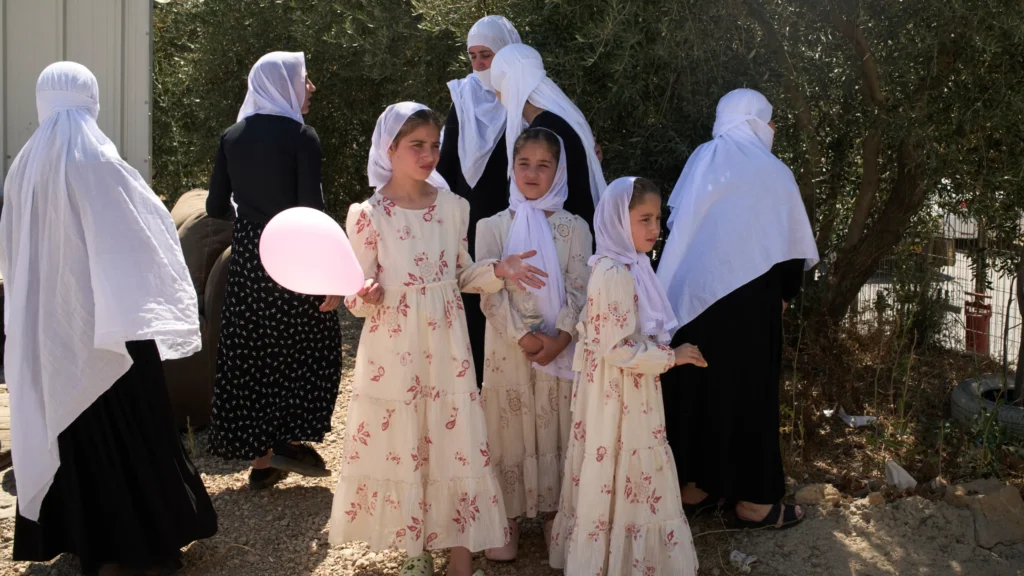
Druze women occupy a theologically distinctive position within the faith — unlike most Islamic-derived traditions, al-Hikma provides a theological framework for women's initiation into the uqqal (the knowing) on equal terms with men, and many of the community's most respected religious figures across history have been women. Initiated Druze women are recognizable by the white headcovering (mandil abyad) they wear, which marks their spiritual status and their commitment to the ethical code of al-Hikma. In communities where the majority of men and women remain uninitiated (juhhal), initiated women serve as moral exemplars and community anchors whose behavioral standards are held to a higher account than the uninitiated majority.
In practice, Druze women's social position has been constrained by the same patriarchal customary norms that govern most Levantine communities — honor codes, restrictions on social movement, and in some communities, limited access to education and professional opportunity. The gap between theological equality and social reality has been a persistent tension in Druze communal life. In Israeli Druze communities, where state institutions provide access to education and legal protection, Druze women have increasingly entered professional life, the IDF (as non-combat volunteers), and public political roles. In Syrian and Lebanese Druze communities, the civil war period has simultaneously created new vulnerabilities and new roles for women as community survival managers in conditions of extreme insecurity.
The Druze religious leadership — the uqqal — constitutes one of the most distinctive religious institutions in the Middle East: a non-hereditary, non-professional initiated class whose members are recognized by the community for their spiritual attainment, ethical conduct, and knowledge of al-Hikma rather than for formal training in any established institution. There is no Druze equivalent of the imam, the priest, or the rabbi — no professional clergy supported by institutional stipends. The most senior religious leaders — the Sheikh al-'Aql — hold positions of enormous communal moral authority without the bureaucratic or economic infrastructure of established religious institutions. This structure has made Druze religious leadership simultaneously more resilient to external pressure (there is no institution to close, no clergy to imprison) and more vulnerable to the destruction of the individuals who embody communal religious knowledge.
The custodians of al-Hikma — the written corpus of Druze sacred texts known as the Rasa'il al-Hikma (Letters of Wisdom) — maintain the community's theological tradition in conditions of deliberate secrecy that have made the Druze faith the object of enormous scholarly speculation and frequent misrepresentation. The texts are kept from outsiders and from uninitiated Druze; their content is transmitted through initiated reading circles rather than public instruction. This secrecy, which has protected the tradition from external interference across a millennium, has also made it vulnerable to mischaracterization by hostile actors — jihadist religious authorities have declared the Druze apostates partly on the basis of Druze theological secrecy, which they interpret as concealment of heretical doctrine.
The Druze diaspora — concentrated in the Americas, particularly Brazil, the United States, Canada, and Venezuela — developed primarily through two waves of emigration from the Levant: a late nineteenth and early twentieth century wave from Mount Lebanon during the late Ottoman period, and a more recent wave driven by the Lebanese Civil War and the Syrian crisis. Diaspora Druze communities have integrated extensively into host country societies — producing politicians, professionals, academics, and business leaders — while maintaining a Druze communal identity rooted primarily in social solidarity, family networks, and communal organizations rather than in the religious practices of al-Hikma, which require a critical mass of initiated community members to sustain.
The theological dimension of diaspora Druze identity is complex: without the critical mass of initiated uqqal that sustained religious practice requires, diaspora communities typically maintain Druze identity as an ethnic and social marker rather than as an active religious practice. The rule against conversion — no one may join the Druze community — means the diaspora does not grow through recruitment, only through birth into Druze families. The Druze prohibition against marrying outside the community, while not absolute in diaspora practice, has created social pressure toward endogamy that has slowed but not prevented assimilation.
Appendix — Crimes Against the Druze
Crimes Against the Levantine Druze: A Historical Record
The following section documents the principal crimes committed against Levantine Druze communities across the modern period — from the Ottoman massacres of the nineteenth century through the systematic jihadist violence of the Syrian civil war and its aftermath. These events span nearly two centuries. They include massacres by state actors, sectarian violence by non-state communities, and the organized genocidal campaigns of jihadist groups that have targeted the Druze explicitly for their religious identity. This record draws on documentation by Human Rights Watch, Amnesty International, the Syrian Observatory for Human Rights, the UN Commission of Inquiry on Syria, the Minority Rights Group, and survivor testimony. Many of these events have never been subject to accountability, formal investigation, or international legal process.
The Druze community's history under Ottoman rule was punctuated by episodes of severe violence — both inflicted upon Druze communities and inflicted by them in the sectarian dynamics of the nineteenth-century Levant. The Druze communities of the Hauran and Mount Lebanon faced periodic military campaigns by Ottoman governors seeking to suppress their autonomous traditions, collect taxes, and enforce conscription. The Druze practice of protecting individuals who sought refuge in their territory — regardless of the political implications — repeatedly brought them into conflict with Ottoman authority enforcing the law against community tradition.
The Ottoman period's most consequential episode for the Druze — the 1860 violence — is, as noted elsewhere in this report, a morally complex episode in which Druze communities were primarily perpetrators rather than victims of mass violence, killing an estimated 11,000 Maronite Christians in the Chouf. The subsequent French intervention and the establishment of the Mutasarrifate of Mount Lebanon reduced direct Ottoman pressure on the Druze while beginning the process of European great-power involvement in Levantine sectarian dynamics that would reshape the region's political landscape across the following century.
The Druze communities of Idlib Governorate — concentrated in the Jabal al-Summaq area north of Idlib city, including the villages of Qalb Lawzeh, Kansafra, and surrounding settlements — constituted an ancient community whose presence in the area predated Ottoman rule. When Jabhat al-Nusra consolidated control of Idlib Governorate in 2015, these communities were subjected to a campaign of persecution that combined explicit religious justification with organized violence: demands for conversion to Sunni Islam, destruction of Druze shrines and religious sites, prohibition of Druze religious practice, forced marriage of Druze women to fighters, property confiscation, and in documented cases, killing of those who refused conversion.
Human Rights Watch documented the June 2015 killings in Qalb Lawzeh — where at least 20 Druze civilians were killed by Jabhat al-Nusra fighters — and found evidence of forced conversions, property seizure, and the destruction of Druze religious sites across the area. The pattern was consistent with what international legal scholars characterize as religiously motivated persecution constituting crimes against humanity. Jabhat al-Nusra's religious authorities had issued prior statements declaring the Druze apostates, creating the theological predicate for the violence that followed.
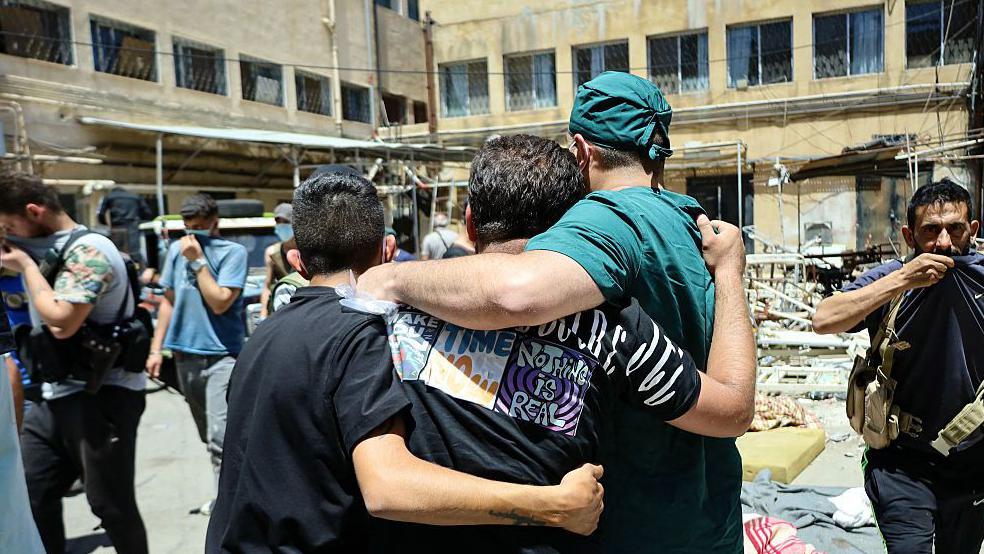
The coordinated ISIS assault on Sweida Governorate on July 25, 2018 constitutes the worst single atrocity against the Druze community in the modern era. Fighters simultaneously attacked multiple villages — Shbaa, al-Rasas, al-Shabki, and Shrehi — in coordinated operations beginning in the early morning, killing over 250 civilians including women, children, and elderly residents, and conducting house-to-house executions of those they found. Simultaneously, ISIS-planted bombs detonated in Sweida city's market, killing civilians in the urban center. The coordinated character of the operation — multiple simultaneous village attacks combined with urban bombing — demonstrated planning and organizational capacity inconsistent with an opportunistic raid.
In the course of the attacks, ISIS fighters abducted approximately 36 Druze women and children — members of the Druze community specifically chosen because of their vulnerability and their value as symbols of communal violation. The hostages were taken into ISIS-controlled territory in the desert badlands of southeastern Syria, where they were held for months under conditions that included forced religious observance, threats of sexual violence, and deliberate humiliation intended to demonstrate jihadist power over the Druze community. Most hostages were eventually released through tribal mediation involving Bedouin intermediaries, but several died in captivity and the psychological consequences for survivors and their families have been severe and lasting.
The forced conversion of Druze communities — documented in ISIS-controlled eastern Syria, in Jabhat al-Nusra and HTS-controlled Idlib, and in areas where jihadist groups have exercised temporary control over Druze villages — constitutes a specific category of cultural crime distinct from but related to physical killing. For the Druze, forced conversion is not merely a theological violation but an attack on a community whose identity is constituted precisely by its distinctiveness and its closed character: a Druze who converts to Sunni Islam does not simply change religious practice but severs the community connection through which Druze identity is transmitted and reproduced. The forced conversion of a Druze village is, in communal terms, the effective destruction of that village as a Druze community.
Jihadist groups have understood this dimension of Druze communal identity and have exploited it deliberately. The demand for conversion — issued to Druze communities under armed occupation — is simultaneously a theological demand, a political assertion of jihadist authority, and a cultural destruction tool whose effects extend beyond the immediate generation of those coerced. Children raised in forcibly converted families under jihadist governance lose access to the Druze tradition, the Druze social networks, and the initiated community through which al-Hikma is transmitted. The cultural loss from forced conversion, even when physical killing does not occur, is irreversible across generations.
In August 2023 — five years after the ISIS massacre and in the context of the Syrian economic collapse, the return of ISIS activity in the eastern desert, and growing Druze resentment of Assad government conscription that had killed thousands of Sweida's young men in a war the community largely opposed — the Druze of Sweida mounted the most significant sustained protest against the Assad government of any Syrian community outside the initial 2011 uprising. Protesters took to the streets of Sweida city demanding the fall of the Assad government, the implementation of UN Security Council Resolution 2254 (the framework for a Syrian political transition), and the release of political prisoners. The protests continued for months — remarkable for their persistence in a country where protest had been met with mass violence since 2011.
The Sweida protests reflected the Druze community's exhaustion with a government that had failed to protect them from ISIS in 2018, was conscripting their men into military service for a war they increasingly regarded as Assad's personal survival project rather than Syrian national defense, and was simultaneously presiding over an economic collapse that had destroyed Sweida's commercial life. The protests also reflected the broader Druze political calculation: having largely avoided the Syrian civil war's worst violence by maintaining a posture of armed neutrality backed by community self-defense forces, the Sweida Druze were no longer willing to extend that neutrality to political silence.
The fall of the Assad government to HTS-led rebel forces in December 2024 has confronted Syrian Druze with an entirely new and deeply uncertain political situation. The Druze leadership of Sweida has engaged cautiously with the new authorities, securing verbal commitments to minority protection while maintaining independent armed community defense forces that represent the community's hedge against a political dispensation whose ultimate character remains unclear. HTS's public statements about minority protection coexist with its jihadist ideological heritage and with the documented record of its predecessor organization's violence against Druze communities in Idlib — a record that Sweida's Druze leadership has not forgotten and has no institutional reason to trust.
The Druze experience of international neglect — a pattern in which documented atrocities against their community have received dramatically less international attention, advocacy, and response than comparable violence against other communities — reflects a structural reality about how international attention to minority persecution is allocated. The Yazidis of Iraq, who suffered a genocide at ISIS hands with significant parallels to the Druze experience — both being declared apostates by jihadist ideology, both subjected to killing, abduction, and sexual enslavement — received sustained international media attention, dedicated advocacy campaigns, and eventually formal international recognition of their genocide by multiple governments and the United Nations. The Druze — who suffered comparable violence in the same ideological context — received comparatively minimal sustained international engagement.
The disproportion reflects several factors: the Druze community's smaller size, its geographic distribution across multiple states with competing political interests in their territories, the complexity of the Druze political situation (their relationship to Israel in particular creates difficulties for organizations working in Arab political contexts), and the absence of a powerful diaspora advocacy network comparable to those that have amplified the suffering of other persecuted communities. The UN Commission of Inquiry on Syria has documented Druze persecution in its reports, but these findings have not translated into dedicated international protection mechanisms, accountability processes, or sustained diplomatic pressure on actors responsible for Druze atrocities.
No perpetrator of the July 2018 Sweida massacre has been prosecuted before any court — domestic, regional, or international. The International Criminal Court lacks jurisdiction over Syria, which has not ratified the Rome Statute, and Security Council referral of Syria to the ICC has been blocked by Russian and Chinese vetoes. The UN Commission of Inquiry on Syria has documented the Sweida massacre as potentially constituting crimes against humanity, but documentation without accountability mechanism is, for the survivors and the families of the dead, insufficient justice. The Druze victims of ISIS violence in Syria join the long list of communities whose suffering has been documented, acknowledged in international reports, and left without remedy — a pattern that represents one of international law's most persistent failures in the contemporary period.
If you or your community have been affected by the events described in this report, we invite you to contribute to our documentation record.