Assyrians (Mountain Regions) | International Freedom Coalition
Northern Middle East Desk · Community Dossier

Assyrian Peoples

Case Undergoing Active Documentation

The Assyrians are one of the world's oldest continuous peoples: the indigenous, Aramaic-speaking Christian nation of Mesopotamia, descended from ancient Assyria and organized through the Church of the East, the Chaldean Catholic Church, and the Syriac Orthodox and Catholic traditions, with a homeland spanning northern Iraq, northeastern Syria, southeastern Turkey, and northwestern Iran. Across the last century that homeland has seen a nearly unbroken sequence of mass atrocity, from the Sayfo of 1915 through Simele in 1933 to the Islamic State's genocide of 2014. A community of roughly 1.5 million in Iraq in 2003 has fallen below 250,000 today, and what remains survives under militia occupation and demographic pressure that continue, by quieter means, the logic of elimination.

Northern Middle East Desk · Area of Documentation

Juliana Taimoorazy, Dossier Leader
Dossier Leader

Juliana Taimoorazy

Founder, Iraqi Christian Relief Council · Nobel Peace Prize Nominee

Juliana Taimoorazy is a leading international advocate for persecuted Christians in the Middle East and a 2021 and 2022 Nobel Peace Prize nominee. Born and raised in Iran, she fled religious harassment in 1989, was smuggled into Switzerland and then Germany, and arrived in America as a refugee in 1990. In 2007 she founded the Iraqi Christian Relief Council, which has delivered food, shelter, and medicine to hundreds of thousands of displaced Christians and other minorities across Iraq and neighboring countries. A UN Delegate in Geneva, she serves on the advisory council of The Witness Institute, which continues the legacy of Nobel laureate Elie Wiesel, and has led efforts among Assyrian Americans to combat antisemitism. She has been featured on Fox News, BBC, Wall Street Journal Live, and Newsmax, and was nominated for the UNHCR's prestigious Nansen Award for her service to humanity.

Conflict Analysis & Human Rights

Region History

The record below traces five millennia of continuity on the same land, the catastrophes of 1915 and 1933, and the jihadist campaign that drives the contemporary crisis.

I · Foundations

Ancient Civilization, Christian Continuity

Assyrian history begins in the third millennium BCE with the city of Assur and reaches its ancient apex in the Neo-Assyrian Empire, whose capital at Nineveh held the library of Ashurbanipal and the Epic of Gilgamesh. The empire fell in 612 BCE, but the people persisted on the same land, keeping their Aramaic language through Persian, Hellenistic, and Sasanian rule. Among the earliest peoples to adopt Christianity, they built in the Church of the East one of the great intellectual engines of late antiquity: the School of Nisibis was among the world's first universities, its scholars carried Greek learning into Syriac and Arabic, and its missionaries reached India and Tang-dynasty China. Syriac remains the liturgical language of Assyrian churches, and modern Aramaic dialects are still spoken in Assyrian homes today.

II · The Sayfo & Simele

The Sword and the Broken Promise

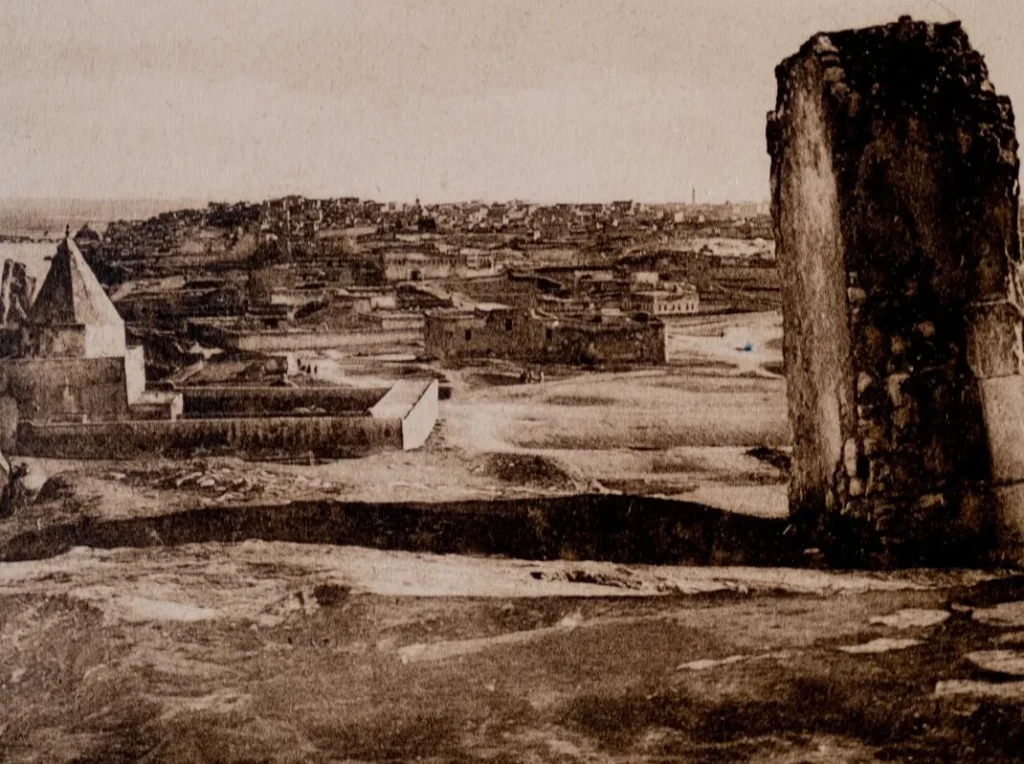
Under Ottoman rule the Assyrians survived as subordinated Christian communities: the semi-autonomous mountain tribes of Hakkari under the Mar Shimun patriarchate, the monastic civilization of Tur Abdin anchored by Mor Gabriel Monastery, founded in 397 CE, the agricultural Urmia plain in Iran, and the Chaldean towns of Mosul and the Nineveh Plains. The First World War destroyed this world: beginning in 1915, in parallel with the Armenian genocide, Ottoman forces and Kurdish irregulars annihilated Assyrian communities across all three highland regions in the catastrophe Assyrians call the Sayfo, the sword, killing as many as 250,000 people, roughly half the nation. Britain recruited the survivors as its smallest ally, but the promised protection never came: the postwar settlements granted the Assyrians nothing, and in 1933 the army of newly independent Iraq carried out the Simele massacre.

III · The Contemporary Crisis

Jihadism and the Quiet Continuation

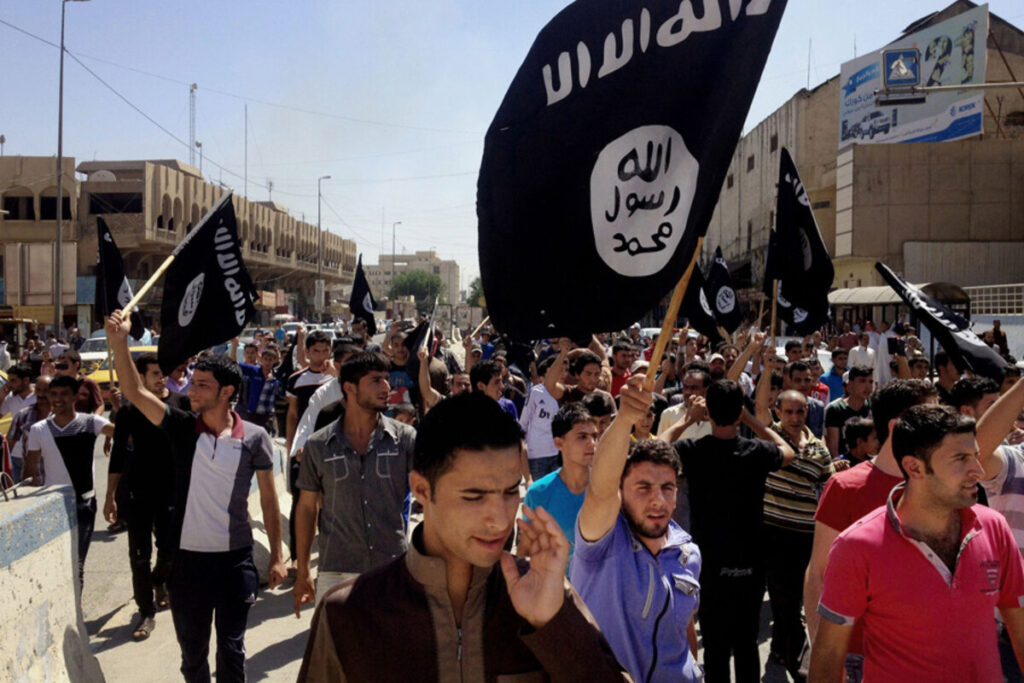
After 2003, al-Qaeda in Iraq and its successors targeted Iraq's Christians with coordinated church bombings, kidnappings framed as jizya collection, and assassinations of clergy, including the Chaldean Archbishop of Mosul in 2008 and 58 worshippers killed at Baghdad's Our Lady of Salvation cathedral in 2010. The Islamic State brought the program to its fullest expression in 2014: an ultimatum to Mosul's Christians of conversion, jizya, exile, or death, the marking of Christian homes with the letter nun, and the August conquest of the Nineveh Plains, which displaced more than 100,000 Christians overnight; in February 2015 ISIS attacked the 35 Assyrian villages of Syria's Khabur valley and abducted more than 200 people. Liberation has not restored the homeland: the Plains towns now sit under sanctioned Iran-aligned militias, land is expropriated, and fewer than half of the displaced have returned.

"We are the remnant of a great nation, reduced by the sword and the famine and the flight. All we have asked, from that day to this, is to live on our own land in safety. That request has never once been granted."

Assyrian Survivor Testimony · Sayfo Oral History Collections

An Ethnic & Cultural Encyclopedia

The Assyrian Communities

The Assyrian nation is one people organized through several church traditions, each with its own geography and its own experience of persecution. Some members identify as Assyrian, others as Chaldean, Syriac, or Aramean; this dossier uses Assyrian in its broad national sense while respecting the distinct identities within it.

Assyrians of the Church of the East

Also known as Suraye · East Syriacs · Hakkari and Urmia Assyrians

RegionHakkari · Urmia plain · Northern Iraq · Khabur (Syria)
Population~400,000 to 600,000 worldwide
LanguageAssyrian Neo-Aramaic · Syriac (liturgy)
ReligionAssyrian Church of the East · Ancient Church of the East

Heirs of the ancient Church of the East that once stretched to China, these communities survived into the modern era as the semi-autonomous mountain tribes of Hakkari and the villages of the Urmia plain. The Sayfo emptied Hakkari permanently in 1915 and devastated Urmia; the survivors, resettled in Iraq, were struck again at Simele in 1933, and thousands fled to the Khabur valley in Syria, where ISIS attacked their 35 villages in 2015. A church of the diaspora with a remnant in the homeland, its patriarchate returned from Chicago to Erbil in 2015 as a deliberate act of witness while ISIS held Mosul forty miles away, and its remaining Iraqi, Iranian, and Syrian communities face militia pressure and the demographic bleed of emigration.

Chaldean Catholics

Also known as Chaldeans · Kaldaye · Chaldo-Assyrians

RegionMosul · Nineveh Plains · Alqosh · Baghdad
Population~1 million worldwide · largest Assyrian tradition
LanguageChaldean Neo-Aramaic · Syriac (liturgy) · Arabic
ReligionChaldean Catholic Church (in communion with Rome)

In communion with Rome since the sixteenth century, the Chaldeans became the largest Christian body in Iraq and the backbone of urban Assyrian life in Mosul and Baghdad, with ancient monasteries at Alqosh and Rabban Hormizd. The post-2003 jihadist campaign struck them hardest of all: the bombing campaigns, the murder of Archbishop Rahho, the 2014 expulsion from Mosul, and the emptying of the Plains towns fell overwhelmingly on Chaldean parishes. The community is now split between a diaspora heartland in metropolitan Detroit and a diminished Iraqi remnant, and Chaldean leaders have publicly warned that without security guarantees and property restitution, Christianity in Iraq faces extinction within a generation.

Syriac Orthodox & Syriac Catholics

Also known as Suryoye · West Syriacs · Arameans

RegionTur Abdin (Turkey) · Nineveh Plains · Syria
Population~1 to 1.5 million worldwide (both churches)
LanguageTuroyo Neo-Aramaic · Syriac (liturgy)
ReligionSyriac Orthodox Church · Syriac Catholic Church

The West Syriac communities sustained one of the deepest continuous Christian cultures anywhere: the monastic plateau of Tur Abdin, anchored by Mor Gabriel Monastery since 397 CE, devastated in the Sayfo and drained by a century of emigration to roughly two thousand people today. The Syriac Catholic branch dominated Qaraqosh, the largest Christian town in Iraq, emptied of its 50,000 people in a single night in August 2014. Qaraqosh has substantially repopulated since 2017, but under militia checkpoints and contested administration; in Turkey, Mor Gabriel has fought repeated land confiscation cases, and the diaspora centered in Södertälje, Sweden sustains the tradition's institutions abroad.

The Assyrian Diaspora

Also known as the Assyrian-Chaldean-Syriac diaspora

DestinationsUSA · Sweden · Germany · Australia · Canada
Population~2 to 4 million · majority now outside the homeland
Key CentersDetroit · Chicago · Södertälje · Sydney
OrganizationsA Demand For Action · Assyrian Policy Institute · Assyrian Universal Alliance

Created by the Sayfo, enlarged by Simele, and swollen by every subsequent Iraqi and Syrian crisis, the diaspora now contains the clear majority of the nation. Diaspora campaigns secured Sweden's 2010 recognition of the genocide and drove the international genocide designations of 2016, and since 2014 the diaspora has served as the homeland's documentation and advocacy arm, monitoring militia abuses and funding reconstruction. Its central dilemma is demographic: each family that successfully resettles abroad strengthens the institutions of exile and thins the presence on the land.

Appendix · The Historical Record and Contemporary Violations

Crimes Against Assyrian Peoples

The events below span more than a century. Not one has been subject to a criminal tribunal, a truth commission, or any adequate process of restitution. They remain unresolved, and in the case of the pressure on the Nineveh Plains, ongoing.

01

State Massacre · Ethnic Cleansing

The Simele Massacre, August 1933

Within a year of Iraq's admission to the League of Nations, its army under General Bakr Sidqi massacred Assyrian civilians in Simele and more than sixty surrounding villages, killing between 600 and 3,000 people: troops disarmed Assyrians gathered under an assurance of safety, then killed the men and boys systematically over several days in the second week of August. Sidqi was promoted and received as a national hero in Baghdad, while Britain, the outgoing mandatory power, documented the massacre in detail and declined to press for accountability at the League. The massacre led the jurist Raphael Lemkin to cite the Assyrian case in the 1933 legal proposals from which the concept of genocide would grow, and thousands of survivors fled to the Khabur valley in Syria, where ISIS would attack their descendants in 2015.

02

Jihadist Terrorism · Anti-Christian Violence

The Post-2003 Campaign Against Iraq's Christians

Between 2003 and 2014, al-Qaeda in Iraq and its successors waged an explicitly religious campaign of church bombings, jizya-framed kidnappings, and clergy assassinations: Father Ragheed Ganni was murdered outside his Mosul church in 2007, and Archbishop Paulos Faraj Rahho was abducted and killed in 2008. On October 31, 2010, gunmen and suicide bombers of the Islamic State of Iraq stormed the Syriac Catholic cathedral of Our Lady of Salvation in Baghdad during Sunday Mass, killing 58 worshippers, priests, and police, and declared all Christians legitimate targets, the deadliest single assault on Iraq's Christians in the modern era. Iraq's Christian population fell from roughly 1.5 million to perhaps half a million before ISIS ever appeared, and prosecutions were effectively nonexistent.

03

Genocide · Forced Conversion · Enslavement

The ISIS Genocide, 2014 to 2017

ISIS's campaign was genocide by formal designation of the United States and the European Parliament in 2016, its elements explicit in the organization's own pronouncements: the ultimatum of conversion, jizya, exile, or death; the marking and confiscation of Christian property; the enslavement of Christian women and children; and the destruction of every visible sign of Christian worship, including the fourth-century Mar Behnam Monastery. The ultimatum ended sixteen centuries of Christian life in Mosul within days, and on the night of August 6 to 7, 2014, after security forces withdrew without warning, ISIS overran the Nineveh Plains towns and more than 100,000 Christians fled overnight. On February 23, 2015, ISIS attacked the 35 Assyrian villages of Syria's Khabur valley, abducting more than 200 civilians and executing three on video during ransom negotiations; a community of roughly 20,000 has effectively ceased to exist in place. No international tribunal has been established, and prosecutions under terrorism statutes record neither the victims' identity nor the crime's genocidal character.

04

Militia Occupation · Demographic Engineering

Post-ISIS Expropriation of the Nineveh Plains

Since liberation in 2017, the Assyrian towns of the Nineveh Plains have come under Iran-aligned Popular Mobilization units, including forces whose commanders the United States has sanctioned for abuses against the communities they claim to protect. USCIRF, the Assyrian Policy Institute, and church authorities have documented land expropriation, checkpoint extortion, intimidation of returnees, and the settlement of non-Christian populations onto Christian agricultural land, while Baghdad and the Kurdistan Regional Government treat the Assyrian presence as a bargaining asset in their dispute over the territories. Fewer than half of the displaced have returned, and the 2016 genocide designations produced targeted aid but no tribunal, no property restitution mechanism, and no security architecture for the Plains, completing by attrition the displacement ISIS began with force.

05

Genocide · Crimes Against Humanity · Cultural Destruction

The Sayfo: The Assyrian Genocide of 1915

The Sayfo was carried out in parallel with, and by the same governing apparatus as, the Armenian genocide, and shared its methods: organized massacre by military and irregular forces, the abduction and forced marriage of women and girls, death marches, the destruction of churches and monasteries, and the confiscation of the property of the dead. Hakkari was invaded and emptied permanently; the Urmia plain was devastated in successive waves through 1918, including the assassination of the patriarch Mar Shimun XIX Benyamin under a flag of truce; and the villages of Tur Abdin were besieged and massacred through the summer of 1915. A nation that entered the twentieth century compact on its own land ended the war as scattered refugees. Sweden's parliament recognized the genocide in 2010 and several other states have followed, while Turkey denies the events constituted genocide; no perpetrator was ever tried, no property returned, and the 1923 Treaty of Lausanne extinguished Assyrian claims without granting Assyrians a seat at the table where their fate was decided.

~250K
Estimated Assyrian dead, roughly half the nation
3
Regions devastated in parallel: Hakkari, Urmia-Salmas, and Tur Abdin
Sayfo
The sword: the survivors' name for the year of destruction
0
Perpetrators prosecuted · restitution paid · acknowledgment by the successor state
Contribute

Affected by the Events
in This Dossier?

If you or your community have been affected by the events described in this report, we invite you to contribute to our documentation record. Submission is confidential by default.