My name is Dr. MAHMOUD ABBAS
I’m your Dossier Leader

Dr. Mahmoud Abbas is a Kurdish writer and political analyst based in the United States whose work focuses on Middle Eastern geopolitics, Kurdish political thought, and democratic governance. His research and writing examine Kurdish history, regional power dynamics, and the impact of political Islam and extremist movements in the Middle East. He is the author of multiple books and hundreds of analytical articles published in Arabic and Kurdish media. Born in Western Kurdistan, Dr. Abbas holds a degree in Geography from Damascus University, a master’s in Geographical Sciences from Kharkov University, and a PhD in Economic Geography from Moscow University. Dr. Abbas is a co-founder and former Vice President of the General Union of Kurdish Writers and Journalists in Syria and a co-founder and Executive Board member of the Kurdish National Council in Syria. He has lived in the United States since 1991 and is fluent in Kurdish, Arabic, English, and Russian.


Kurds: Region History
Conflict Analysis & Human Rights

Kurds: A History

Middle East & Central Asia Desk Kurdish Peoples Dossier

The Kurds are the world's largest nation without a state — a people of approximately 35 to 45 million distributed across the mountains and plains of Turkey, Iraq, Iran, and Syria, with significant diaspora communities across Europe, the Americas, and beyond. They are an ancient people whose presence in the highlands of the northern Fertile Crescent and the Zagros and Taurus mountain ranges predates the modern states that divide their homeland. They have their own languages, their own literary and musical traditions, their own religious diversity spanning Sunni Islam, Alevism, Yarsanism, and Yazidism, and their own political aspirations for self-determination that have been denied, suppressed, and violently crushed by four separate states across more than a century of modern history. The Kurdish story is one of extraordinary cultural vitality and extraordinary political suffering — a people that has produced poets, warriors, and revolutionaries in equal measure, endured genocide and chemical weapons attacks and mass displacement, and continued to assert its existence against adversaries whose combined military and political resources have vastly exceeded anything the Kurds have been able to marshal in their own defense. It is also a story that the world has repeatedly witnessed, periodically mourned, and structurally failed to resolve.


Ancient Origins, the Mountain Homeland, and the Betrayal of Sèvres

The Kurds are an Iranian-language people whose presence in the upland regions of the northern Middle East — the Zagros and Taurus mountain ranges, the highlands of southeastern Anatolia, and the plains of the upper Tigris and Euphrates valleys — is attested in historical sources from at least the seventh century BCE. Their ancestors likely include elements of the ancient Medes, whose empire briefly dominated the region in the sixth century BCE before absorption into the Achaemenid Persian Empire, and various other highland Iranian-language peoples whose gradual coalescence produced a distinct Kurdish ethnolinguistic identity over the first millennium CE. By the medieval period, Kurdish tribes and confederations were identifiable political and military actors across the region — providing soldiers to multiple empires, establishing their own principalities in the mountain zones where central power was weakest, and developing the distinctive culture of mountain nomadic pastoralism and sedentary agriculture that shaped Kurdish social organization across subsequent centuries.

Kurdish military reputation preceded Kurdish political recognition. Saladin — the twelfth-century military leader who recaptured Jerusalem from the Crusaders in 1187 and founded the Ayyubid dynasty — was of Kurdish origin, a fact that has been central to Kurdish nationalist consciousness ever since. The irony that one of Islam's greatest heroes was Kurdish while Kurdish people have been subjected to systematic persecution by Muslim states has not been lost on Kurdish political thinkers. Under the Ottoman Empire, Kurdish tribal confederations occupied an ambiguous position — simultaneously autonomous and subordinated, periodically recruited as instruments of Ottoman state violence against other minorities and periodically rebelling against Ottoman authority in a cycle of accommodation and resistance that lasted from the sixteenth century through the empire's collapse in 1918.

The Promised State and the Treaty of Sèvres

The collapse of the Ottoman Empire at the end of World War I created the conditions for what Kurdish leaders hoped would be Kurdish political recognition. The 1920 Treaty of Sèvres — negotiated between the Allied powers and the defunct Ottoman government — contained provisions for a referendum on Kurdish autonomy in the predominantly Kurdish regions of southeastern Anatolia, with the possibility of independence for a Kurdish state. For Kurdish nationalists, Sèvres represented the moment when the world acknowledged Kurdish political existence. It was never implemented. The Turkish War of Independence led by Mustafa Kemal Atatürk defeated the Greek, Armenian, and Allied forces that had occupied Anatolia, producing the 1923 Treaty of Lausanne — which replaced Sèvres entirely, contained no provisions for Kurdish autonomy or statehood, and established the borders of the modern Turkish Republic across the Kurdish heartland of southeastern Anatolia.

The betrayal of Sèvres established the template for Kurdish relationships with international powers across the following century: a pattern in which Western governments acknowledged Kurdish political aspirations when it was diplomatically convenient, armed and supported Kurdish forces when it served geopolitical interests, and abandoned Kurdish communities when political calculations shifted — leaving Kurds exposed to reprisals from the states they had been encouraged to resist. This pattern — established at Sèvres and Lausanne in 1920–1923 — would repeat with minor variations through the 1975 abandonment of the Iraqi Kurds by the United States and Iran, the 1991 failure to protect the Kurdish uprising after the Gulf War, the 1996–1998 US de facto abandonment of the KDP against the PUK, and the 2019 US withdrawal from northeastern Syria that exposed Kurdish forces to Turkish military operations.

The Kurdish Question Across Four States

The post-World War I settlement divided the Kurdish population across the borders of four states — Turkey, Iraq, Iran, and Syria — each of which developed its own framework for denying Kurdish political identity and suppressing Kurdish cultural expression. Turkey — home to the largest Kurdish population — pursued the most aggressive assimilationist policy, officially denying the existence of a distinct Kurdish people (using the term "Mountain Turks" for decades), banning the Kurdish language from public life, education, and broadcasting, and conducting multiple military campaigns against Kurdish populations in response to periodic uprisings. Iraq — where a British-created state placed Arab and Turkmen elites in authority over a large Kurdish minority in the north — conducted campaigns of mass violence against Kurdish civilians including the Anfal genocide of 1986–1989 and the Halabja chemical weapons attack of 1988. Iran suppressed Kurdish political organization through execution and armed force from the earliest weeks of the 1979 Islamic Revolution. Syria — with the smallest Kurdish population of the four — denied Syrian Kurds citizenship en masse in a 1962 decree, stripping hundreds of thousands of people of their nationality and their civil rights overnight.

The Kurds have no friends but the mountains. Every alliance we have made has ended with our abandonment. Every uprising has ended with our massacre. And still we are here — because the mountains have never betrayed us, and because we have no choice but to continue.

— Kurdish proverb, widely cited in political literature on the Kurdish question

ISIS, State Persecution, and the Kurdish Existential Struggle

The Kurdish encounter with jihadist violence reached its most acute expression in the emergence of the Islamic State in Iraq and Syria (ISIS/Daesh) from 2013 onward — an organization that targeted Kurdish communities with particular ferocity because of the intersection of territorial ambition, religious ideology, and practical military competition. ISIS's advance across northern Iraq and northeastern Syria brought it into direct confrontation with Kurdish communities, political institutions, and military forces, producing some of the worst atrocities of the twenty-first century: the Yazidi genocide of 2014 (a Kurdish-speaking religious minority), the siege of Kobane, and the systematic destruction of Kurdish cultural and political life in areas ISIS temporarily controlled.

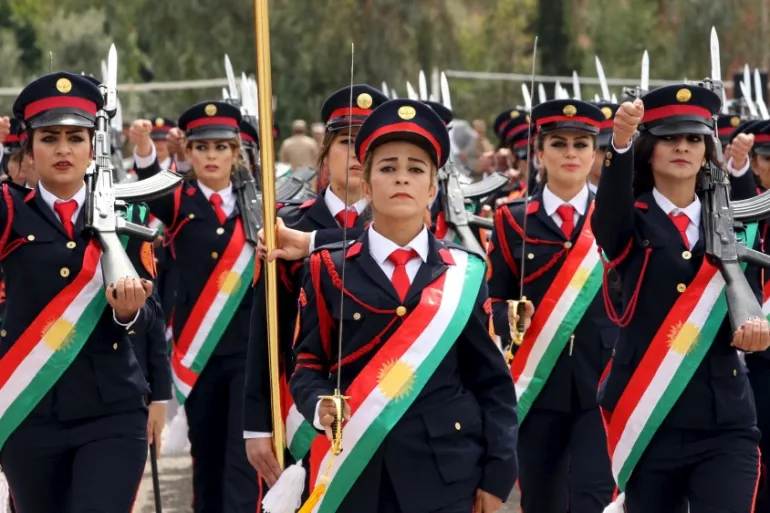
Kurdish military forces — the Peshmerga of Iraqi Kurdistan and the YPG/YPJ of northeastern Syria — became the primary ground forces that halted ISIS's territorial expansion and eventually drove it from its self-declared caliphate, at enormous human cost to Kurdish communities. The approximately 11,000 Kurdish fighters killed fighting ISIS — a figure cited by the Syrian Democratic Forces — represents a sacrifice that Western governments acknowledged with gratitude and subsequently treated as discharged by the formal territorial defeat of ISIS, without translating into durable political commitments to Kurdish security, autonomy, or protection from the other threats Kurds face.

Turkey, the PKK, and the Criminalization of Kurdish Political Life

The Turkish state's approach to the Kurdish question has oscillated between periods of military suppression, intermittent dialogue, and renewed military campaigns across the post-World War II period. The Kurdistan Workers' Party (PKK) — founded by Abdullah Öcalan in 1978 as a Marxist-Leninist nationalist movement — launched an armed insurgency against the Turkish state in 1984 that has killed approximately 40,000 people across four decades, combatants and civilians on both sides. The PKK's history includes documented atrocities against Kurdish civilians it regarded as collaborators, village guards, and political opponents — violence that must be acknowledged alongside the Turkish state's far more extensive violence against Kurdish populations. Turkey, the United States, and the European Union designate the PKK as a terrorist organization, a designation that has been used to criminalize Kurdish political expression far beyond the PKK's actual membership.

The Turkish state's treatment of Kurdish political parties, Kurdish elected officials, and Kurdish civil society has been extensively documented as disproportionate, systematic, and constitutive of political persecution. The Peoples' Democratic Party (HDP) — a legal Kurdish-majority political party that won over 10% of the vote in Turkish elections and sent dozens of members to parliament — has had its co-leaders imprisoned, its mayors removed and replaced by government-appointed trustees, and now faces a Constitutional Court case that could ban the party entirely. The imprisonment of Selahattin Demirtaş — the HDP's former co-leader, held since 2016 despite European Court of Human Rights rulings demanding his release — is among the most documented cases of political imprisonment in Europe's recent history.

The Anfal Campaign and Halabja: Genocide in Iraq

The Iraqi Kurds' most catastrophic twentieth-century experience was the Anfal campaign of 1986–1989, conducted by the Ba'ath government of Saddam Hussein under the operational direction of Ali Hassan al-Majid — known internationally as "Chemical Ali." The campaign combined conventional military operations, chemical weapons attacks, mass execution, forced displacement, and the systematic destruction of Kurdish villages across northern Iraq in a coordinated effort to depopulate Kurdish rural areas, break the Peshmerga resistance, and permanently alter the demographic character of northern Iraq. An estimated 50,000 to 182,000 Kurdish civilians were killed — a range whose imprecision reflects the systematic destruction of evidence and the ongoing recovery of mass graves. Approximately 4,000 Kurdish villages were destroyed. The campaign's legal characterization as genocide — recognized by Iraq, Norway, the United Kingdom, Sweden, and other governments — rests on documented evidence of intent to destroy the Kurdish people as such, not merely to defeat an armed insurgency.

The chemical weapons attack on Halabja on March 16–17, 1988 — in which Iraqi aircraft dropped mustard gas and nerve agents including sarin, tabun, and VX on a Kurdish city of approximately 80,000 people — killed between 3,200 and 5,000 civilians immediately and injured tens of thousands more, with long-term health consequences including elevated cancer rates, birth defects, and chronic respiratory disease that continue to affect the population decades later. Halabja remains the largest chemical weapons attack on a civilian population in history. The international community's response at the time was muted — the United States, which had been providing intelligence support to the Iraqi military, initially attributed the attack to Iran and declined to formally condemn Iraq — a failure of international accountability whose consequences for subsequent chemical weapons use have been extensively analyzed.

Syrian Kurds, Rojava, and Turkish Military Operations

The Syrian civil war created the conditions for the most significant experiment in Kurdish self-governance in the modern era — the Autonomous Administration of North and East Syria, known as Rojava — while simultaneously exposing Syrian Kurdish communities to devastating military violence from both ISIS and the Turkish state. The YPG (People's Protection Units) and its female wing YPJ, organized by the Democratic Union Party (PYD), established territorial control across a large area of northeastern Syria as the Assad government's authority collapsed, creating administrative structures grounded in a political philosophy of democratic confederalism developed by Abdullah Öcalan from his prison cell on İmralı Island. Rojava's experiment in multi-ethnic, feminist, and ecologically grounded governance attracted international attention and academic study even as it remained under existential military threat from multiple directions.

Turkey's military operations in northern Syria — Operation Olive Branch (2018) in Afrin, Operation Peace Spring (2019) in northeastern Syria following the US withdrawal, and subsequent operations — displaced hundreds of thousands of Kurdish civilians, enabled the deployment of Turkish-backed Syrian armed groups documented by human rights organizations as conducting looting, kidnapping, and killing of Kurdish civilians in captured areas, and systematically dismantled the Kurdish self-governance structures that had been established in the targeted territories. The 2019 operation — launched within days of President Trump's announcement of US withdrawal from northeastern Syria — was characterized by Kurdish leaders and many international observers as a betrayal of allies who had fought and died alongside US forces against ISIS. The Turkish government characterized it as a legitimate counterterrorism operation against PKK-affiliated forces.


Kurdish Communities: A Regional Encyclopedia

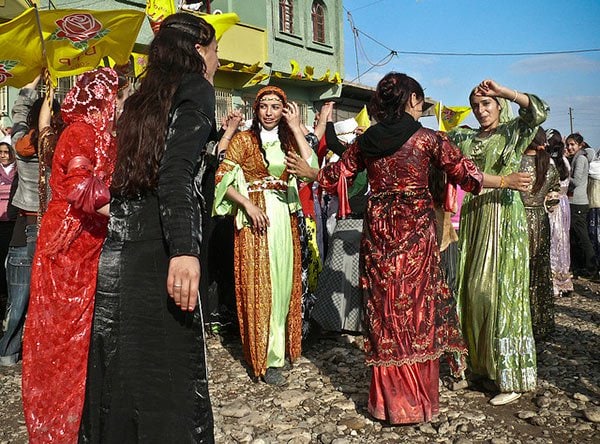
The Kurdish people are not a single community but a mosaic of regional, linguistic, religious, and political identities distributed across four countries and a global diaspora. The entries below document the principal Kurdish communities — their geographic anchors, languages, social organization, religious traditions, and specific experiences of state violence, jihadist persecution, and political struggle. Understanding this internal diversity is essential to understanding both the vitality of Kurdish culture and the complexity of the political challenges Kurdish communities face across four different state contexts simultaneously.

Kurmanji Kurds
Also known as: Northern Kurds · Badinani · Kurmanci

Kurmanji-speaking Kurds constitute the largest single Kurdish linguistic community — a group that spans the Turkish-Iraqi-Syrian-Armenian borderlands and whose language, written in the Latin script in Turkey and Syria and in Arabic script in Iraq, serves as the primary vehicle for Kurdish literary and cultural production in the region's western and northern zones. The Kurmanji literary tradition includes a rich oral poetry tradition — the dengbêj (story-singers) whose epic narratives preserve Kurdish history and mythology — and a modern written literature developed in exile and diaspora that has flowered despite systematic suppression in Turkey, where the Kurdish language was banned from public life for decades and its teaching in schools was only partially permitted after 2003.

Kurmanji Kurds in Turkey bear the most severe burden of state suppression within the Kurdish world — decades of military operations in the southeast, forced village evacuations affecting approximately three million people during the 1984–1999 period of intense PKK conflict, the destruction of thousands of villages, and a legal and political framework that has criminalized Kurdish cultural expression, political organization, and advocacy for Kurdish rights. The PKK insurgency has brought genuine violence to Kurmanji communities alongside state violence — a double burden of insecurity that has driven massive urbanward and Europeward migration.

Conflict Exposure Kurmanji Kurds in Turkey have experienced the forced evacuation of approximately 3,000–4,000 villages, the killing of tens of thousands of civilians and combatants across four decades of armed conflict, the imprisonment of tens of thousands for political offenses, and the systematic destruction of Kurdish cultural institutions. In Syria, Kurmanji Kurdish communities in Afrin and northeastern Syria have faced Turkish military operations, displacement, and the documented looting and abuse of civilians by Turkish-backed armed groups.
Sorani Kurds
Also known as: Central Kurds · Sulaimani Kurds · Iraqi Kurds (majority)

Sorani Kurds — concentrated in the Sulaymaniyah and Erbil governorates of Iraqi Kurdistan and in the Iranian Kurdistan Province — are the primary population of the Kurdistan Region of Iraq (KRI), the most politically advanced Kurdish autonomous entity in the world. The KRI, established in its current form following the 2003 US-led invasion of Iraq, has functioned as a self-governing region with its own president, parliament, military (the Peshmerga), and increasingly its own foreign policy relationships — hosting international oil company operations, maintaining its own diplomatic presence in multiple countries, and functioning in significant respects as a de facto independent state within the formal framework of Iraqi federalism.

The Sorani-speaking communities of Sulaymaniyah were the primary victims of the Anfal campaign — the villages of the Sulaymaniyah and Erbil governorates were systematically destroyed, their populations killed or driven into the desert, in operations that constitute the most extensively documented episode of genocide against the Kurdish people. The recovery of mass graves containing Anfal victims has continued for decades and remains incomplete. The Kurdish community's memory of Anfal — transmitted through survivor testimony, the Halabja Memorial Museum, and the cultural production of a generation that lived through or was born immediately after the genocide — is the defining experience of political consciousness for Iraqi Sorani Kurds.

Conflict Exposure Iraqi Sorani Kurds survived the Anfal genocide (1986–1989), the Halabja chemical weapons attack (1988), the failed 1991 uprising and its brutal suppression, the 1990s civil war between the KDP and PUK, and the ISIS advance of 2014 that reached the gates of Erbil before being halted with US air support. The ISIS advance displaced over one million people within Iraqi Kurdistan and produced the Yazidi genocide against the Sinjar Kurds. The KRI's Peshmerga bore the ground combat burden of defeating ISIS in Iraq at a cost of thousands of fighters killed.
Yazidis
Also known as: Êzidî · Yazidi Kurds · People of the Peacock Angel

The Yazidis are a Kurdish-speaking religious minority whose faith — one of the oldest continuously practiced religions in the world — synthesizes elements of ancient Iranian, Mesopotamian, and early monotheistic traditions into a distinctive theology centered on the Peacock Angel (Melek Taus) and a sacred cosmology transmitted through an oral tradition of hymns and prayers. They are divided into endogamous castes with distinct ritual roles, and their community is closed to conversion: no one may join the Yazidi faith. This theological distinctiveness — particularly the role of the Peacock Angel, whom some Islamic theologians have conflated with Satan — has made the Yazidis the target of seventy-three documented genocides (ferman) across their history, a count maintained in Yazidi communal memory as a testament to their extraordinary survival against persecution.

The Yazidi homeland of Sinjar (Shengal) — a mountain massif in northwestern Iraq that has served as a refuge and sacred center for the community for millennia — was overrun by ISIS forces on August 3, 2014, in an event that the UN formally recognized as genocide. In a matter of days, ISIS killed thousands of Yazidi men and older women, enslaved approximately 6,400 Yazidi women and girls in a systematic program of sexual slavery explicitly justified in ISIS theological publications, and drove tens of thousands of survivors to the summit of Sinjar Mountain where they faced death from dehydration and exposure before a combination of YPG Kurdish forces from Syria and US airdrops opened a corridor for evacuation.

Conflict Exposure The 2014 Yazidi genocide is the most documented atrocity of the ISIS period — recognized as genocide by the UN, the US, the EU Parliament, and multiple governments. Approximately 2,700–3,000 Yazidi women and girls remain missing as of 2025, held or unaccounted for since 2014. Mass graves containing Yazidi victims continue to be discovered across the Sinjar area. The Yazidi community's reconstruction is hampered by ongoing insecurity in Sinjar, where Iranian-backed Iraqi militias, Turkish military forces, PKK-affiliated groups, and the Iraqi government all maintain competing armed presences on territory that is the Yazidis' ancestral home.
Iranian Kurds
Also known as: Kurds of Rojhelat · Eastern Kurds · Iranian Kurdistan

Iranian Kurds — inhabitants of the region Kurds call Rojhelat (Eastern Kurdistan) — occupy a doubly marginal position within the Islamic Republic: ethnically non-Persian and predominantly Sunni Muslim in a state whose legitimizing ideology is rooted in Shia Persian identity. The brief Republic of Mahabad (1946) — the only independent Kurdish state to exist in modern times, lasting eleven months before being crushed by Iranian military forces with tacit Soviet withdrawal of support — remains the foundational symbol of Kurdish national consciousness in Iran and a constant reference point for the KDPI (Kurdistan Democratic Party of Iran) and Komala, the two principal Kurdish political organizations that have maintained armed resistance and exile politics for decades.

The Islamic Republic's suppression of Iranian Kurdish political life has been sustained and lethal since the revolution's first weeks in 1979, when Khomeini declared jihad against Kurdish organizations seeking autonomy. IRGC military operations in Iranian Kurdistan have killed thousands of combatants and civilians. The execution of Kurdish political prisoners has been documented at rates dramatically disproportionate to the Kurdish share of the population — Amnesty International's annual reports consistently identify Iranian Kurds among the highest-represented groups in Iran's execution statistics. Kolbar killings — border guards shooting Kurdish cross-border traders on mountainous smuggling routes that represent the only livelihood available in chronically underdeveloped Kurdish provinces — have been documented at a rate of five to ten per month for years.

Conflict Exposure Iranian Kurds have faced near-continuous armed conflict with IRGC forces since 1979, supplemented by missile strikes on KDPI and Komala headquarters in Iraqi Kurdistan — including a January 2024 ballistic missile strike on Erbil that killed senior KDPI members and civilians. The killing of Mahsa (Zhina) Amini — a 22-year-old Kurdish Iranian woman — by the morality police in September 2022 triggered Iran's most significant uprising in decades, whose slogan "Jin, Jiyan, Azadî" (Woman, Life, Freedom) originates directly in Kurdish political culture.
Syrian Kurds & Rojava
Also known as: Kurds of Rojava · PYD · AANES · West Kurdistan

Syrian Kurds — stripped of citizenship by a 1962 Syrian government decree that rendered approximately 120,000 people stateless overnight, a number that had grown to over 300,000 by the civil war — established the most ambitious experiment in Kurdish self-governance in modern history when the Autonomous Administration of North and East Syria (AANES), known as Rojava, emerged from the Syrian civil war's collapse of central state authority. The AANES, governed through a system of councils at municipal, regional, and cantonal levels with co-presidency arrangements mandating gender parity at every tier, and supported militarily by the YPG and YPJ (Women's Protection Units), has administered a multi-ethnic territory of several million people since 2012 while simultaneously fighting ISIS, defending against Turkish military operations, and negotiating an extraordinarily complex political environment involving the Assad government, Russia, the US, Turkey, and Iraqi Kurdistan.

The YPJ — the all-female military wing of the YPG — became one of the most internationally recognized symbols of the Syrian conflict, generating global attention for both the novelty of an all-female fighting force and the ideological significance of women bearing arms specifically against ISIS's ideology of female subjugation. Thousands of YPJ fighters have been killed fighting ISIS and in Turkish military operations — deaths that have been mourned within Kurdish communities worldwide and that represent the human cost of the Rojava project's military dimensions.

Conflict Exposure Syrian Kurds have faced ISIS genocide against their Yazidi community, the siege of Kobane, Turkish military operations in Afrin (2018) and northeastern Syria (2019) that displaced hundreds of thousands, and the documented conduct of Turkish-backed Syrian armed groups in captured territories including looting, kidnapping, and killing of Kurdish civilians. The collapse of the Assad government in late 2024 and HTS's military expansion have created new uncertainties for Rojava's future and for the Kurdish civilian populations of northeastern Syria.
Alevi & Zaza Kurds
Also known as: Kızılbaş · Dimili · Zaza people · Dersimli

The Zaza-speaking Alevi communities of eastern Anatolia — concentrated in the Dersim region (now Tunceli Province) and surrounding areas — occupy a distinctive position within the broader Kurdish world, speaking a language that is related to but distinct from Kurmanji and Sorani and practicing Alevism, a syncretic religious tradition rooted in Anatolian Shia and pre-Islamic spiritual practices that is distinct from both mainstream Sunni Islam and Twelver Shia. Alevi religious life centers on the cem ceremony — a communal gathering involving music, poetry, and collective prayer — and is led by dede (hereditary spiritual guides) rather than the mosque-based imams of Sunni tradition. The combination of linguistic distinctiveness, religious difference from Sunni Islam, and geographic isolation in the Dersim highlands produced a community whose relationship to both the Turkish state and to Sunni Kurdish political movements has been complex and sometimes antagonistic.

The Dersim massacre of 1937–1938 — in which Turkish state military forces and air power killed an estimated 13,000–14,000 Alevi Kurds following an uprising against forced resettlement and cultural assimilation policies — represents one of the most severe state massacres in Turkish Republican history. Conducted under the personal supervision of Interior Minister Şükrü Kaya and framed as a pacification operation, the massacre involved aerial bombardment, ground operations, mass executions, forced relocations, and the systematic destruction of Alevi religious and cultural infrastructure. Turkish Prime Minister Erdoğan formally acknowledged the Dersim massacre in 2011 as "one of the most tragic events of the recent past" — a remarkably explicit acknowledgment for Turkish political discourse, though critics noted the acknowledgment was made partly as a political attack on the Republican People's Party, whose founders had ordered the massacre.

Conflict Exposure Alevi Kurds face double discrimination in Turkey — as Kurds in a state that has suppressed Kurdish identity, and as Alevis in a state whose institutional framework privileges Sunni Islam. Alevi cemevi (prayer houses) are not recognized as equivalent to mosques by Turkish law, receiving no state funding despite the Diyanet (Directorate of Religious Affairs) funding only Sunni mosques. The Dersim massacre has never been subject to formal accountability, and efforts by descendants of victims to obtain legal recognition of the killings through Turkish courts have been systematically dismissed.
Feyli Kurds
Also known as: Faili Kurds · Shia Kurds · Lurish Kurds

Feyli Kurds — Shia-practicing Kurds concentrated primarily in Baghdad and the Diyala Province borderlands between Iraq and Iran — occupied an extraordinarily vulnerable position under Saddam Hussein's Ba'ath regime, targeted simultaneously on ethnic grounds as Kurds and on sectarian grounds as Shia Muslims in a regime whose core was Sunni Arab. The Ba'ath government conducted a systematic campaign of Feyli Kurdish deportation and denationalization beginning in the 1970s and intensifying in the 1980s: Feyli Kurds were stripped of their Iraqi citizenship on the grounds that they were of "Iranian origin" — a claim applied selectively and without evidence — and forcibly expelled across the border into Iran, with their property confiscated and their men in many cases disappeared into detention from which they did not return.

An estimated 200,000–500,000 Feyli Kurds were deported from Iraq between the 1970s and 1988, in operations that killed thousands and destroyed families across generations. The young men detained at the time of deportation — separated from their families at the border — were taken to Ba'ath detention facilities where the vast majority were killed, their families receiving no notification and no remains. The mass graves of Feyli Kurdish men — discovered following the 2003 US-led invasion — have allowed some families to recover remains after decades of not knowing whether their relatives were alive or dead.

Conflict Exposure Feyli Kurds experienced systematic deportation, denationalization, property confiscation, and the disappearance of thousands of young men into Ba'ath detention facilities where they were killed. The Human Rights Watch documentation of Feyli Kurdish persecution constitutes one of the most detailed records of Ba'ath regime ethnic cleansing outside the Anfal campaign. Post-2003 Iraq has partially restored Feyli Kurdish citizenship rights, but recovery of confiscated properties and accountability for disappearances remain incomplete.
The Kurdish Diaspora
Also known as: Kurdish Germans · Kurdistani diaspora · Exile Kurds

The Kurdish diaspora — concentrated most heavily in Germany, Sweden, and the United Kingdom, with significant communities across Western Europe and smaller communities in North America and Australia — represents the accumulated product of displacement across multiple waves: Turkish Kurds who migrated as guest workers in the 1960s and 1970s and were joined by asylum seekers fleeing the PKK conflict; Iraqi Kurds who fled the Anfal campaign and the 1991 failed uprising; Iranian Kurds fleeing IRGC persecution; and Syrian Kurds displaced by the civil war. Germany alone is home to an estimated 800,000–1,000,000 Kurds — the largest Kurdish population in any country outside the Middle East — making it a de facto Kurdish political capital in exile.

The Kurdish diaspora has been central to documenting and publicizing the atrocities committed against Kurdish communities — the Kurdish Institute in Paris, established in 1983, has been a key institution for Kurdish cultural and political advocacy, while diaspora journalists, human rights activists, and political organizations have maintained international attention on Kurdish persecution at moments when the world's attention has been directed elsewhere. Diaspora Kurds have also been central to the preservation of Kurdish language and culture in conditions where it is suppressed in the homeland: Kurdish-language broadcasting, publishing, and educational institutions in Europe have kept linguistic and cultural traditions alive that the states of the region have sought to extinguish.

Conflict Exposure The Kurdish diaspora faces specific surveillance and political pressure from Turkish intelligence services — documented cases of Turkish intelligence operations targeting Kurdish political activists in Germany and other European countries have created a climate of insecurity for diaspora political activity. Germany's PKK ban — which prohibits PKK symbols, fundraising, and organizational activity — has been applied in ways that Kurdish civil society organizations argue criminalizes legitimate Kurdish cultural and political expression far beyond the PKK's actual membership or activities. Sweden's 2023 agreement to extradite Kurdish individuals to Turkey as a condition of NATO membership approval provoked intense protest from the Kurdish diaspora.

Crimes Against the Kurdish People: A Documentation Record

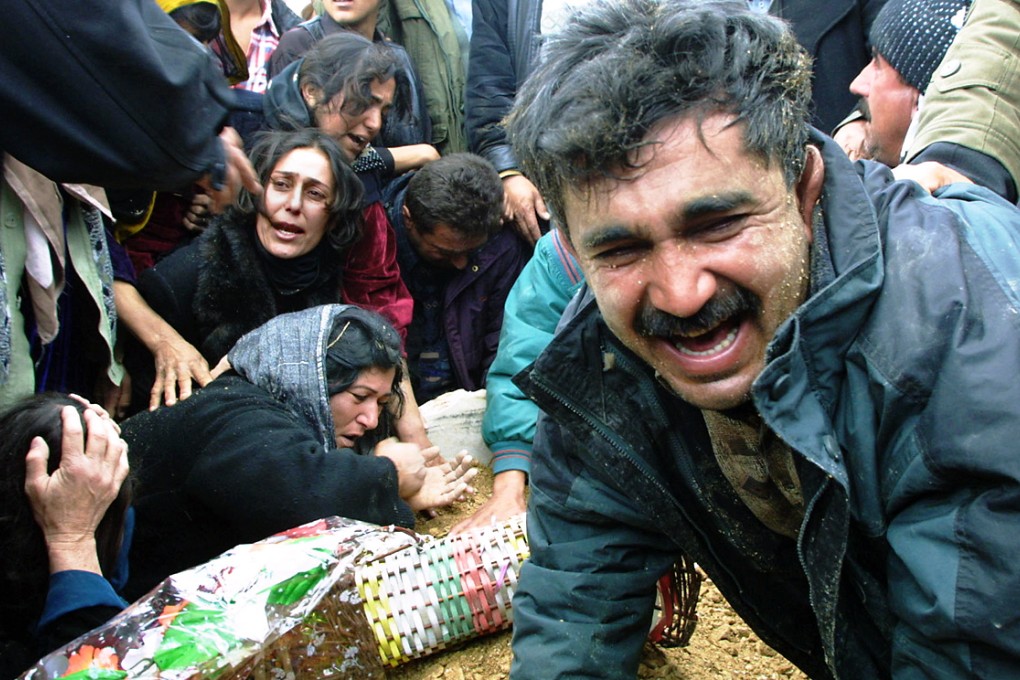
The following section documents the principal crimes committed against Kurdish communities across the modern period — from the post-World War I massacres and the Dersim genocide through the Anfal campaign and Halabja chemical weapons attack, the Yazidi genocide, and the contemporary patterns of state violence, jihadist persecution, and political imprisonment that continue to define the Kurdish experience across four countries. These events span more than a century. Some have been formally recognized as genocide by multiple governments and international bodies. None has produced anything approaching comprehensive accountability, and in most cases the structures of impunity that permitted them remain intact.

01
State Massacre · Cultural Destruction
The Dersim Massacre and Early Turkish Republican Suppression

The Turkish Republic's suppression of Kurdish identity was inscribed in its foundational institutions from the beginning. The Sheikh Said rebellion of 1925 — a Kurdish uprising with both nationalist and religious dimensions — was suppressed with overwhelming military force, with Sheikh Said and 47 other leaders hanged in public executions. The subsequent Law on the Maintenance of Order (Takrir-i Sükun) was used to shut down Kurdish newspapers, associations, and political parties and to imprison or exile Kurdish intellectuals and leaders in operations that effectively decapitated Kurdish civil society across southeastern Anatolia. Hundreds of villages were destroyed and populations forcibly relocated in the years following the rebellion's suppression.

The Dersim massacre of 1937–1938 — conducted against the Alevi Kurdish (Zaza-speaking) communities of Dersim in response to an uprising against forced resettlement — killed an estimated 13,000–14,000 people through a combination of aerial bombardment, ground operations, mass execution, and forced death marches. The survivors were forcibly relocated to western Turkey. The massacre was ordered at the highest levels of the Turkish Republic and executed with the full military and administrative apparatus of the state. It remains one of the most severe state massacres in twentieth-century Turkish history and was not formally acknowledged by any Turkish government until Erdoğan's partial recognition in 2011.

1937–1938 — Dersim Massacre Turkish military forces and aircraft killed an estimated 13,000–14,000 Alevi Kurdish civilians in Dersim, with approximately 11,000 survivors forcibly relocated to western Turkey. The operations included aerial bombardment of mountain villages, ground-level executions, and the deliberate destruction of the Alevi cultural and religious infrastructure of the region. General İhsan Sabri Çağlayangil — later a Turkish foreign minister — participated in the operations and described their character in memoir accounts. No accountability process has ever been conducted.
1925–1930s — Cultural Suppression Campaign Following the Sheikh Said rebellion, the Turkish government banned the Kurdish language, Kurdish names, and Kurdish dress in public spaces; closed all Kurdish cultural, religious, and educational institutions; and renamed Kurdish towns and villages with Turkish names in a systematic program of cultural erasure that continued for decades. Kurdish children were prohibited from speaking their language in schools. The term "Kurdish" was replaced in official discourse with "Mountain Turk" — a denial of ethnic existence written into state administrative language.
02
War Crime · Genocide
The Halabja Chemical Weapons Attack — March 1988

The chemical weapons attack on Halabja on March 16–17, 1988 — in which Iraqi aircraft dropped mustard gas and nerve agents including sarin, tabun, and VX on the Kurdish city during the Iran-Iraq War — killed between 3,200 and 5,000 civilians immediately and injured tens of thousands more. It remains the largest chemical weapons attack against a civilian population in history. The victims — men, women, children, and infants — died in their homes and in the streets, their bodies found in the positions of sudden death: mothers clutching children, families collapsed in doorways attempting to flee. The attack was part of the broader Anfal campaign against Kurdish civilians.

The long-term health consequences of the Halabja attack have been severe and extensively documented: elevated rates of cancer — particularly lymphoma and lung cancer — birth defects, miscarriage, chronic respiratory disease, and neurological disorders have affected the population at rates far exceeding national averages across the decades since 1988. The contamination of soil and groundwater has created ongoing environmental health consequences for communities living in the attack area. A 2010 study published in the British medical literature found cancer rates in Halabja approximately twelve times the national average — a legacy of chemical weapons use that continues to kill civilians who were not born when the attack occurred.

March 16–17, 1988 — The Attack Iraqi Air Force aircraft dropped chemical bombs containing mustard gas and multiple nerve agents on Halabja over approximately 48 hours. The attack killed 3,200–5,000 people immediately. US Defense Intelligence Agency documents declassified decades later revealed the CIA and DIA were aware of Iraqi chemical weapons use against Kurdish civilians during this period while the US government continued to provide intelligence support to the Iraqi military — implicating the United States in a degree of complicity with the attack that has never been formally acknowledged.
2010–Present — Ongoing Health Legacy Peer-reviewed medical research published in journals including the Lancet and JAMA has documented dramatically elevated cancer rates, birth defect rates, and chronic disease among Halabja's population and their descendants — a continuing death toll from a weapons attack that ended in 1988. The Iraqi government established the Halabja Memorial Museum and officially recognized the attack as genocide in 2010. Ali Hassan al-Majid ("Chemical Ali") was executed for his role in the Anfal campaign, including Halabja, in 2010 — the most significant accountability for Kurdish genocide achieved in any legal forum.
03
Forced Displacement · Cultural Destruction
Turkish State Forced Village Evacuations and Displacement

Between 1984 and 1999 — during the most intense phase of the PKK armed conflict — the Turkish security forces evacuated and destroyed between 3,000 and 4,000 Kurdish villages across southeastern Turkey, forcibly displacing an estimated two to three million Kurdish civilians. The village evacuations were conducted ostensibly to deny the PKK a civilian support base in the rural southeast, but their implementation — burning of villages, destruction of crops and livestock, forced departure of populations with little notice — produced mass displacement whose humanitarian consequences included deaths, destitution, and the irreversible destruction of traditional Kurdish agricultural and pastoral communities that had existed in the mountains for generations.

The village evacuations produced one of the largest internal displacement crises in Turkey's history, driving Kurdish rural populations into the shantytowns of southeastern cities and into western Turkish urban centers — particularly Istanbul, where an estimated one to two million Kurds live in informal settlements. The destruction of the rural Kurdish economy — replacing subsistence farming and herding communities with urban poverty — has had long-term consequences for Kurdish social structure and political organization that persist to the present day. Human Rights Watch documented the evacuations extensively, and the European Court of Human Rights ruled in hundreds of cases that Turkey had violated the rights of displaced Kurdish villagers — rulings that Turkey has paid compensation for in some cases while declining to implement structural accountability mechanisms.

1984–1999 — Systematic Village Destruction Turkish security forces, operating under emergency rule provisions that suspended normal legal protections across ten southeastern provinces, burned and destroyed an estimated 3,000–4,000 Kurdish villages and hamlets, forcibly evacuating their populations. Human Rights Watch documented cases of villages burned within hours of evacuation orders, livestock killed, food stores destroyed, and populations forced to march to district centers in winter conditions. The European Commission on Human Rights received over 10,000 individual applications related to the village evacuations, the largest single-country caseload in its history at the time.
2015–2016 — Urban Warfare and Civilian Casualties Following the collapse of the 2013–2015 peace process between the Turkish government and the PKK, Turkish security forces conducted major military operations in Kurdish urban centers including Cizre, Sur (historic Diyarbakır), Nusaybin, and Silopi — operations involving tank fire, aerial bombardment, and extended curfews that killed civilians, destroyed historic neighborhoods, and again displaced tens of thousands. The UN High Commissioner for Human Rights documented violations of international humanitarian law in these operations including civilian deaths, destruction of medical facilities, and denial of evacuation access to wounded civilians.
04
Political Persecution · Imprisonment
Mass Imprisonment of Kurdish Political Leaders and Activists

The criminalization of Kurdish political life — through broadly drafted anti-terrorism laws applied to Kurdish political parties, elected officials, journalists, academics, and civil society organizations — has produced mass imprisonment of Kurdish activists across Turkey, Iran, and Syria as a systematic instrument of political suppression. In Turkey, the use of the Anti-Terror Law (TMK) and the Turkish Penal Code's provisions on membership in terrorist organizations has resulted in the imprisonment of thousands of HDP party members, dozens of elected Kurdish mayors removed from office and imprisoned, Kurdish journalists facing terrorism charges for reporting on the Kurdish conflict, and academics imprisoned for signing a peace petition. The pattern constitutes what the Council of Europe, the European Parliament, and multiple UN special rapporteurs have characterized as the systematic criminalization of political opposition.

The imprisonment of Abdullah Öcalan — the PKK founder and ideological leader who was captured in Kenya in 1999 and transferred to solitary confinement on İmralı Island in the Sea of Marmara, where he has been held for over 25 years — represents the most politically significant political detention in the Kurdish world. Öcalan's continued imprisonment, in conditions that the European Committee for the Prevention of Torture has repeatedly described as constituting cruel and inhuman treatment, serves as both a symbol of Kurdish political persecution and a structural obstacle to any negotiated resolution of the Turkish-Kurdish conflict, given his continued influence over the PKK's political direction despite near-total communication isolation.

2016–Present — Mass HDP Prosecutions Following the July 2016 coup attempt, Turkish authorities prosecuted HDP co-chairs Selahattin Demirtaş and Figen Yüksekdağ alongside thousands of party members on terrorism charges. Demirtaş — who received 10% of the vote in the 2014 presidential election — has been imprisoned since November 2016 despite two European Court of Human Rights rulings ordering his release. The Constitutional Court case that could ban the HDP entirely, if successful, would disenfranchise the approximately 6 million Turks who voted for the party in 2023.
1999–Present — Öcalan's Solitary Confinement Abdullah Öcalan has been held in solitary confinement on İmralı Island since 1999 — initially the sole prisoner on the island, later joined by a handful of others. The European Committee for the Prevention of Torture has described his conditions as constituting isolation amounting to inhuman treatment. Öcalan has been permitted no legal visits for extended periods and no family visits for years at a time. His lawyers have been barred from access to their client for years simultaneously — a detention condition that violates multiple provisions of international human rights law to which Turkey is a party.
05
Genocide · Chemical Warfare · Crimes Against Humanity
The Anfal Genocide — 1986–1989
50–182K Kurdish civilians killed — range reflects mass grave uncertainty
~4,000 Kurdish villages destroyed during the Anfal campaign
~1M Kurds internally displaced within Iraq during Anfal
3,200–5,000 Killed in Halabja chemical attack alone — March 16–17, 1988

The Anfal campaign — named after the eighth chapter of the Quran dealing with the spoils of war — was the systematic military, chemical, and administrative operation conducted by Saddam Hussein's Ba'ath regime against the Kurdish population of northern Iraq between 1986 and 1989, under the direction of Ali Hassan al-Majid (designated operational commander of the northern region in 1987). The campaign combined eight sequential military sweeps through Kurdish-controlled areas with chemical weapons attacks on civilian settlements, mass execution of captured males, forcible transfer of surviving populations to concentration camp-style facilities (the Topzawa and Dibs camps), destruction of approximately 4,000 Kurdish villages, and the systematic depopulation of the Kurdish rural highlands through a combination of killing and forced displacement to government-controlled collective towns.

The documentary record for the Anfal campaign is exceptionally strong by the standards of twentieth-century atrocities — because Iraqi Kurdish forces captured approximately 14 tonnes of Ba'ath government documents during the 1991 uprising, which were subsequently transferred to Human Rights Watch and analyzed in detail by Peter Galbraith, Joost Hiltermann, and other researchers. These documents — including operational orders, execution reports, census records of displaced populations, and administrative correspondence discussing the campaign in explicit terms — established beyond legal doubt that the campaign constituted genocide as defined under the 1948 Genocide Convention: a deliberate program to destroy the Kurdish people as such, not merely to defeat an armed insurgency.

The chemical weapons attacks that accompanied the Anfal campaign — including Halabja but extending to dozens of other Kurdish villages attacked with mustard gas and nerve agents — represented an unprecedented use of weapons of mass destruction against a civilian population by a state against its own citizens. Physicians for Human Rights investigations in the early 1990s documented chemical weapons casualties in multiple attack sites, with soil samples taken from attack locations subsequently analyzed in American laboratories and confirming the presence of mustard gas residue decades after the attacks. The international community's muted response to the Anfal campaign — occurring during the Iran-Iraq War, when Western governments prioritized support for Iraq against Iran — represented one of the most consequential failures of the international human rights system in the late twentieth century.

1987–1989 — The Eight Anfal Operations The Ba'ath regime conducted eight sequential military sweeps across Kurdish regions — from the Jafati Valley in the south to the Badinan area in the north — in which Kurdish villages were bombed, their populations rounded up and transferred to collective facilities, the men and older boys separated and executed, and the villages themselves bulldozed to prevent return. Human Rights Watch documented mass graves from this period across northern Iraq; Iraqi courts later found that the Anfal operations in the Badinan area alone killed approximately 182,000 people.
April 1988 — Anfal Chemical Attacks Beyond Halabja In addition to Halabja, Iraqi forces conducted chemical weapons attacks on dozens of Kurdish villages during the Anfal campaign, including the villages of Goktapa, Askar, and settlements across the Germian area. Physicians for Human Rights documented attacks on over 40 villages using chemical weapons agents during the campaign period. The cumulative death toll from chemical weapons attacks during the full Anfal period significantly exceeds the Halabja figure alone.
1992 — Human Rights Watch Documentary Record Human Rights Watch researchers, working with the captured Ba'ath documents transported to the United States with the assistance of Peter Galbraith, published Genocide in Iraq: The Anfal Campaign Against the Kurds — the most detailed documentary account of a genocide produced during the twentieth century, based on the perpetrator government's own internal documentation. The report named the campaign as genocide under international law and provided the evidentiary basis for subsequent legal proceedings, including the trial of Ali Hassan al-Majid before the Iraqi High Tribunal that resulted in his execution in 2010.
2010 — Accountability: Ali Hassan al-Majid Executed Ali Hassan al-Majid — "Chemical Ali" — was convicted by the Iraqi High Tribunal of genocide, crimes against humanity, and war crimes for his role in the Anfal campaign, including ordering the Halabja chemical attack, and was executed in January 2010. His conviction and execution represent the most significant accountability achieved for crimes against the Kurdish people in any legal forum — and the only high-level conviction. Saddam Hussein, executed in 2006, was tried and convicted for the Dujail massacre of Shia Muslims rather than for the Anfal genocide, meaning the genocide's primary architect was never formally judged for that specific crime before his execution.
06
Genocide · Sexual Slavery · Crimes Against Humanity
The ISIS Yazidi Genocide — August 2014
~5,000 Yazidis killed in the initial ISIS assault on Sinjar
~6,400 Yazidi women and girls taken into sexual slavery by ISIS
~2,700 Yazidi women and girls still missing as of 2025
80+ Mass graves discovered in Sinjar containing Yazidi victims

On August 3, 2014, ISIS forces overran the Sinjar region of northwestern Iraq — the ancestral homeland and sacred center of the Yazidi people — in a coordinated assault following the withdrawal of Kurdish Peshmerga forces that had been protecting the area. In the hours that followed, ISIS fighters separated the Yazidi population by sex and age: men and older boys were taken to execution sites and shot in mass killings documented across dozens of locations; younger boys were taken for forced recruitment into ISIS forces; women and girls were enslaved in a system explicitly documented in ISIS's own theological publications as religiously sanctioned, with theological arguments developed to justify the enslavement of women whose faith ISIS classified as polytheist apostasy.

The ISIS sexual slavery system imposed on Yazidi women and girls was systematic, bureaucratically organized, and documented in extraordinary detail — both by ISIS's own publications (which described the theological justifications for enslaving Yazidi women in the ISIS magazine Dabiq) and by the testimony of thousands of survivors. Women and girls were bought and sold at slave markets, transferred between fighters, subjected to systematic rape and sexual violence, and in documented cases killed when they attempted to escape or resist. Nadia Murad — a Yazidi woman who survived enslavement and subsequently became a UN Goodwill Ambassador and Nobel Peace Prize laureate — has provided the most internationally prominent testimony of the genocide's character, bringing a level of global attention to Yazidi suffering that partially but not completely translated into meaningful international action.

The UN Security Council formally recognized the ISIS campaign against the Yazidis as genocide in August 2014. The United States formally recognized it as genocide in 2017. The European Parliament, the UK Parliament, the Council of Europe, and multiple national governments have made equivalent recognitions. Yet the gap between recognition and accountability remains enormous: most ISIS fighters who participated in the Yazidi genocide have not been prosecuted. The mass graves of Sinjar — over 80 documented by Iraqi authorities — contain the remains of thousands of victims whose individual identification has proceeded slowly. Approximately 2,700 Yazidi women and girls remain unaccounted for as of 2025, more than a decade after the genocide began.

August 3, 2014 — The Sinjar Assault ISIS forces captured the Sinjar region within hours of the Peshmerga withdrawal, killing approximately 5,000 Yazidis in mass executions at sites including Kocho village — where the entire male population was executed — and driving tens of thousands of survivors onto the summit of Mount Sinjar, where they faced death from dehydration and exposure before US airdrops and a YPG/YPJ corridor from Syria enabled evacuation. The bodies of those executed were left in mass graves across the Sinjar plain, some of which have since been excavated by forensic teams.
August 2014 – 2019 — The Slave Markets ISIS operated an organized slave market system through which Yazidi women and girls were bought, sold, and transferred across ISIS-controlled territory in Syria and Iraq. ISIS's own financial documents — captured by US Special Operations Forces and analyzed by the Conflict Research Programme — recorded transactions involving Yazidi slaves with cash valuations, receipts, and bureaucratic tracking. Women were priced by age, with young girls commanding the highest prices. The system was not informal but institutionalized — a deliberate religious-political statement about the permissibility of enslaving non-Muslim women that ISIS sought to demonstrate through scale and documentation.
2018 — Nobel Peace Prize: Nadia Murad Nadia Murad — a Yazidi survivor of ISIS sexual enslavement who escaped captivity in 2014 and subsequently became the UN's first Goodwill Ambassador for the Dignity of Survivors of Human Trafficking — was awarded the Nobel Peace Prize in 2018, shared with Congolese physician Denis Mukwege. The prize brought unprecedented global attention to the Yazidi genocide and to the use of sexual violence as a weapon of war. Murad has continued to advocate for the prosecution of ISIS perpetrators, the recovery of missing women and girls, and the reconstruction of the Yazidi homeland in Sinjar.
07
Forced Displacement · War Crimes · Civilian Targeting
Turkish Military Operations Against Kurdish Communities in Syria
~300,000 Kurds displaced from Afrin following Operation Olive Branch (2018)
~180,000 Civilians displaced from northeastern Syria in first weeks of Operation Peace Spring (2019)
~11,000 SDF (predominantly Kurdish) fighters killed fighting ISIS
72 hours Between Trump's withdrawal announcement and Turkish military operation launch

Turkey's military operations in northern Syria — Operation Euphrates Shield (2016–2017), Operation Olive Branch against Afrin (2018), and Operation Peace Spring against northeastern Syria (2019) — have resulted in the displacement of hundreds of thousands of Kurdish civilians, the documented conduct of Turkish-backed Syrian National Army factions in ways that human rights organizations have characterized as war crimes, and the dismantling of the Kurdish self-governance structures established in Rojava. Human Rights Watch and Amnesty International documented looting, kidnapping, arbitrary detention, property seizure, and in documented cases killing of Kurdish civilians by Turkish-backed armed groups in areas captured from Kurdish forces — including the capture of Afrin, whose predominantly Kurdish population was largely displaced and whose property was systematically looted.

The October 2019 Operation Peace Spring — launched within 72 hours of the Trump administration's announcement of US withdrawal from the area — was described by Kurdish leaders as a direct consequence of US abandonment of allies who had fought and died alongside American forces in the campaign against ISIS. General Mazloum Kobani — the commander of the Syrian Democratic Forces — wrote publicly that Kurdish forces had faced "a moment of death" when the US withdrew, and that the subsequent Turkish operation killed civilians, displaced hundreds of thousands, and threatened the continued detention of thousands of ISIS prisoners held in SDF facilities — prisoners whose escape, if it occurred, would directly threaten Western security. The operation was condemned by the UN Secretary-General, the EU, and multiple NATO member governments, but produced no material Western response to halt it.

January–March 2018 — Operation Olive Branch, Afrin Turkish military forces and Turkish-backed Syrian National Army factions captured Afrin canton in northwestern Syria, displacing an estimated 300,000 Kurdish civilians who fled the military advance. Human Rights Watch documented systematic looting of Afrin by Turkish-backed factions — olive harvests taken, businesses stripped, homes occupied — and arbitrary detention, physical abuse, and killing of Kurdish civilians who remained or were captured. The Afrin region's Kurdish population has not been permitted to return, and demographic transformation of the area through settlement of Arab and Turkmen families has been documented by multiple human rights organizations.
October 2019 — Operation Peace Spring Turkish forces and Turkish-backed Syrian National Army factions advanced into northeastern Syria following the US withdrawal announcement, targeting the SDF-controlled border area between Serêkaniyê (Ras al-Ayn) and Girê Spî (Tel Abyad). Amnesty International documented the killing of Kurdish and Syriac Christian civilians, extrajudicial executions of captured SDF fighters, and the deliberate targeting of a vehicle carrying Kurdish politician Hevrin Khalaf, who was dragged from her car and killed by Turkish-backed fighters in an incident documented on video. Approximately 180,000 civilians were displaced in the operation's first weeks.
Ongoing — Drone Strikes on Kurdish Leadership Turkey has conducted a sustained campaign of drone strikes targeting Kurdish political and military leaders in northern Iraq and Syria, killing multiple senior figures of the PKK, KDPI, and SDF in strikes on Iraqi Kurdistan territory — including a January 2024 strike on Erbil — and in northeastern Syria. The strikes have killed both targeted individuals and civilians in their vicinity. Iraq has repeatedly condemned the strikes as violations of Iraqi sovereignty; the Turkish government characterizes them as legitimate counterterrorism operations against designated terrorist organizations.

If you or your community have been affected by the events described in this report, we invite you to contribute to our documentation record.

IFC — Newsletter Signup

Copyright 2026, International Freedom Coalition. All Rights Reserved.