Alawites: Region History
For over a millennium, the Alawite people of Syria and the broader Levant have endured cycles of persecution rooted in their identity as a heterodox religious minority. Branded heretics by Sunni legal scholars from the medieval period onward, subjected to forced conversions, massacres, and structural exclusion under successive Muslim empires, and now facing existential violence at the hands of Islamist armed groups following the collapse of Bashar al-Assad's regime in December 2024, the Alawites represent one of the most acutely endangered religious communities in the Middle East. This report examines the sustained ideological framework through which Islamist political theology has defined the Alawites as enemies to be eliminated — and the concrete human cost of that framework across centuries and into the present day.
Part I — Historical Foundations
The Theological Architecture of Persecution
The ideological basis for anti-Alawite persecution did not originate in modern Islamism — it was codified in the medieval period and has been transmitted across centuries as authoritative religious doctrine. The Alawite faith, which emerged from ninth-century Iraq through the teachings of Muhammad ibn Nusayr and was organized into a distinct community by the scholar al-Khasibī in tenth-century Aleppo, diverges from Sunni and mainstream Shia Islam in ways that Sunni legal scholars have historically treated not as theological difference but as apostasy demanding violent response.
The pivotal figure in this theological architecture is the Hanbali jurist Ibn Taymiyya (1263–1328), whose three fatwas against the Alawites — issued between 1305 and 1318 during the Mamluk period — constituted the foundational legal framework for their persecution in Islamic jurisprudence. Ibn Taymiyya declared the Alawites to be outside Islam entirely, describing them as worse enemies of Muslims than the Crusaders or Mongols, and adjudging them to be among the most dangerous of polytheist sects. His rulings called for punitive action against them and denied them the protections extended to recognized dhimmi (protected non-Muslim) communities. Critically, these fatwas were not merely the position of a fringe scholar — Ibn Taymiyya's legal legacy became foundational to modern Salafi and Wahhabi theology, giving his anti-Alawite rulings a long afterlife that continues to operate in the ideology of contemporary Islamist armed groups.
From Medieval Fatwa to Ottoman Persecution
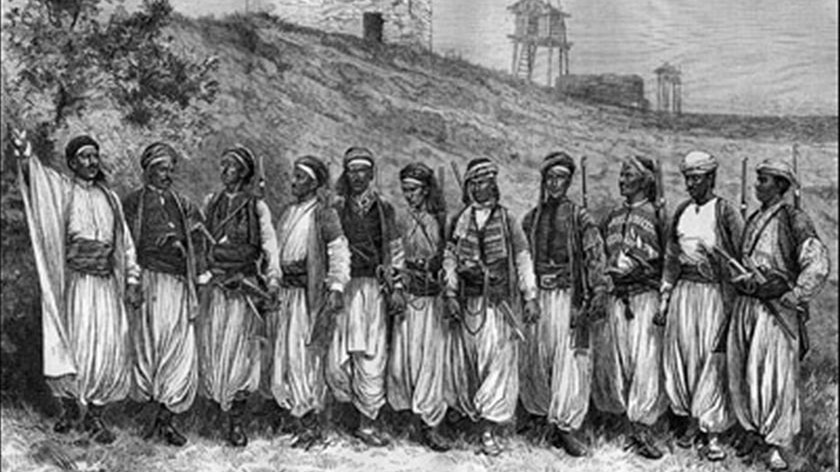
The Mamluk and Ottoman authorities used Ibn Taymiyya's fatwas as religious justification for campaigns against Alawite communities. Under Ottoman Sultan Selim I, Alawites in Aleppo were subjected to a massacre at the Great Mosque in April 1517, one of the documented episodes of organized violence that drove surviving Alawites from the city and into the isolated coastal mountain range of northwestern Syria — the Jabal al-Sahiliyya — where they would remain geographically concentrated, socially marginalized, and economically impoverished for the following four centuries. Throughout the Ottoman period (1516–1918), Alawites were classified in a legal grey zone: not recognized as Muslims, not granted the formal protections of dhimmi status, and subjected to specific taxation and periodic violence when they asserted communal interests.
The practice of taqiyya — the strategic concealment of religious identity to avoid persecution — became a survival mechanism deeply embedded in Alawite communal life precisely because open profession of Alawite belief carried genuine risk of death under successive Sunni-governed states. This practice of concealment, noted by Muslim scholars with suspicion, was itself then used as further evidence of Alawite untrustworthiness and heresy — a self-reinforcing logic of persecution that made any demonstration of religious authenticity grounds for suspicion.
The Alawites were not simply a persecuted minority — they were a community whose existence was repeatedly adjudged illegitimate by the religious authorities of the states under which they lived. That is a fundamentally different position from ordinary discrimination. It is the theological negation of the right to exist as who you are.
— Scholar of Levantine religious minorities, Carnegie Endowment for International Peace, 2025A critical — and frequently overlooked — dimension of Alawite history is that formal recognition as Muslims was not extended to them until 1932, when the Grand Mufti of Jerusalem, Hajj Amin al-Husseini, issued a fatwa accepting them into the Muslim community. This recognition was driven primarily by pragmatic anti-colonial politics rather than theological reconciliation: al-Husseini sought to maximize Arab solidarity against French colonial rule. The conditional and politically contingent nature of this recognition meant that it could be — and has been — revoked or ignored by Islamist actors who regard Ibn Taymiyya's fatwas as the more authoritative theological position.
Part II — The Muslim Brotherhood CampaignThe Brotherhood's Anti-Alawite Insurgency, 1970s–1980s
The modern phase of organized Islamist violence against the Alawites began with the Syrian Muslim Brotherhood's campaign against the Ba'athist government and, explicitly, against Alawite political authority in the 1970s and 1980s. When Hafez al-Assad — himself Alawite — came to power through a military coup in 1970, he became both a target and a symbol for the Brotherhood's theological conviction that Alawite governance was an affront to Islamic order. The Brotherhood's propaganda explicitly characterized Alawite rule as a form of heretical domination over a Sunni Muslim majority, invoking Ibn Taymiyya's categorization of Alawites as enemies of Islam.
This ideological framing produced organized violence with deliberate targeting of Alawites as a community. On June 16, 1979, Brotherhood gunmen separated Alawite cadets from their peers at the Aleppo Artillery School and massacred thirty-two of them. This attack — known as the Aleppo Artillery School massacre — was not simply anti-government; it was explicitly sectarian, with selection of victims based on religious-ethnic identity. It inaugurated a period of sustained Brotherhood attacks that included assassination campaigns targeting Alawite military officers, bombings in Alawite-populated urban areas, and an attempted armed seizure of the city of Hama in February 1982. The regime's crushing of the Hama uprising — in which between 10,000 and 25,000 people died — has been extensively documented, but the explicitly anti-Alawite ideological dimension of the Brotherhood campaign that preceded it has received comparatively little attention.
The Syrian Civil War and the Resurrection of Takfiri Framing
When Syria's civil war erupted in 2011, the theological framing established by Ibn Taymiyya and operationalized by the Brotherhood was resurrected, amplified, and weaponized by a new generation of jihadist organizations with far greater military capacity than any previous anti-Alawite force. Jabhat al-Nusra — al-Qaeda's Syrian affiliate, founded in 2012, which would later rebrand as Hayat Tahrir al-Sham (HTS) — incorporated explicit anti-Alawite theology into its organizational identity. In 2016, the top religious official of Jabhat al-Nusra declared publicly of Alawites: the land must be purged of them. This language — drawn directly from the Taymiyyan tradition of declaring Alawites fit only for expulsion or elimination — was not an aberration but an institutional doctrinal position transmitted to an entire generation of fighters trained in Idlib province between 2015 and 2024.
Throughout the civil war, Alawite civilian communities were subjected to targeted violence by multiple armed factions. The Islamic State, Jabhat al-Nusra, and affiliated groups conducted massacres of Alawite civilians in contested territory, carried out kidnappings for ransom or execution, and systematically destroyed Alawite religious shrines, tombs of holy figures, and other sacred sites. The destruction of religious heritage was not incidental but ideologically deliberate — consistent with a doctrinal conviction that Alawite religious practices constituted shirk (polytheism) whose physical expressions had no right to exist.
Part III — The Fall of Assad and the 2025 MassacresPost-Assad Syria and the Violence Against Alawite Communities
The collapse of Bashar al-Assad's government on December 8, 2024, following the lightning offensive led by HTS under Ahmed al-Sharaa, initiated an immediate period of acute danger for Alawite communities across Syria. The fears that Alawites expressed in the days following the regime's fall were grounded in a concrete and documented reality: the new governing forces were drawn substantially from organizations whose ideology characterized Alawites as heretics deserving elimination, and whose cadres had been raised in an environment in which anti-Alawite incitement was part of institutional culture.
The week of March 6–12, 2025, witnessed a coordinated and catastrophic assault on Alawite communities across Syria's Mediterranean coast. Attackers descended on at least 56 villages across the Latakia and Tartus hinterland — primarily Islamist factions including al-Hamzat, al-Amshat, pro-Turkish Syrian National Army factions, and foreign fighters operating under the broader command structure of the Military Operations Command (MOC) linked to HTS. The assault was characterized by mass execution of men, kidnapping of women, looting of property, burning of homes and agricultural land, and the destruction of Alawite religious sites. In the village of Brabshbu, all males were executed. Similar massacres were documented in Snobar and Jableh.
The Syrian Network for Human Rights — a widely regarded monitoring organization — documented at least 1,662 deaths during this period, of whom 1,217 were killed by forces linked to the new government and 445 by remnants of the Assad regime. Other estimates placed the Alawite civilian death toll substantially higher. Thousands of civilians fled to Lebanon. The Alawite Islamic Council released a statement attributing responsibility for the violence to the government. Christian Solidarity International issued a formal Genocide Warning on March 12, 2025.
What we witnessed in March 2025 was not the chaos of transition. It was organized, ideologically-driven mass killing of civilians selected for death based on their religious identity. The perpetrators arrived in convoys, announced their purpose, and carried out executions village by village. This is not post-war disorder. It is the fulfillment of a doctrine.
— Senior analyst, Syrian Justice and Accountability Centre, March 2025Theological Delegitimization as a Precondition for Violence
The violence against Alawites cannot be understood without recognizing the ideological infrastructure that makes it possible. The Alawite community has been characterized as what scholars of religious minorities call a "liminal minority" — a group whose beliefs are regarded as deviant by the dominant religious framework, whose rituals are treated as secret and therefore threatening, and whose members are subject to deep-seated stigmas transmitted across generations in religious texts and institutions. The category matters because it explains why violence against Alawites has consistently been framed not as aggression but as religious obligation.
The Salafi theological tradition that undergirds organizations including HTS, the Islamic State, and affiliated groups regards the fatwas of Ibn Taymiyya as authoritative. In this tradition, Alawites are not simply political opponents or enemies in a civil war — they are heretics whose existence constitutes a spiritual problem requiring resolution. This framing has practical consequences: it removes the inhibitions that would otherwise prevent the targeting of civilians, it frames massacres as religiously sanctioned acts, and it creates a community of perpetrators who understand their violence as righteous rather than criminal.
The Instrumentalization of the Alawite Question
The Alawites' position has been further complicated by the Assad regime's deliberate instrumentalization of Alawite communal identity for regime survival purposes. By embedding Alawite officers throughout the security apparatus and presenting regime violence as the only alternative to Islamist genocide, Hafez and then Bashar al-Assad created a structural condition in which Alawite communal fate became bound to regime fate — regardless of whether ordinary Alawites supported the government or not. By 2024, approximately one-third of Alawite men between twenty and fifty years old had been killed in the civil war. The community had been bled white defending a government that had exploited their fear of sectarian extermination as its primary instrument of communal mobilization.
This entanglement has been systematically exploited by anti-Alawite actors to justify collective punishment: if the regime was Alawite, then all Alawites bear responsibility for regime crimes. Syrian Foreign Minister Asaad al-Shaibani of the transitional government gave a speech explicitly linking the Alawites as a community to regime guilt — precisely the logic of collective punishment that international human rights law prohibits and that creates the preconditions for atrocity. Reports of HTS-led clearing operations in Alawite neighborhoods in Homs — including documented incidents of civilians being forced to make animal sounds and civilians being intimidated at gunpoint — reflected a pattern of systematic humiliation and dehumanization consistent with the early stages of ethnic cleansing operations documented in other historical contexts.
Part V — Contemporary DimensionsOngoing Persecution: Displacement, Destruction, and Impunity
The violence of March 2025 has not ended. Human rights monitoring organizations documented the continuation of targeted killings of Alawite men, kidnappings of Alawite women, home invasions, and extrajudicial executions in the months following the coastal massacres. The Alawite Islamic Forum documented sectarian attacks in Homs, Hama, Latakia, Tartus, Damascus, and Daraa. Mass-distributed flyers filled with anti-Alawite hate speech circulated in areas under new government control. Alawite religious shrines — including the tombs of revered figures — were vandalized and destroyed by armed groups claiming religious justification for the erasure of Alawite sacred heritage.
The patterns of cultural destruction are not incidental to the physical violence — they are part of the same project. The systematic targeting of Alawite religious sites mirrors the logic that drove Ibn Taymiyya's original fatwas: that Alawite religious expression is itself a form of heresy that should not be permitted to exist in physical form. When mosques broadcast calls to jihad during the March attacks, and when armed men on video announced "a battle for purification" and threatened to slaughter Alawites, they were drawing on a theological tradition seven centuries in the making.
The Demographic Trajectory and the Risk of Elimination
The Alawite community in Syria numbered approximately 3–4 million people before the civil war — roughly 10–12% of Syria's pre-war population — concentrated primarily in Latakia and Tartus provinces along the coast and in urban centers including Homs and Damascus. The war killed an estimated 100,000–150,000 Alawites and displaced many hundreds of thousands more. The massacres of March 2025 and the ongoing insecurity of the post-Assad period have accelerated displacement toward coastal strongholds and toward Lebanon, with some analysts warning that increased persecution will transform the Alawite coast into a refuge enclave while urban Alawite populations face progressive elimination from mixed areas.
The trajectory matters as much as the present toll. The demographic concentration of Alawites into a coastal enclave — which has historical precedent in the short-lived French Mandate Alawite State of 1920–1936 — represents both a potential survival strategy and a profound vulnerability: a geographically bounded population facing Islamist armed groups with superior numbers and no external protective guarantee. The Israeli government, which has offered rhetorical protection to the Druze, has not extended equivalent assurances to the Alawites. The United States and European governments have conditioned Syria policy on engagement with the HTS-dominated transitional authority, limiting their leverage for minority protection.
Part VI — Community ImpactThe Human Cost: A Community Under Existential Threat
The sustained ideological persecution of the Alawites — rooted in medieval legal theology, operationalized by modern Islamist organizations, and now manifesting in documented mass killings — has produced a human cost that extends across multiple dimensions of communal existence. Displacement statistics capture part of this cost: tens of thousands fled to Lebanon following the March 2025 massacres, and Alawite communities in formerly mixed areas of Homs, Damascus, and Hama have contracted sharply under the pressure of violence and intimidation. But the structural costs go deeper.
The Alawite community's religious life has been under sustained attack. Sacred sites destroyed during the civil war and in its aftermath represent not only aesthetic and historical losses but the severing of living religious practice from its physical anchors — the shrines where community members sought intercession, the tombs around which annual gatherings were organized, the gathering places in which religious knowledge was transmitted to younger generations. The esoteric character of Alawite religious teaching — in which deeper doctrinal knowledge is traditionally passed only to initiates — means that the loss of learned elders to killing or displacement cannot be compensated through written texts. Knowledge dies with people.
Impact on Women and Girls
Reports from the March 2025 massacres and subsequent violence document the systematic targeting of Alawite women and girls through kidnapping, sexual violence, and forced displacement. Video footage distributed by perpetrators showed armed men explicitly announcing their intent to harm Alawite women. The UN Office of the Special Representative on Sexual Violence in Conflict flagged Syria as a situation of acute concern in the post-Assad period. Alawite women in areas under new government control reported being unable to move freely, facing harassment and threats, and in documented cases, being taken from their homes by armed groups with no legal recourse available.
The targeting of women carries both immediate and generational significance. Women are primary transmitters of religious knowledge in the Alawite tradition — the domestic sphere has historically been where Alawite religious teaching is maintained and passed to children, precisely because the community's taqiyya practice kept formal religious expression private. The disruption of this transmission through displacement, killing, and the suppression of Alawite religious practice in public life represents an attack on the community's capacity to perpetuate itself culturally across generations.
Impact on Youth and Cultural Continuity
Alawite youth in post-Assad Syria face a landscape of profound insecurity, restricted opportunity, and existential uncertainty. Young men are particularly vulnerable to targeted violence; entire cohorts of men from specific villages were killed in the March massacres. Young women face the intersection of general insecurity and specific vulnerability to gender-based violence by armed actors who regard Alawite women as legitimate targets under ideological frameworks inherited from medieval fatwas. The absence of protective governance, functioning legal institutions, or credible accountability mechanisms leaves Alawite youth without the structural conditions required for ordinary life.
The cultural disruption extends to the community's relationship with its own history. Alawite religious identity has for centuries been maintained partly through secrecy — through taqiyya, through initiatory transmission, through communal memory held in oral rather than written form. Centuries of persecution created communities adept at survival through concealment. But survival through concealment has limits when the threat is not discriminatory law or social marginalization but organized mass killing. The March 2025 massacres demonstrated that concealment cannot protect against attackers who are specifically searching for Alawites by name, village, and family lineage.
Part VII — Policy and AdvocacyAdvocacy Imperatives: Recognition, Protection, and Accountability
The analysis presented in this report carries direct implications for international actors, advocacy organizations, and governments engaged with Syria's transition. Several imperatives follow from the evidence.
- The March 2025 massacres must be investigated as potential crimes against humanity and genocide. The documented scale of killing, the targeting of a religious-ethnic group, the pattern of command responsibility linking perpetrators to the HTS-dominated Military Operations Command, and the explicit ideological framing of the violence meet the threshold for international criminal investigation. The International Criminal Court and the Independent International Commission of Inquiry on Syria must ensure that these events are within their investigative mandates.
- Sanctions relief and diplomatic normalization with Syria's transitional government must be conditioned on measurable minority protection. The joint statement of December 2024 by the Arab Contact Group and Western governments referenced human rights protection as a condition — this conditionality must be enforced with specificity, including concrete benchmarks for Alawite security, accountability for perpetrators of sectarian violence, and cessation of HTS-linked hate speech and incitement.
- Humanitarian access to Alawite communities in the coastal region and in displaced populations must be guaranteed and monitored. Reports of obstruction of humanitarian access to areas where Alawite communities experienced violence must be addressed urgently. Humanitarian organizations require unimpeded access, and their staff require security guarantees independent of the government forces that perpetrated or tolerated the March attacks.
- The theological infrastructure of anti-Alawite persecution must be named and addressed. International advocacy has tended to treat the sectarian dimension of anti-Alawite violence as background context rather than primary driver. This analytical evasion serves the interests of perpetrators. Ibn Taymiyya's fatwas remain operative doctrine in the organizations now governing Syria; this is not a medieval curiosity but an active ideological force with direct consequences for Alawite survival.
- Protection of Alawite religious heritage must be an explicit diplomatic and humanitarian priority. The destruction of shrines, tombs, and sacred sites is not merely cultural loss — it is an attack on the living religious identity of a community. International organizations with mandates for cultural heritage protection must document, monitor, and advocate for the preservation of Alawite religious sites.
- Alawite voices must be centered in international engagement with Syria. The transitional government's documented pattern of meeting with Kurdish, Christian, and Druze community leaders while excluding senior Alawite representatives reflects a political marginalization that the international community has not sufficiently challenged. Inclusive governance frameworks must specifically require Alawite representation at the national level.
- Regional accountability mechanisms must address cross-border ideological funding and incitement. Gulf-linked organizations that have funded Salafi missionary networks promoting anti-Alawite doctrine must be held accountable through financial monitoring and diplomatic pressure. The ideological ecosystem that produces anti-Alawite violence is sustained by external funding flows that can be traced and interrupted.
The Role of International Documentation
Sustained international documentation of the ideological dimensions of anti-Alawite persecution is essential for several reasons that mirror the documentation imperative in other minority protection contexts. It counters narratives that frame anti-Alawite violence as the spontaneous consequence of the Assad regime's crimes, obscuring the pre-existing theological framework that targets Alawites as a religious community irrespective of their relationship to any particular government. It provides the evidentiary basis for legal accountability claims. And it signals to Alawite communities that their experience of violence is recognized as a matter of international legal and moral significance — not merely as a humanitarian emergency, but as a systematic human rights violation rooted in religious persecution.
The sensitivity of religious dynamics in post-civil war contexts is real, and documentation must be evidence-based and scrupulous. But the alternative — treating anti-Alawite ideology as too controversial to name, or reducing the violence to the aftermath of regime politics — serves the interests of those perpetrating it and leaves the Alawite community without the international protection that accurate understanding of their situation demands.
Conclusion
The Alawite people have survived over a millennium of persecution rooted in their definition as heretics by the dominant religious authorities of the states under which they lived. From Ibn Taymiyya's fourteenth-century fatwas through Ottoman massacres, from the Brotherhood's artillery school killings to the Islamic State's targeting of Alawite civilians, from the March 2025 coastal massacres to the ongoing kidnappings and extrajudicial executions — the thread connecting these episodes is not political but theological: the conviction, transmitted across centuries in authoritative Islamic legal texts, that Alawite existence is an affront that righteous governance cannot tolerate.
That the Alawite community persists — maintaining its distinct religious identity, its cultural practices, its communal memory, and its extraordinary capacity for resilience through centuries of forced concealment and intermittent violence — is itself a remarkable historical fact. But persistence has come at catastrophic cost, and the current moment represents the most acute existential threat in the community's modern history. The combination of a governing ideology explicitly rooted in anti-Alawite theology, a military apparatus staffed by fighters raised on anti-Alawite incitement, a state too weak or unwilling to enforce minority protection, and an international community slow to name what it is witnessing creates conditions in which further mass atrocity is not merely possible but probable. Preventing it requires, at minimum, the willingness to name the ideology driving it accurately.
Appendix — Communities of the Alawite World
Alawite Communities: A Geographic and Social Encyclopedia
The Alawite community — numbering approximately 3–4 million in Syria and smaller populations in Lebanon and Turkey — is not a monolithic bloc but a geographically dispersed and internally differentiated people whose experiences of persecution have varied by location, proximity to urban power, and relationship with successive governing authorities. The entries below provide structured reference to the principal Alawite communities and their particular exposure to ideologically driven violence. Population estimates reflect pre-2011 figures; the civil war and its aftermath have significantly altered the distribution of all communities.
The Latakia coastal mountains — the Jabal al-Sahiliyya — have been the demographic and spiritual heartland of the Alawite community since the medieval massacres drove the community from the cities of the Syrian interior. The relative inaccessibility of this mountainous terrain provided a degree of natural protection across centuries of persecution under Mamluk and Ottoman rule. Villages in the Latakia hinterland — Qardaha, Haffeh, Slinfeh, and dozens of smaller settlements — preserve the deepest strata of Alawite religious practice and oral tradition. The town of Qardaha is the ancestral origin of the Assad family, giving the region a particular political salience in the post-Assad period.
The Latakia Alawite community bore disproportionate losses during the civil war, providing the bulk of the Assad regime's military manpower in a conflict sold to them as existential. Reliable estimates suggest that by 2024, the community had lost a third of its men of fighting age — a demographic catastrophe with generational implications for communal cohesion and economic viability.
Tartus Governorate, south of Latakia along the Syrian Mediterranean coast, constitutes the second pillar of the Alawite demographic base. The port city of Tartus and the surrounding villages have a more mixed religious character than the Latakia interior — Alawites, Sunni Muslims, and Christians have coexisted in the urban center — but the rural hinterland is predominantly Alawite. The Russian naval facility at Tartus gave the region strategic international significance during the civil war and contributed to the relative military protection of the coastal zone during that period.
The post-Assad transition has brought the Turkish-backed Syrian National Army (SNA) — which includes factions with deeply anti-Alawite ideological orientations — into areas of Tartus Governorate, creating acute security concerns for local communities. Fursan Sharqiyah fighters affiliated with the Turkish-backed SNA were documented in the Tartus area during the period of the March 2025 coastal attacks.
Homs — Syria's third-largest city — was home to a significant Alawite population concentrated in specific neighborhoods including al-Zahraa, al-Arman, al-Sabil, and al-Muhajereen. The Homs Alawite community lived in a specifically precarious position during the civil war: in a Sunni-majority city where the conflict was experienced most intensely as sectarian, Alawite neighborhoods became identified with regime forces and subjected to both sustained Islamist military pressure and, after government reconquest, the political exposure of having been deemed disloyal by armed opposition groups.
The geography of Homs — Alawite neighborhoods adjacent to areas that became rebel strongholds and experienced catastrophic destruction under regime bombardment — meant that surviving Alawite communities faced the return of displaced Sunni populations with grievances rooted in immediate, lived experience of violence attributed to Alawite-led forces. The compound character of this trauma — Alawites who feared Islamist extermination, Sunnis who experienced regime violence — creates conditions in which reconciliation requires both accountability and protection simultaneously.
Damascus's Alawite population consisted substantially of military officers, security officials, civil servants, and their families who had relocated to the capital over the preceding decades of Alawite political prominence under the Assad regime. This demographic composition has made Damascus Alawites particularly vulnerable to collective punishment in the post-Assad period: their presence in the capital is associated in public discourse with the security apparatus of the regime, regardless of the individual roles or positions of specific families and individuals.
The rapid fall of Damascus in December 2024 left the Alawite population of the capital with no time to relocate and no protective infrastructure. In the days and weeks following the regime's collapse, reports emerged of systematic searches of Alawite neighborhoods, harassment, and in some cases arrests and disappearances of Alawite men with claimed ties to former security services — with accountability processes that human rights observers characterized as lacking fundamental due process protections.
The Alawites of Hatay Province in southern Turkey — historically the Sanjak of Alexandretta, incorporated into Turkey in 1939 — are Arabic-speaking communities closely related in doctrine and culture to Syrian Alawites, distinct from the ethnically and doctrinally different Turkish Alevi tradition. Their cross-border identity has placed them in a structurally complex position: Turkish nationals with deep cultural and familial ties to Syrian Alawite communities, living in a country whose government has been one of the primary patrons of anti-Assad Islamist opposition forces including factions that perpetrated atrocities against Syrian Alawites.
Hatay Alawites have historically maintained a lower political profile in Turkey than their Turkish Alevi counterparts, navigating the specific pressures of being an Arab minority in a Turkish state and a heterodox religious minority in a majority Sunni country. Their proximity to the Syrian border has exposed them to the spillover of Syrian sectarian violence and to the political pressures of Turkish foreign policy toward Syria.
Lebanon's Alawite community, concentrated primarily in Tripoli's Jabal Mohsen neighborhood and the surrounding Akkar district of northern Lebanon, occupies one of the most precarious positions of any Alawite population. Unlike Lebanon's officially recognized confessional communities — Maronite Christians, Sunni Muslims, Shia Muslims, Druze, and others — the Alawites have historically not been formally recognized as a distinct confessional group under Lebanon's sectarian power-sharing system, limiting their access to political representation, state resources, and institutional protection.
The Lebanese Alawite community experienced severe sectarian violence in Tripoli during repeated rounds of armed clashes between Jabal Mohsen and the adjacent Sunni-majority Bab al-Tabbaneh neighborhood — conflicts that served as microcosms of the Syrian sectarian war and in which Alawite residents were subjected to sniping, rocket fire, and siege conditions that international observers documented as constituting deliberate targeting of a civilian population.
The hundreds of small agricultural villages scattered through the mountains of northwestern Syria represent the most historically rooted tier of Alawite civilization. These communities — where olive cultivation, animal husbandry, and subsistence farming have sustained Alawite families for generations — maintained their religious and cultural distinctiveness precisely because their geographic remoteness limited the reach of governing authorities. Sacred sites, the shrines of holy figures, the gathering places of religious instruction, and the landscape of Alawite cosmology are preserved most fully in these mountain communities.
The same geographic concentration that provided centuries of protection became a vulnerability in the March 2025 violence: villages that could not disperse their populations, that lacked armed defenders, and that were known by name and location to attacking forces, were subjected to systematic assault in sequence across a week of coordinated violence. The village of Brabshbu became a symbol of this catastrophe — a community where all men were reportedly executed.
Hama has a particular significance in Alawite historical memory as the site of both the Muslim Brotherhood's 1982 armed uprising and the Assad regime's catastrophic military response. For Alawite communities in and around Hama, the city encapsulates the impossible structural position of Alawite existence in Syria: a community whose survival was bound to a regime that committed documented mass atrocities in their name, in a city whose Sunni majority experienced those atrocities as directed against them. The layers of grievance in Hama are among the deepest and most intractable in Syria.
Hama Alawites in the post-Assad period face a Sunni-majority urban environment now administered by forces drawn substantially from the Brotherhood's ideological descendants — organizations that have regarded Hama as a city where the score of 1982 remains unsettled. The specific historical character of this grievance creates conditions of exceptional danger for Alawite residents.
Appendix II — Documentation of Atrocities
Crimes Against the Alawite People
The following section constitutes a documented record of categories of crimes committed against the Alawite people across the Syrian civil war, the post-Assad transition, and the longer historical arc of Islamist persecution described in this report. Entries draw on findings by the United Nations Commission of Inquiry on Syria, Human Rights Watch, Amnesty International, the Syrian Network for Human Rights, the Syrian Observatory for Human Rights, Christian Solidarity International, and investigative reporting by the New Lines Institute and Carnegie Endowment for International Peace. This record is neither exhaustive nor closed — crimes continue to be documented, and many remain uninvestigated due to access restrictions and the political interests of the governing authorities.
Deliberate mass killing of Alawite civilians by Islamist armed groups has been documented across the Syrian civil war and most acutely in the post-Assad transition period. During the civil war, the Islamic State and Jabhat al-Nusra carried out targeted killings of Alawite civilians in areas they controlled, framing these killings as religiously obligated acts against heretics. The scale and character of these killings — selection of victims by religious identity, execution-style killing, display of bodies — is consistent with crimes against humanity under the Rome Statute.
The March 2025 coastal massacres represent the single largest documented episode of organized mass killing of Alawites in modern history. The Syrian Network for Human Rights documented 1,662 deaths across one week, of whom the substantial majority were attributed to government-linked forces. Human rights investigators documented specific episodes of mass execution in individual villages, with patterns consistent with command responsibility rather than spontaneous violence.
The systematic destruction of Alawite religious sites — shrines, tombs of holy figures, maqams (sacred gathering places), and places of worship — has been carried out by Islamist armed groups throughout the civil war and in the post-Assad period as an ideologically deliberate act of cultural erasure. The theological basis for this destruction is explicit: Salafi doctrine regards the veneration of shrines and the practices associated with Alawite sacred sites as shirk (polytheism) that Islamic governance is obligated to eliminate. The destruction is not vandalism but doctrine made physical.
International law protects cultural and religious heritage, including places of worship, from deliberate destruction in armed conflict under the 1954 Hague Convention and customary international humanitarian law. The systematic character of the destruction of Alawite sacred sites — documented across multiple provinces and multiple armed groups — constitutes a pattern of violations meeting this legal threshold.
Sexual violence against Alawite women has been documented as a systematic feature of Islamist armed groups' operations in areas where they have gained control over Alawite civilian populations. During the civil war, the Islamic State and affiliated groups captured Alawite women in areas of operational control and subjected them to sexual slavery — a practice explicitly framed in IS theological doctrine as religiously sanctioned treatment of female captives taken from groups classified as mushrikeen (polytheists). The ideological framing of Alawite women as legitimate war booty mirrors the framework that governed the enslavement of Yazidi women in Iraq and Dinka women in Sudan.
In the post-Assad transition, reports of kidnapping of Alawite women emerged in the weeks and months following the regime's fall, with human rights monitors and community advocates documenting cases in the coastal regions and in urban centers. The inability or unwillingness of new government security forces to investigate or prosecute these cases reflects the impunity that has historically characterized violence against Alawites.
The forced displacement of Alawite communities — through direct violence, systematic intimidation, destruction of homes and livelihoods, and denial of the conditions required for ordinary life — has operated across multiple historical phases. During the civil war, Alawite communities in areas captured by Islamist armed groups were expelled or killed. In the post-Assad transition, the combination of the March 2025 massacres, ongoing targeted violence, and the general insecurity of living under governance structures with anti-Alawite ideological orientations has produced significant new displacement.
Analysts warn that the trajectory of the post-Assad period — progressive displacement of urban Alawite communities toward the coastal enclave, destruction of the conditions for Alawite life in mixed areas — risks creating the demographic conditions for an effectively separate Alawite zone. This demographic concentration, while potentially providing a degree of communal security, also renders the community more vulnerable to precisely the kind of coordinated territorial assault witnessed in March 2025.
The systematic theological incitement against the Alawite people — originating in medieval jurisprudence and continuing in the institutional culture of contemporary Islamist organizations — constitutes the foundational precondition for the physical violence documented in this report. Under international law, incitement to genocide and hate speech capable of triggering violence against a religious or ethnic group are recognized as offenses. The transmission of Ibn Taymiyya's anti-Alawite fatwas through Salafi educational institutions, the public sermons of influential scholars calling for collective punishment of Alawites, and the explicit institutional doctrine of organizations like HTS and its predecessors classifying Alawites as heretics fit for elimination all represent forms of incitement whose relationship to subsequent mass violence is direct and documented.
In May 2013, the prominent Qatar-based Sunni scholar Sheikh Yusuf al-Qaradawi gave a widely broadcast sermon explicitly invoking Ibn Taymiyya's seven-century-old fatwas against Alawites to justify treating the entire Alawite community as collectively guilty for regime violence. This resort to medieval heresy doctrine — by a scholar with influence across the Sunni world — demonstrated the operability of pre-modern theological frameworks in contemporary political contexts with direct consequences for civilian safety. The fighters who descended on Alawite villages in March 2025 had in many cases been educated in institutions where this theological tradition was not merely historical curiosity but active doctrine.
The mass-distribution of hate-speech flyers targeting Alawites in areas under new government control from December 2024 onward, the mosque broadcasts of calls to jihad during the March 2025 attacks, and the video recordings of armed men explicitly announcing intent to slaughter Alawites demonstrate that incitement was an active element of the operational planning of violence — not merely background ideology. Under international humanitarian law and international criminal law, commanders who permitted or encouraged such incitement bear individual criminal responsibility for the violence it enabled.
The attack on Alawite cultural identity — through the destruction of religious heritage, suppression of Alawite religious expression in public life, forced concealment of religious identity, and the progressive elimination of the physical and institutional infrastructure of Alawite communal life — constitutes what international legal scholars have characterized as ethnocide: the destruction of a people's cultural existence without necessarily seeking their physical annihilation. The Alawite case is distinctive in that this process has been operating, with varying intensity, for over a millennium — with the present moment representing an acute escalation rather than a new phenomenon.
The esoteric character of Alawite religious knowledge — transmitted orally in initiatory settings from sheikh to student — means that physical destruction of community structures and the killing or displacement of learned elders cannot be compensated through textual preservation alone. When a village's religious leadership is killed or forced to flee, the specific forms of knowledge they carried — the ceremonial practices, the oral commentaries on scripture, the interpretive traditions passed across generations — are lost in ways that no archive can fully recover. The March 2025 massacres killed and displaced Alawite religious figures as well as ordinary civilians, accelerating a process of cultural transmission rupture that the civil war had already severely advanced.
The taqiyya survival mechanism — the practice of religious concealment that Alawites developed over centuries of persecution — is itself evidence of the sustained character of cultural suppression the community has faced. A community that has been compelled to conceal its religious identity for survival for hundreds of years, and that is again being driven underground or into displacement in the present moment, is a community whose cultural existence has been under systematic attack across a historical arc that current advocacy frameworks are rarely equipped to address.
The near-total absence of accountability for crimes committed against Alawites — across the civil war and in the post-Assad transition — represents not a failure of capacity but a failure of political will and institutional design. No senior commander of any Islamist organization has been prosecuted for crimes against Alawite civilians during the Syrian civil war. No accountability mechanism for the March 2025 coastal massacres existed as of mid-2025 with genuine capacity to investigate government-linked perpetrators. The hearings convened in Aleppo in November and December 2025 for a small number of defendants — eighteen individuals — were widely regarded by human rights investigators as inadequate to the scale of the crimes and structurally incapable of reaching the commanders who ordered or condoned them.
The Syrian transitional government's expressions of commitment to accountability have not been accompanied by institutional action commensurate with the scale of documented atrocity. The government's own statement by Ahmed al-Sharaa characterizing the Alawites as having made an "unforgivable mistake" — in language that attributed collective guilt to a civilian community — reflected an approach to accountability that international human rights law explicitly prohibits: collective punishment of a religious group for the actions of a government and its armed forces.
The consequence of impunity is structural permission for future atrocity. The commanders who ordered the March 2025 massacres, the fighters who carried them out, and the officials who failed to prevent them have faced no personal consequences. This impunity communicates clearly to Alawite communities that their lives carry no legal value under the current governance framework — and communicates equally clearly to potential perpetrators that organized mass violence against Alawites is without legal risk. Accountability is not merely a matter of historical justice; it is the minimum institutional precondition for Alawite physical survival in post-Assad Syria.
The deliberate targeting of Alawite religious leaders, scholars, and community figures — whose roles in the transmission of esoteric religious knowledge and the maintenance of community cohesion are irreplaceable — constitutes both a war crime under international humanitarian law and a form of cultural destruction whose long-term consequences for Alawite communal existence are profound. The esoteric character of Alawite religious doctrine means that the killing or forced displacement of the senior figures who hold that knowledge disrupts transmission chains that cannot be reconstituted from texts alone.
The Alawite community has historically maintained its religious distinctiveness precisely through the oral transmission of initiatory knowledge within protected communal settings — a practice necessitated by centuries of persecution that made written documentation of heterodox belief dangerous. The destruction of this transmission framework — through the killing of elders, the displacement of religious figures, the suppression of communal gatherings, and the confiscation or destruction of the material culture of Alawite religious life — is an attack on the mechanisms by which the community perpetuates its own existence across generations.
If you or your community have been affected by the events described in this report, we invite you to contribute to our documentation record.